




The United States spent more than two centuries becoming a world leader in science and humanities research, but we’re quickly losing that title as universities face federal funding cuts and global competition intensifies. China is now the global leader in several critical fields, including engineering, the physical sciences and agriculture.
To understand how we got here and what we can do about it, we need to look back at how America constructed its intellectual leadership, what chipped away at it, and how the values that first made us leaders in research can guide a renewed commitment to investing in ideas.
After World War II, the United States embraced the belief that open-ended exploration in the sciences and humanities without the promise
of immediately exploitable knowledge would elicit breakthroughs. And it did.
Where we choose to place our funding dollars for research is a value judgment on what forms of knowledge are worthy of pursuit. When federal funding constraints or political agendas influence intellectual inquiry, scholars lose the agency to pursue what drew them to the work. Instead, they shape their ideas around what institutions consider fundable. As a result, that narrows not just our curiosity and creativity, but also the space for wider discovery. That space to discover and experiment is critical for us to move forward.
What W.E.B. Du Bois has in common with discovery of penicillin?
For example, sociologist and civil rights leader W.E.B. Du Bois needed to transcend the confines of disciplines to challenge prevailing ways of understanding Black American life by combining sociology, statistics, history and visual design.
Or consider the accidental discovery of penicillin: Alexander Fleming published his landmark paper on the antibacterial effect of a new mold long before knowing its therapeutic potential.
Time and time again, we have seen that some of the most consequential breakthroughs have come from curious people following unexpected results.
Against this backdrop, private funding and philanthropy play an important role in preserving that freedom of intellectual inquiry. For 45 years, the MacArthur Foundation has put this principle of trust into practice through unrestricted support of some of the most extraordinary thinkers and doers in this country.
We steward a rigorous process of selection, engaging many nominators and a community of peers relevant to the nominee’s work, before awarding Fellowships, but we don’t prescribe “what’s next.” The Fellowship offers researchers, scientists, writers, historians and artists the autonomy to exercise their own judgment about where to lead their ideas.
From 'ocean plastics' to inheritance law

Fellows are often selected after years of pursuing questions or approaches that are overlooked or doubted:
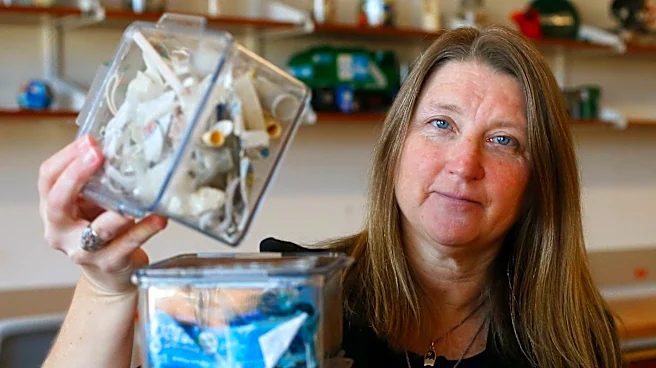
“Ocean plastics” was a relatively obscure term when Jenna Jambeck started studying them. It wasn’t until 2015 that her first estimate of how much plastic waste enters the oceans each year was highlighted on the cover of Science.
And Thomas Wilson Mitchell persevered, even after being warned that he was committing "career suicide" by focusing on legal reform solutions to involuntary land loss that disproportionately affected Black landownership and wealth. Today, his work continues to be cited in analyses of the lasting impact of heirs’ property law.
We chose these Fellows because they showed what curiosity and commitment – despite career, financial or popular headwinds – can achieve.
Removing funding pressures tied to discipline adherence makes room for interests that do not neatly fit into established professional categories. Fellows like Ieva Jusionyte and Robin Wall Kimmerer bring together forms of knowledge and practices that traditional institutions often separate – from anthropology and emergency medicine to Indigenous knowledge and plant ecology.
This is also why the familiar “genius” shorthand for MacArthur Fellows often obscures that kind of range. The word is a shorthand that overlooks Fellows’ ability to move beyond traditional boundaries, take risks, and persist through personal and conceptual obstacles.
Jacqueline Woodson, for instance, moves across forms of storytelling to tackle complex issues with children and young adults. Most recently, she wore the many hats of executive producer, cowriter and narrator in a PBS Kids adaptation of her book, “The Day You Begin.”
Beyond their individual freedoms to explore through unrestricted funding, this commitment to intellectual exploration shapes how we bring Fellows together to exchange ideas. This year, to mark the 45th anniversary of the MacArthur Fellowship, Fellows across classes have been coming together for a series of events to interrogate different questions, compare perspectives, and come up with innovative ideas that cut across disciplines.
Most recently, the musician, scholar and activist Martha Gonzalez and filmmakers Cristina Ibarra and Alex Rivera collaborated for the debut screening of "Let the City Speak: The Sonic Journey of Quetzal." The documentary follows Quetzal, a Chicano rock band that emerged from the vibrant 1990s East Los Angeles scene, over their three-decade transformation from abandoning the music industry to creating activism-aligned art.

Across these collaborations, we’ve seen just a glimpse of the possibilities that come with unrestricted funding for inquiry, enhanced by the opportunity to encounter different disciplines and ways of thinking. Those exchanges can generate connections and directions that no single field or institution could prescribe in advance.
At a moment when federal funding is constraining questions, rebuilding America’s strength in discovery will require renewed commitment to curiosity at every level. Across classrooms, workplaces and homes, we should resist rewarding only ideas that reinforce what we already know.
Not every question will identify a new deep-sea species or decipher a lost language. But you never know which ones will, until you ask.
Kristen Mack serves as vice president of communications, fellows and partnerships at the MacArthur Foundation.
This article originally appeared on USA TODAY: Don't let America lose our title as world leader in research | Opinion