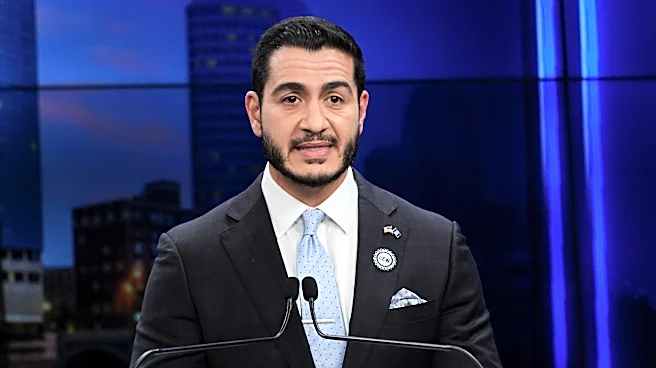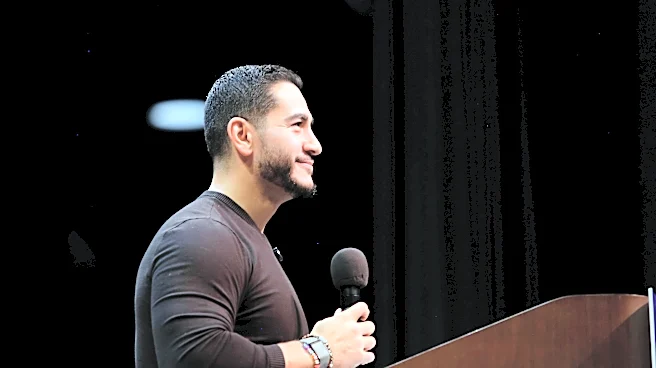



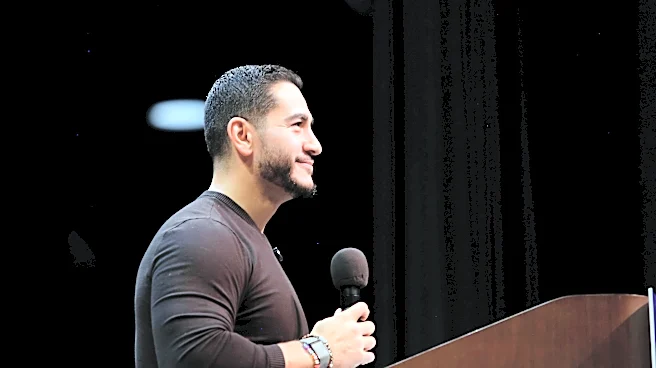
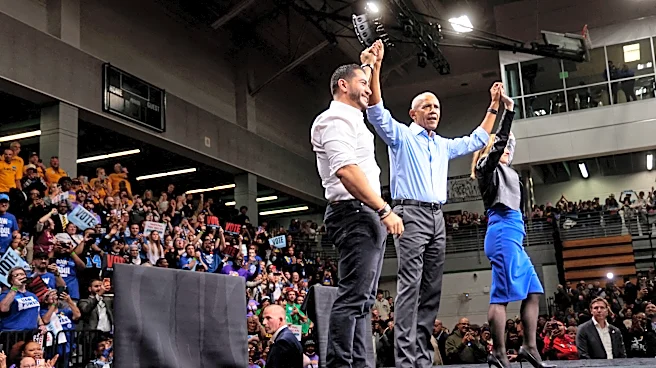

Michigan Republican Senate candidate Mike Rogers is trying to lean on usually reliable left-leaning constituents in his fight to defeat his Democratic opponent Abdul El-Sayed, who has faced questions about his ability to solidify his own party's support.
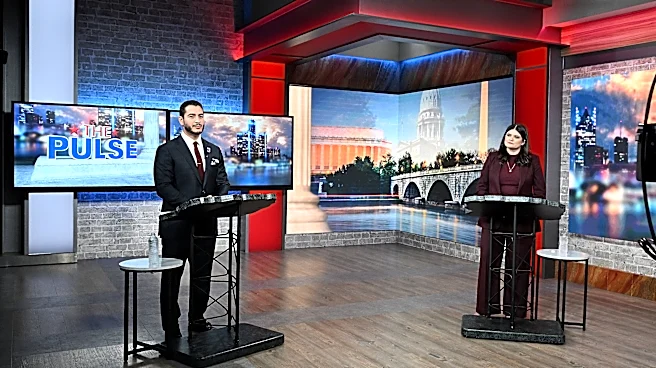
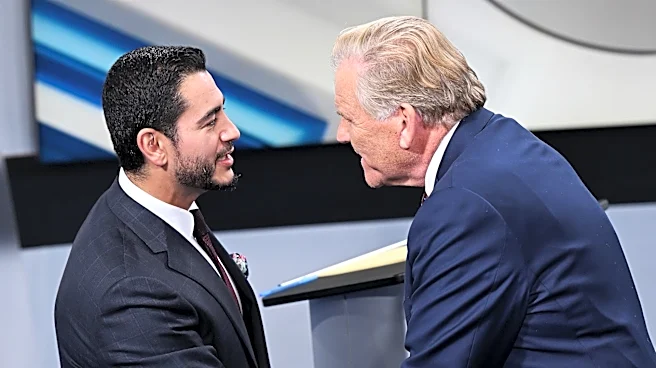
During the final debate against El-Sayed, the Democratic Senate nominee, Rogers said his campaign is making inroads with Black and Jewish voters in key areas of the state, despite trailing in several polls as Election Day nears.
"We're doing well with African Americans in the city of Detroit, in Pontiac, in Flint. We're doing exceptionally well with Jewish Democrats who are literally afraid," Rogers said. "I've talked to ones with tears in their eyes about the future of their kids and grandkids
because of the anger and division that (El-Sayed) is laying out on the street. This is really, really important that you listen to the people who are not going to support (him)."
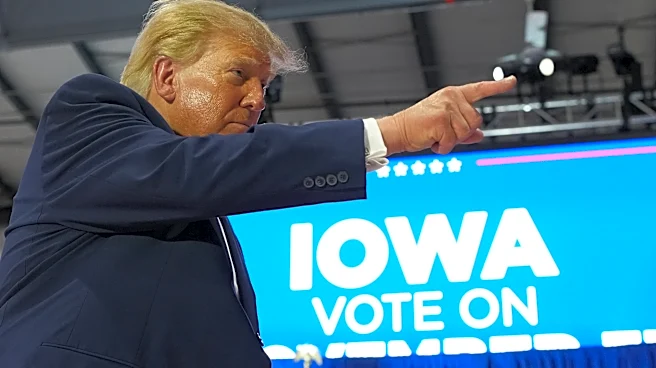
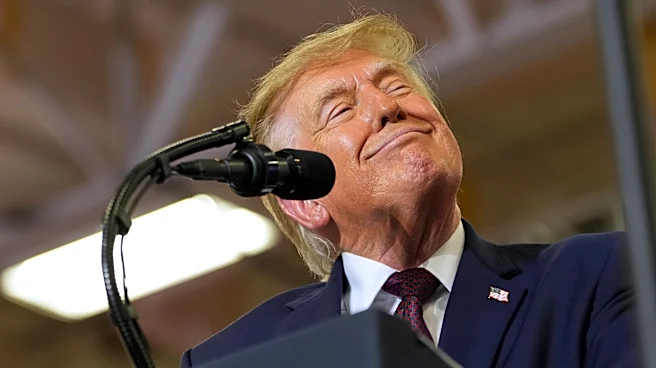
Not to be outdone, President Donald Trump, during an Oct. 29 GOP campaign rally in Rock Hill, South Carolina, criticized El-Sayed with messaging focused on Black and Jewish voters in Michigan.
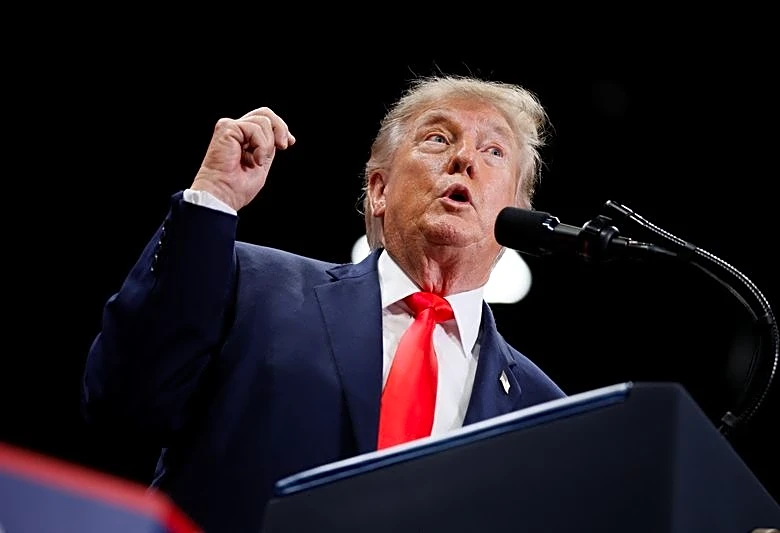
"If you're Black, or if you're Jewish, and if you vote for Abdul, you're crazy, OK," Trump said to cheers, adding moments later, "You're crazy anyway. But if you’re Black or Jewish and you vote — the things that this guy has said is …"
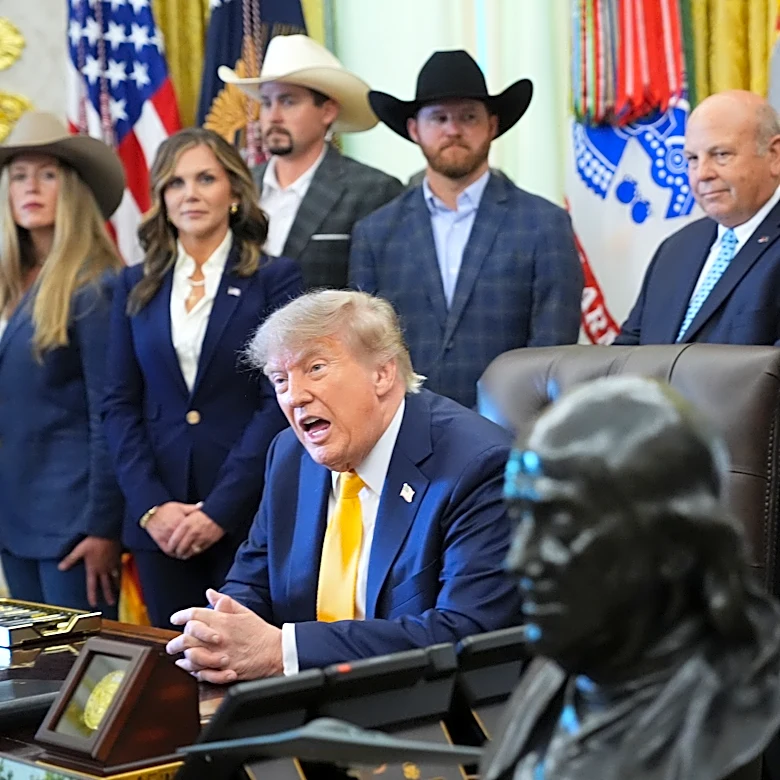
Trump echoed similar sentiments the next day in Daytona Beach, Florida, campaigning for GOP candidates. "If you're Black or if you're Jewish and you vote for Abdul, you're not smart," Trump said. "Abdul is not a big fan of Jewish people, and he's not a big fan of black people….I hope you're going to vote against him and send him back to where he came from."
And then there are Trump's remarks on Oct. 25 in Port Huron, Michigan, while campaigning for Rogers and other Republican candidates. The president said, "Any Jewish person that supports this guy should be ashamed of themselves."
El-Sayed has a complicated relationship with Jewish voters, who remain concerned over his stance on Israel, and Black voters, whose support was split during his contentious primary with former Democratic Senate nominee Rep. Haley Stevens two months ago.
But for El-Sayed's chances to become the first Muslim member of the Senate, he needs a significant share of both groups, especially in metro Detroit, to defeat Rogers and ensure Democrats can keep the seat as the party looks to take control of the upper chamber on Congress.
"It all depends on Black voter turnout, which is typically Democratic. Will they show up?" Mario Morrow, a longtime Detroit-area political consultant and adviser for Stevens' Senate campaign, told USA TODAY. "But just as big a question is what are the Jewish voters going to do?"
Rogers' unlikely ally
While Rogers' polling within the Black community is around 7%, he apparently has a noticeable key ally within the Jewish community. Jason Turkish, Stevens' fiancé, surprisingly said he will vote for Rogers, stating he's convinced the progressive El-Sayed is an antisemite. El-Sayed beat Stevens, the former Obama administration official, by 1 percentage point in the critical Senate primary in August to replace retiring Democratic Sen. Gary Peters.
"This choice for me, in the end, was very simple," Turkish told reporters at a Republican Jewish Coalition event in Birmingham, Michigan, on Oct. 28, saying he was hoping El-Sayed would help tone down the rhetoric regarding Israel. "But he didn't moderate the escalators. He got worse and worse and worse as this general election campaign has gone on. Rather than bringing people together, he's just driven them further and further apart."
Turkish recalled El-Sayed repeatedly not answering whether Iran or Israel poses a bigger threat to the United States during the first Senate debate. The candidate also wasn't distancing himself enough, to Turkish's liking, from a controversial ad by the Rebellion PAC that's set in a grocery store, where a couple debates whether they can afford eggs and bananas because "we have to set that $7 aside for killing Palestinians."
Turkish said, "History will remember who stands where in this moment, and it will not remember Abdul El-Sayed kindly."
In an ironic twist, Stevens, Turkish's fiance, was reportedly scheduled to appear alongside El-Sayed at a get-out-the-vote rally in Detroit, along with Rep. Jim Clyburn, D-South Carolina, on Nov. 1, two days before Election Day. The Oct. 29 announcement of the joint rally came a day after Stevens, who has described herself as a Zionist and a "proud pro-Israel Democrat," told CNN, "Like a lot of households across America, we're a house divided. I still very much want our Democratic nominee, his name is Abdul, to win this race. There's so much on the line."
But after a tense back-and-forth public exchange Oct. 30, El-Sayed asked Stevens not to attend any of his upcoming campaign events. Stevens later told The New York Times that El-Sayed’s team hadn't called to let her know whether the church event is happening or if she's been uninvited. "I haven’t had time to digest this. I don’t think this is a melodrama," Stevens said.
Still, Republican Jewish Coalition Spokesperson Sam Markstein told USA TODAY that Turkish's stance on El-Sayed has also made one thing pretty clear. He's not alone.
"Mr. Turkish gave voice to what a lot of Jewish Democrats are feeling: scared and conflicted," said Markstein, noting that more than 600 people attended the Oct. 28 JRC event. "But at the end of the day, party loyalty and partisanship do not come before safety and security."
Morrow sums up the last two months. "I’ve been doing this (political strategy) for 35 years, and I have never seen the level of negativity, hate, and disrespect across the board in any senatorial, gubernatorial, and congressional race in the state of Michigan."
Another prominent Jewish Democrat also not voting for El-Sayed

A prominent Michigan Democratic Jewish leader also said she's not voting for El-Sayed.
Joan Lowenstein, a member of the Michigan Democratic Party Central Committee, told USA TODAY that she doesn't support El-Sayed for a host of reasons. She's particularly troubled by El-Sayed's comments criticizing the longtime alliance between Israel and the United States. El-Sayed told ABC News on Oct. 20 that "An ally that takes your money to push you into wars you shouldn't be fighting is not an ally. I think it's time for us to realize that, like, Israel is not actually our friend."
Lowenstein wonders if El-Sayed is good for the Democratic Party.
"I can’t vote for him because I really don’t know what he stands for. There was an interview where El-Sayed said that Israel is not an ally of the United States. I don’t know what that says for our stature in the world if a presumptive senator doesn't understand our foreign policy; I think that’s bothersome," said Lowenstein, a board member on the Michigan Democratic Jewish Caucus and a former Ann Arbor city council member. "I don't think he considers us an important constituency for him."
Lowenstein, a retired attorney, declined to say if she's even casting a Senate vote.
Jewish leaders still waiting for El-Sayed to publicly condemn rhetoric
Meanwhile, a group of rabbis and Jewish leaders in the state launched Nonnegotiable Michigan, including a petition for Jewish voters to sign, citing five "nonnegotiable baseline commitments" for El-Sayed to consider. They include "Jewish sovereignty in Israel," "affirming a vision for a better future for the Middle East," and welcoming "full participation in American political life" for Jews.
One of Nonnegotiable Michigan's co-founders, Rabbi Aaron Starr, told members during an Oct. 27 virtual meeting that the group of majority Democratic voters remains frustrated that the rhetoric "has turned way up."
Starr said that while he wants to believe in El-Sayed, he and other group members remain conflicted that the candidate "is not really hearing our pain and our concerns." They say the Rebellion PAC commercial featuring his image is yet another example.
"He's acknowledging that he's not the one who put it out. Now, I appreciate that he's distancing himself from it, but it's just not enough," Starr said. "We have to condemn this kind of language.
Lowenstein thought Stevens' statement was what she "hoped" El-Sayed would say before joining forces in person. "Stevens extended a hand, and El-Sayed walked away," Lowenstein said.
As a result, Lowenstein said there's lots of Jewish voters who feel "more secure" voting for Rogers.
"I’ve heard from a lot of people that there are no good outcomes in this race," Lowenstein said. "And I think for many of them, Mike Rogers is the devil that you know."
Lowenstein said the Senate election is not causing a deep rift within the Jewish community.
"The Jewish community is split; I think they are split on who they are voting for," Lowenstein said.
Black voters see El-Sayed, Rogers vastly different
Despite the odds, Rogers is aggressively courting Black voters.
He launched a “Democrats for Rogers” coalition and an office in a predominantly Black neighborhood. He's attended services at several Black churches seeking support. Rogers also has the endorsement of outgoing Michigan state Rep. Karen Whitsett, who left the Democratic Party earlier this year because of her Christian faith, not politics.
"I am very confident that he will not leave us behind," Whitsett said during the coalition's announcement on her block in Detroit, citing Rogers concerns over maintaining affordable health insurance. "You need to pick your candidate by your issue, period... Common sense prevails that Mike Rogers is the right candidate for you."
He's also met with Detroit City CouncilwomanMary Waters, a lifelong Democrat, who later posted about it on social media, saying "I want to build relationships that can benefit our city, regardless of who ultimately wins an election. That is not an endorsement. This is leadership."
Morrow thinks between 8% and 10% of Black voters will back Rogers, but "I don't know if that’s going to make a difference in the overall Democratic Black support for El-Sayed."

A recent Marist University poll showed El-Sayed with a 15-percentage-point lead among non-White voters, a lead he's held since winning the Democratic nomination, even though he had a 2% lead among all voters in the poll of 1,185 likely voters.
In the primary, Stevens won majority-Black Detroit with more than 60% of the vote. El-Sayed became the first Michigan Democrat to win a state primary without winning its biggest city since the 2018 Democratic gubernatorial primary, when now-Gov. Gretchen Whitmer narrowly lost Detroit to candidate Shri Thanedar.
Getting the majority of the Black vote, especially in the Democratic-heavy metro areas of Detroit, Wayne and Oakland counties, is going to be key for El-Sayed to win the Senate, said longtime pollster David Paleologos, director of the Suffolk University Political Research Center.
"Let's say percentage-wise, El-Sayed wins 65% to 35%, or even 70% to 30%; that may not be enough to carry the rest of the state, which is pretty red," Paleologos said. "He needs 85% to 90%. That’s how the Dems win Michigan. They run up a big lead in Detroit and the surrounding areas to help carry them statewide."
Although El-Sayed has the endorsement of some influential Black clergy in cities including Detroit, Saginaw and Flint, and the backing of Detroit Mayor Mary Sheffield, City Council President James Tate and Wayne County CEO Warren Evans, the candidate's work is still cut out for him.
"(El-Sayed's) got people who are supporting him and have coattails, but a lot of these voters in the Black community tend not to follow and become independent thinkers," Morrow said.
Paleologos said El-Sayed also has to capture some of the Black male voters who went for Trump in 2024 and might not be inclined to vote for Rogers. "A lot of them are feeling duped, like some young Hispanic men in Arizona and Nevada who may feel buyer's remorse voting for Trump," Paleologos said. "Will these men cast their ballots for El-Sayed?
"Two (percentage) points could decide this whole race," Paleologos said.
Voter won't let 'dark money spending' determine outcome
A week before Election Day, Angela Sawyers' suburban Detroit mailbox was stuffed with anti-El-Sayed flyers she described as filled with Islamophobic rhetoric. If it's not the mailers, then it's the calls, the texts, and the nonstop TV ads filling the airwaves.
Sawyers, who is Black, said she won't let the "dark money spending" from the various political action committees from both parties deter her from voting for El-Sayed. She's stuck with the candidate when his "platform wasn't as solid during the primary," but believes it has since evolved.
She thinks El-Sayed is trying to stay on point with his messages of affordability and Medicare for all, despite repeated questions about his Arab-American background.
The El-Sayed she knows helped transform Detroit's health department after the city's infamous bankruptcy; the physician who brought a sense of calm during COVID, and later helped get kids free glasses when he ran Wayne County's health department.
"He showed up for Detroit and the county when they needed him," Sawyers said. "I think he'll do the same thing as a Senator."
Sawyers said she can relate to the recent viral comments made by Detroit salon owner Nicole Wilson to the BBC when she wa asked if El-Sayed is "too left-wing" or a "socialist "to win her vote.
"At this point, what do we have to worry about? Anything but what we have," Wilson said. "We're on our way to hell, so at this point, socialist, socialize, social, don't matter to me; Lower my cost of living."
Sawyers said that's what many Michigan voters want.
"In the end, no matter how much money is being spent on either side, our vote belongs to the people, and it's up to us," she said.
Contributing: Arit John, USA TODAY
This article originally appeared on USA TODAY: El-Sayed, Rogers seek Jewish, Black vote in tight Michigan Senate race