
I remember Sept. 11, 2001, like it was yesterday. My three brothers and I had planned a rare Tuesday off to play a round of golf on a beautiful morning.
All of that changed at 8:46 a.m., when hijacked American
Airlines Flight 11 struck the World Trade Center 's north tower. A little over an hour later, my family was gathered around the television when I turned to my mother-in-law and uttered eight painful words.
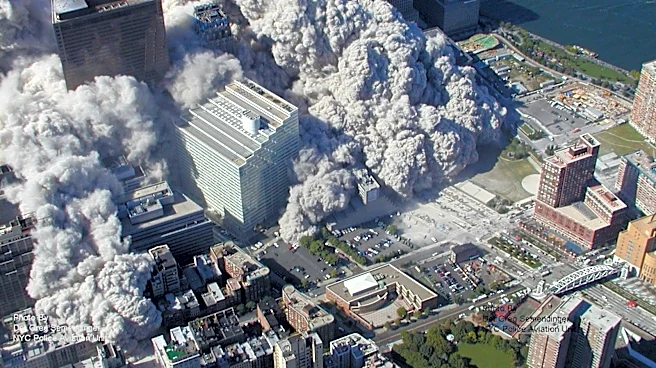
"Nancy, I think I just lost my brother." It was 9:59 a.m., and I was watching the south tower collapse.
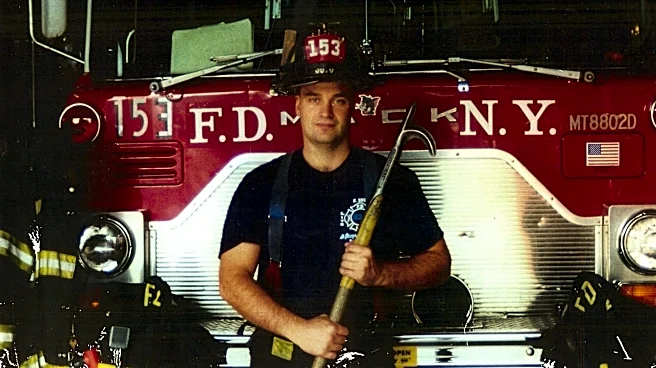
My youngest brother, New York City firefighter Stephen Siller, was driving home from work on the Brooklyn-Queens Expressway when he received a radio call about the Twin Towers being hit. Without hesitation, Stephen turned his pickup around and drove toward the Brooklyn-Battery Tunnel, which he would soon run through with 60 pounds of gear strapped to his shoulders.
“Everyone was trying to run out,” eyewitness John Raiso later said. “He was running in.”

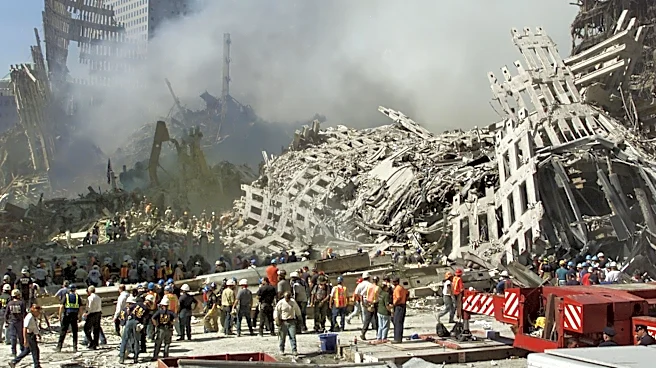
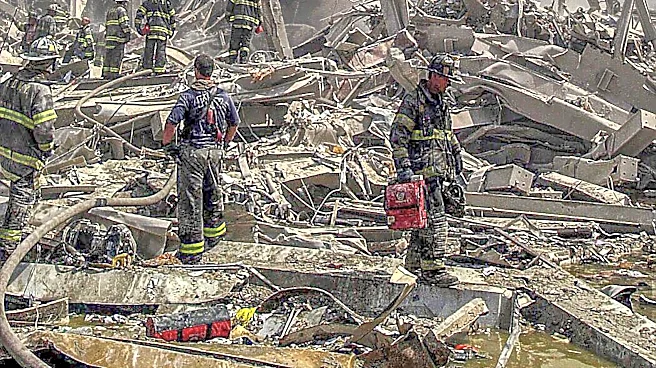
It's been more than 9,000 days since my brother was last seen near the south tower, and not one has passed without me thinking about him. Even after 25 years of grief, the courage Stephen showed still takes my breath away. He was 34, happily married, the father of five – and he knew death might be waiting on the other side of that tunnel. He ran toward it anyway. His remains were never recovered.
'Turning Stephen's memory into something positive'
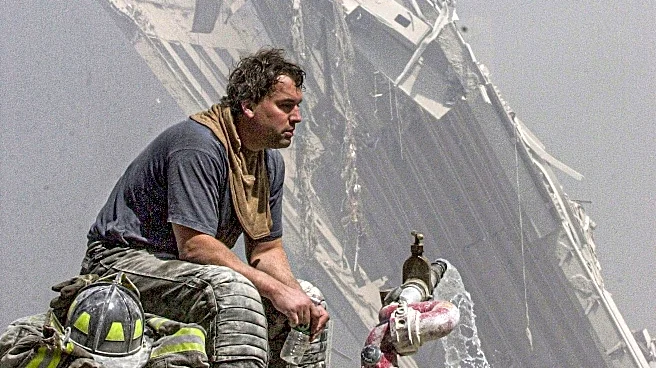
My brother is one of thousands of 9/11 heroes we honor and remember on this sacred 25th anniversary of the worst terrorist attack in American history. That's why, after Stephen's death, my family founded the Tunnel to Towers Foundation in his honor.
As smoke rose from Ground Zero, the Pentagon and a field in Pennsylvania, we resolved that Stephen's death would not be the end of his story, but a new beginning.
“The pain doesn’t end,” my late brother Russell once said. “But we diminish it by turning Stephen’s memory into something positive – by doing good for others.”
That mission has taken us far beyond 9/11 – to the families of firefighters, police officers and service members killed in every conflict since, from Afghanistan to this year's strikes in Iran.
After the March 1 Iranian drone strike on Kuwait's Port Shuaiba, I called the surviving spouses of U.S. Army Reserve Maj. Jeffrey O'Brien and Sgts. 1st Class Noah Tietjens and Nicole Amor, all of whom left children behind. I told Roxanne, Michelle and Joey not only that we were praying for them, but that they would no longer be burdened with paying off a mortgage.
We would later do the same for four more families who lost loved ones in that conflict.
Every call I make to a widow or widower has a singular purpose: making sure they know they are not alone. Heroes who sacrifice their lives or limbs for their community and country are our greatest national treasures – and so are their loved ones.
That's what the 2,000 mortgage-free homes we've delivered since 9/11 really mean – not a statistic, but 2,000 families who don't have to wonder how they'll keep the roof over their kids' heads.
My brother's wife, children made an enormous sacrifice on 9/11
Though Sept. 11, 2001, was the worst day imaginable for my family and many more like us, what we saw in the days and weeks that followed was the best of America: compassion, prayer, patriotism and a unity not seen in most of our lifetimes.
For 25 years, the Tunnel to Towers Foundation has tried to keep that spirit alive by being there for those who – at America's darkest hours – have always been there for us.
Stephen never slowed down that morning, not even when the tunnel forced him out of his car. None of us know what the world will look like 25 years from now. But I know this: As long as I'm alive, no family who has given what mine has will have to face it alone.
My brother's wife, Sally, and their five children – Katherine, Olivia, Genevieve, Jake and Stephen Jr. – made an enormous sacrifice on 9/11. Yet for the past 25 years, they have watched their husband and father's name become one that strangers speak with gratitude, in a foundation built in his memory.
For the next 25 years and beyond, the legacy of FDNY firefighter Stephen Siller and his fellow heroes will endure.
A few days ago, I had the honor of speaking at the U.S. Military Academy at West Point. During my remarks, I told the story of Welles Crowther, the now-famous "Man in the Red Bandana" who saved as many as 18 lives on the south tower's 78th floor as fires raged, smoke billowed and jet fuel burned. Welles' story and my friendship with his mother, Alison, are close to my heart.
I repeated a quote attributed to Welles: "With this red bandana, I'm going to change the world."
Despite having no idea that his defining moment would arrive on the morning of Sept. 11, 2001, Welles was ready to act. Because of his heroic actions, 18 people – and 18 families – were given the miraculous gift to keep on living. On Sept. 8, President Donald Trump posthumously awarded Welles the Presidential Medal of Freedom.
We all have our own version of a red bandana. Today, please join me in putting them on and being ready to help someone in need like Welles Crowther was. By coming together and loving our neighbors as we did in the first days after 9/11, we too can change the world.
Frank Siller is the chairman and CEO of the Tunnel to Towers Foundation.
This article originally appeared on USA TODAY: My brother ran into the Twin Towers on 9/11. He never came out. | Opinion