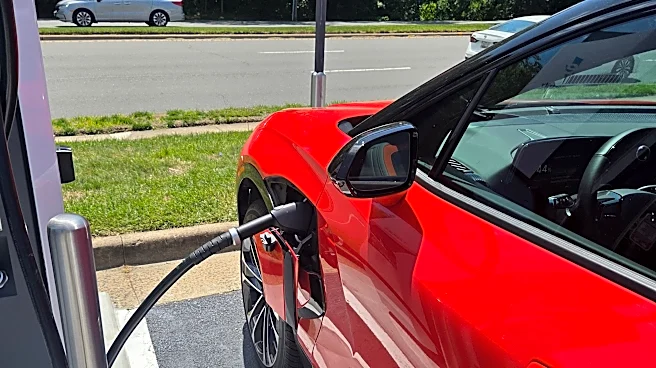







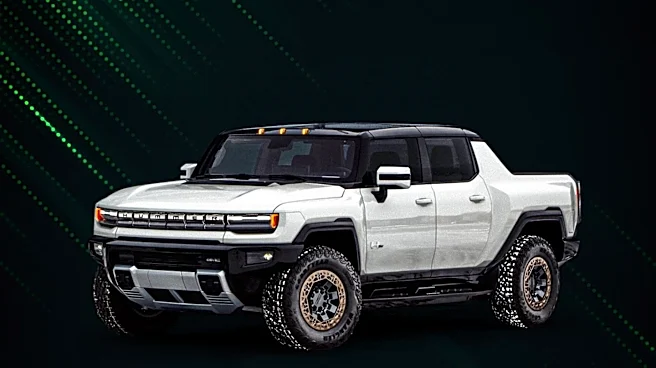
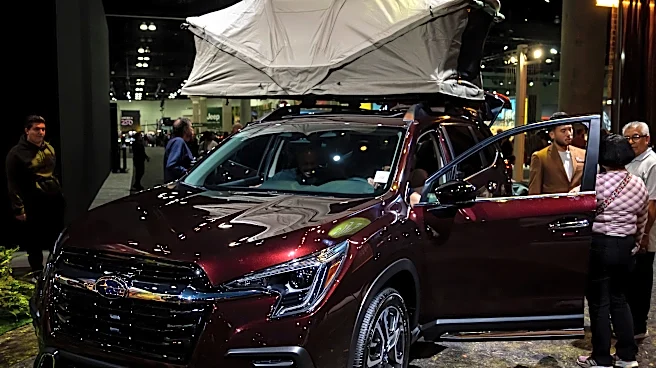
Electric car drivers are far less likely to default on their auto loans than owners of traditional gas-guzzlers are, according to a new study.
According to a new report from the Natural Resources Defense Council and Atlas Public Policy, electric car drivers have a 50 percent lower auto loan default than their counterparts who drive traditional cars that get lower fuel economy.
Despite that finding, the groups said, EV drivers usually face higher loan rates than owners of traditional cars, in part because of the typically higher prices for plug-in vehicles.
"Based on our analysis, late payment risk decreased as vehicle fuel economy increased," the groups said. "Borrowers financing higher fuel economy vehicles appeared less likely to fall behind
on payments than borrowers financing lower fuel economy vehicles."
"Lenders, however, did not appear to price loans in a way that recognized the lower repayment risk with higher fuel economy vehicles," the groups continued. "Interest rates showed little variation based on fuel economy among gas vehicles, and EV borrowers, who carried the lowest predicted late payment risk in the dataset, paid more than $300 in additional financing costs over the life of a loan compared to otherwise comparable gas vehicle borrowers."
With that in mind, the USA TODAY Cars team took a look at some of the potential advantages of driving an electric car and some of the downsides of falling behind on your auto loan.
What are some advantages of electric cars?
- Saving on gas: A driver who opts for a new or used EV could save $2,200 annually on gas, according to the U.S. Department of Energy. Even hybrid drivers can save $1,500 on gas annually, according to the agency.
- Saving on maintenance: Owners of electric models saved an average of about $8,811 on ownership and maintenance compared to the best-selling traditional cars over the length of time it takes them to drive the car 200,000 miles, according to Consumer Reports.
- Slower depreciation: Consumer Reports also said EVs have historically depreciated faster than gas-powered cars, but the gap is narrowing as the used EV market expands. EVs typically lose around 58% to 60% of their value over five years, compared to a typical depreciation rate in the low to high 40% range for gas cars over five years.
What are the downsides of falling behind on your car payments?
Falling behind on your car payments could result in a reduction in your credit score or your car being repossessed if you can't catch back up.
Additionally, almost 30% of recent new car buyers were underwater on loans for their trade-ins when they go to buy new cars, according to Edmunds.com.
The group said 29.3% of trade-ins that were used in new car purchases were underwater in the fourth quarter of 2025, which means the owners owed more on their existing vehicle than it was worth at the time of trade-in. Edmunds said that figure represented the highest share of underwater car buyers it has recorded since the first quarter of 2021, when the group said 31.9% of buyers had negative equity on their trade-ins.
Edmunds.com said its data "highlights how easily negative equity can become a cycle that’s difficult to escape."
"Rolling debt forward may offer short-term relief, but it often leaves buyers with higher payments and fewer options the next time they’re in the market," the group said.
Keith Laing is an automotive reporter on the National Trending Desk at USA TODAY. Contact Keith at klaing@usatodayco.com.
This article originally appeared on USA TODAY: Are EV drivers less likely to default on car loans? New study says yes.