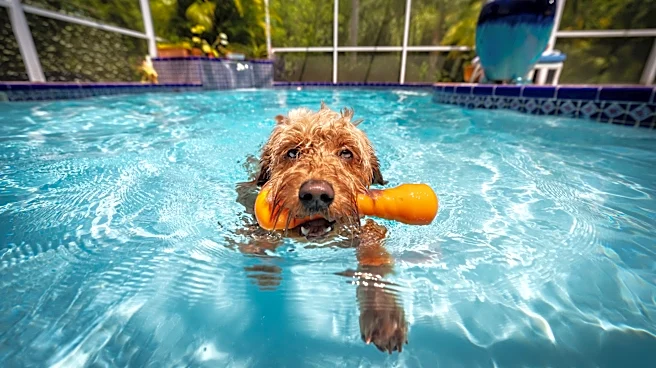








Everyone’s trying to beat the heat this summer, including our four-legged friends. And if you have a backyard pool, it can be the perfect place for them to cool off, get some exercise and perfect their dog paddle.
"For the majority of healthy dogs, swimming in a properly-maintained chlorinated pool is generally safe and can provide a great means of burning calories and expending energy in a low-impact way," says Dr. Rebecca Greenstein, veterinary medical adviser for Rover.
But not every dog is destined to make a splash. So before letting your Fido dive into the deep end, there are a few important pool precautions veterinarians recommend.
Never let your dog swim unattended
Veterinarian Dr. Jolee Stegemoller says dogs can enjoy backyard pools, but they should never be left unsupervised
near water. Accidental drowning is one of the biggest risks dogs face in and around pools. Even dogs that appear to be strong swimmers should never be left alone near the water.
"Dogs may know somewhat instinctively how to paddle, but that doesn’t mean every dog knows how to swim per se," Greenstein says. "Constant poolside and in-water supervision is non-negotiable and mandatory."
Create a safe exit for wet paws
Another crucial safety step is making sure your dog has an easy, slip-resistant way to exit the pool. Slippery surfaces and unclear exits can quickly turn a fun dip into a dangerous situation. Experts recommend using a dog ramp with a textured surface, since wet paws can struggle to grip smooth steps and slick pool decks. Pools should also be securely fenced to help prevent dogs and children from accidentally falling in when no one is watching.
"Not every dog knows how to exit a pool, which can lead to exhaustion and muscle fatigue — not to mention emotional distress — and can be a risk factor for drowning," Greenstein says. Show your dog where the ramp or steps are before the swim begins, then practice the route several times so they know exactly where to go.
Not every dog is a natural swimmer
Some dogs take to the water almost immediately, while others are better-suited to lounging on dry land. Breeds historically used for retrieving, rescuing or working near water may be more comfortable swimming, Stegemoller says.
"Some dogs are natural swimmers and others are less likely to be water babies," Greenstein adds. Bulldogs, for example, may struggle because of their flat faces and barrel-shaped bodies. Puppies, senior dogs and dogs with heart or breathing problems may also have difficulty swimming.
"If your dog seems reluctant to try swimming, never force him or her into the water," Greenstein says. She recommends that less-confident swimmers wear a properly-fitted life jacket and be removed from the water if they show signs of panic, fatigue or significant water ingestion.
Dry off after every dip
Veterinarians also advise rinsing and thoroughly towel-drying dogs after swimming. Trapped moisture, particularly in the ears and skin folds, can allow yeast and bacteria to grow, potentially leading to irritation or infection.
"In a properly maintained pool, chloride usually isn’t a significant irritant but can be slightly drying and irritating to those with sensitive skin," Greenstein says. Regular pool cleaning is also essential, Stegemoller says, because fur and bacteria can affect water quality.
Be your dog’s lifeguard
Most dogs will be ready for a rest after swimming, but certain symptoms can signal something more serious. "Any changes in breathing should be considered significant until proven otherwise, since inhaling or aspirating water is always a concern,” Greenstein says.
Water intoxication from drinking a massive volume of water is uncommon in her experience, but neurological symptoms require immediate attention. Those symptoms should be addressed immediately at the nearest emergency veterinary facility.
With close supervision, a safe way out and a thorough post-swim rinse, many dogs can enjoy the pool without getting in over their heads.
This article originally appeared on USA TODAY: Can dogs swim in pools? Owners need to know these safety tips