





With the astonishing news that Christa Pike is conscious, talking and making a "medically unprecedented" recovery following her botched execution, Tennessee is now facing a critical question: Will the state try to kill her again?
"Against all odds, Christa Pike is conscious, speaking, and continues to receive critical medical care," her attorneys said in a statement on Oct. 6. "Her prognosis remains unclear but, at a minimum, we expect a long recovery."
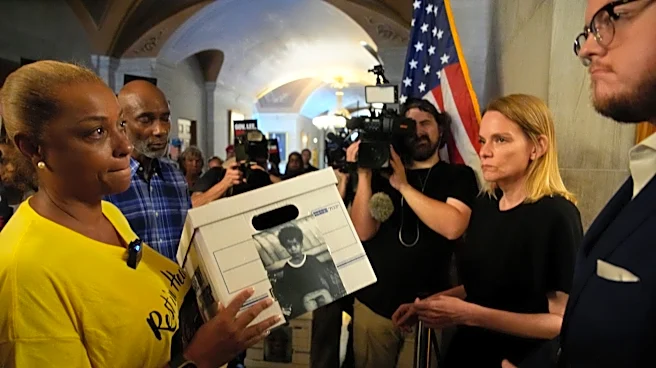
So far, Tennessee Gov. Bill Lee has not responded to repeated calls from Pike's attorneys and death penalty observers to commute her sentence to life in prison. That leaves open the possibility that Pike will face a second execution, even after her attorneys said the first attempt on Sept. 30 amounted
to unconstitutionally cruel and unusual punishment.
"We’re in uncharted territory," said Robin Maher, executive director of the nonprofit Death Penalty Information Center, which does not take a stance on the death penalty.
"The U.S. Supreme Court has not decided whether a second execution attempt would violate the constitution since 1947," Maher told USA TODAY. “These are questions that have never needed to be asked before and no one knows the answers.”
As Pike continues to recover in a Tennessee hospital, USA TODAY is looking at the issues that state officials will need to weigh when deciding whether Pike will live or die.
When did the Supreme Court last address a second execution?
The last time the Supreme Court addressed whether an inmate who survived an execution would face another one was nearly 80 years ago in 1947.
The case involved Willie Francis, a 17-year-old Black teen convicted of murder by an all-white jury for a crime committed when he was 16. His first execution inside the local parish jail in St. Martinville, Louisiana, was halted when the portable electric chair known as "Gruesome Gertie" failed to deliver enough current. It was widely reported that the electrical mechanism malfunctioned due to improper setup by a drunken prison guard.
Witnesses said Francis screamed "Take it off! Take it off! Let me breathe!" from behind his leather hood. The execution was aborted, and an appeal was filed to the Supreme Court. Francis spent the next year back on death row awaiting a decision from the Supreme Court about whether a second electrocution would be unconstitutional cruel and unusual punishment, according to the Death Penalty Information Center.
The court justices ruled that the state could put Francis back in the electric chair, writing that "accidents happen for which no man is to blame."
"Even the fact that (Francis) has already been subjected to a current of electricity does not make his subsequent execution any more cruel in the constitutional sense than any other execution," the Supreme Court concluded. "The cruelty against which the Constitution protects a convicted man is cruelty inherent in the method of punishment, not the necessary suffering involved in any method employed to extinguish life humanely."
Francis was successfully executed in the electric chair on May 9, 1947. He told reporter Elliott Chaze a few days before the execution that he was going to meet the Lord with his "Sunday pants and Sunday heart."
Experts: Pike's case differs from 1947 case
There's a huge difference between what happened to Francis in 1947 and what happened to Pike last week, said Columbia Law School's Bernard Harcourt, who is writing a book about a botched lethal injection in Alabama involving an inmate he represented.
“What’s interesting about that case is that the Supreme Court said it was an accident and, ‘You get to do it again,’” Harcourt told USA TODAY. “Christa Pike wasn’t an accident. They knew. They had information from her lawyers, who told them, ‘You’re going to have a hard time getting to her veins.’”
Nearly 10 months before the Pike's botched execution, Pike's attorneys warned Tennessee that personnel would have trouble with Pike's unusually small veins and would struggle to deliver a fatal dose of pentobarbital. They repeated those warnings up until her execution.
Because of that, Harcourt said, if Tennessee seeks to try to execute Pike again, it would "arguably violate double jeopardy."
Maher of the Death Penalty Information Center agreed that a second attempt would "likely be unconstitutional."
"Of all the unknowns we have at the moment, the only thing I’m certain of is that she should not be subject to a second one," Maher said. "She has already endured a torturous experience in that execution chamber."
Tennessee governor hasn't ruled out 2nd execution for previous botch
In May, Tennessee botched another execution. Tony Carruthers survived after executioners failed to establish a second IV line required under the state's execution protocol. The doctor carrying out the lethal injection also unsuccessfully tried to place a central line.
After Carruthers spent more than an hour strapped down waiting to die, the state abandoned the execution. Lee granted Carruthers a rare one-year reprieve, leaving open the option to try to execute him again.
In a lawsuit filed in July, his family said that they believe Carruthers suffered a brain stroke and that the entire right side of his body was left paralyzed. His attorneys argue that he's suffered enough and that the governor should commute his sentence. He has not.
As for Pike's botched execution, Lee ordered an investigation into what went wrong, called off the state's only remaining lethal injection this year and announced the upcoming resignation of Department of Correction Commissioner Frank Strada.
Lee has not granted Pike a reprieve similar to Carruthers' and has not indicated what the future holds for her. He hasn't spoken publicly about the matter since Oct. 1, the day after the botched execution.
Lee called the failure a deeply disturbing "tragedy" that should never have happened. He also reiterated his commitment to the death penalty.
"My responsibility is to uphold the sentences that Tennessee juries have handed down, even when it's difficult, and that is exactly what we intend to do in the days ahead," Lee said. "The people of Tennessee have determined that the death penalty is the appropriate penalty for the most heinous crimes in the state. The people of Tennessee make that decision, and my job is to make sure then that those sentences are carried out."

A recap of the case
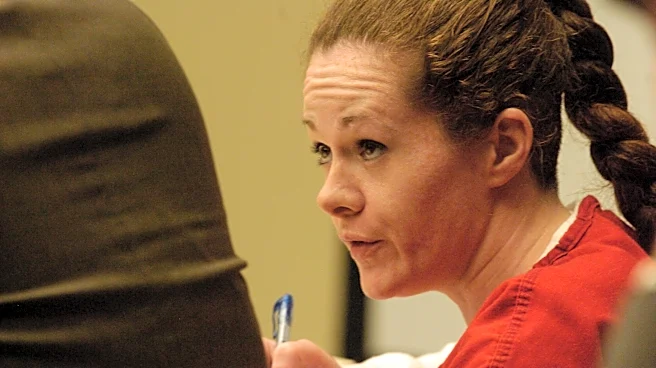
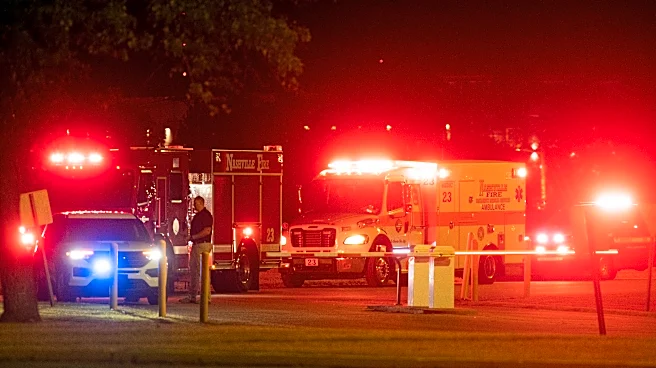
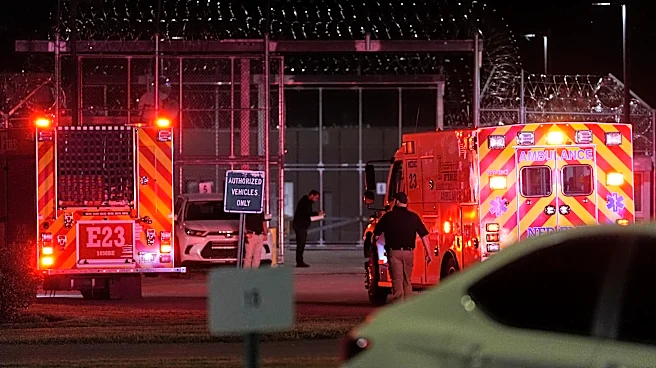
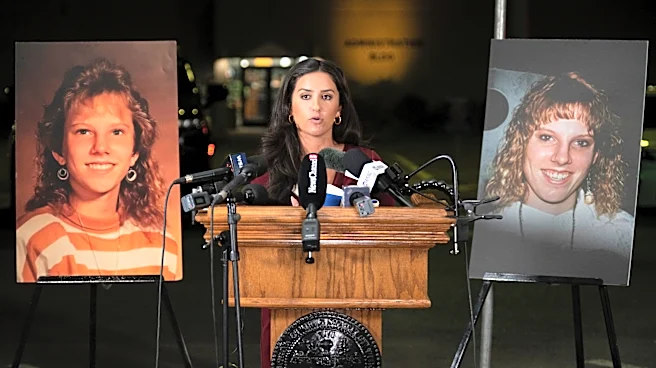
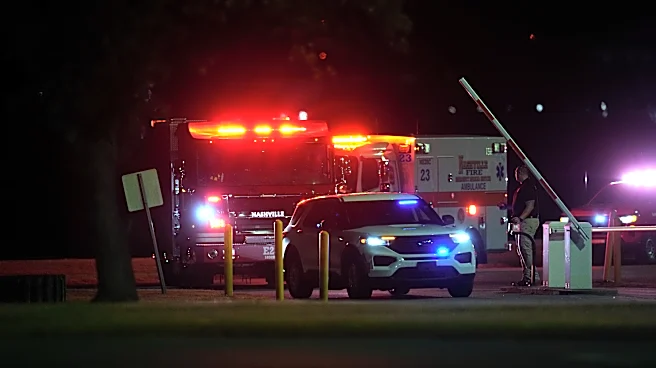
Tennessee was supposed to execute Pike, 50, by lethal injection on Sept. 30 for the brutal and prolonged 1995 murder of 19-year-old Colleen Slemmer. The execution failed after Pike survived two doses of pentobarbital injections and was taken to a Nashville-area hospital.
A timeline of the chaos in the death chamber compiled by USA TODAY shows that the state tried to kill Pike for over an hour before rushing to save her.
Her attorneys say they believe that Pike's IV lines were improperly placed or that Pike's veins had blown, causing some or all of the pentobarbital to enter her arm rather than her bloodstream. The state has not said why Pike's execution failed.
Pike was 18 when she and her 17-year-old boyfriend, Tadaryl Shipp, lured Slemmer into the woods in Knoxville on Jan. 12, 1995.
Prosecutors said Pike and Shipp tortured and killed Slemmer, who was her romantic rival. Pike cut Slemmer's throat and crushed her skull with a rock, later showing off a piece of the skull.
Slemmer's mother, May Martinez, witnessed Pike's failed execution. Martinez previously told People Magazine that Pike had never apologized for her daughter's death and that she wanted to finally see justice.
Contributing: Kelly Puente, Nashville Tennessean
Amanda Lee Myers is a senior crime and courts reporter who covers the death penalty, cold cases and breaking news for USA TODAY. Follow her on X at @amandaleeusat.
This article originally appeared on USA TODAY: Will Tennessee try to execute Christa Pike again? They might.