


When alleged victims came to former attorney Cheyenne Hunt in April about alleged sexual abuse by then-Rep. Eric Swalwell, D-California, Hunt posted to her more than 500,000 combined Tik Tok and Instagram followers. Hunt's video led to helping connect survivors with traditional news investigating the claims. Although he denied the claims, Swalwell resigned from office.
Then, in July, Hunt posted about alleged sexual abuse victims coming to her about Democratic Maine congressional candidate Graham Platner. She posted about victims' stories and provided legal resources while connecting them with traditional news reporters. Platner eventually dropped out, while denying the accusations.
Hunt's key role in bringing the allegations to light is just
one example of how content created by social media users increasingly driven for political news and messaging in the 2026 election cycle.
While Hunt is on the left, social media is just as influential on the right. Parties and campaigns on both sides of the aisle are increasingly working with online content creators, also known as influencers. Some of it is similar to mainstream legacy news coverage, with journalists speaking to audiences online, while other messaging occurs in paid partnerships, like political ads.
More than 100 conservative social media content creators were invited to the September Republican midterm convention in Dallas to amplify the event to voters. From the "Creator Lounge," Lydia Shaffer, whose account @conservativebarbie2.0 has more than 280,000 followers on Instagram, and Xaviaer DuRousseau, with over 950,000 Instagram followers, had a front seat for their phone cameras and their social media audiences to post videos and photos from the event.
Their content varied, with some only posting photos on Instagram recapping their experience, while others posted comedic content or even participated in on-camera interviews with conservative media outlets. Conservative commentator Link Lauren posted his personal takeaways and behind-the-scenes set-up footage to his 389,000 Instagram followers.
This all helped bring the Republican convention to social media audiences who might not be tuning in to cable news to watch the speeches, or who may not have even been aware of the convention otherwise.
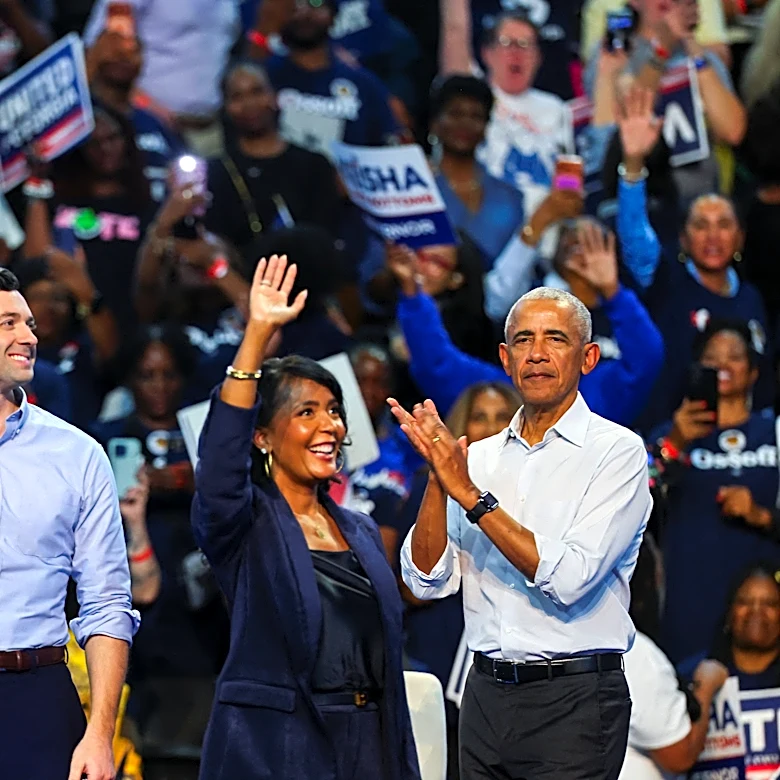
The campaign of Sen. Jon Ossoff, D-Georgia, employs Parker Stout, who went viral in 2024 for “hype” dancing behind Vice President Kamala Harris at a campaign event in Atlanta, as a strategist for outreach to non-traditional digital communicators such as social media influencers.
David Karpf, a professor at George Washington University who studies strategic political communications in the digital age, said that 30 years ago, campaigns reached inattentive voters through local news media. But as local media has declined over the years, campaigns have pivoted into a space where they're reaching voters online.
"That local media has been pretty much gone for over a decade now, and what has been replacing it is online media in general, but in particular, influencers who build an audience – some of whom are focused on politics, others are focused on other things – but then if they engage with political campaigns, that's an opportunity for local campaigns to reach people who are already deciding to tune them out," Karpf told USA TODAY.
The big challenge for campaigns, Karpf said, is "how do you reach people who aren't already self-selecting to pay attention to politics?" The answer, he says, is through joining a podcast or working with influencers who already have an audience.
Federal Election Commission Chair Shana M. Broussard, said that government election regulators have "increasing social media being a popular tool" to get news about politics, at an Oct. 15 Washington Post event. In response to the increase in social media coverage, the FEC passed a rule in March 2023 for political ads on social media to include disclosures about who paid for them, like disclosures on televised campaign ads.
Who are these 'influencers' influencing people?
The voters getting midterm election news from social media might follow anyone from independent journalists or newsroom journalists reporting on the news, to partisan voices that are in paid business partnerships with campaigns.
One liberal creator, Harry Sisson, has 1.6 million followers on Instagram and 2.3 million on TikTok, and his videos reacting to President Donald Trump's Truth Social posts or to clips from campaign events, mostly mocking the president, garner hundreds of thousands of views. On the right, Riley Gaines, with 1.3 million Instagram followers, devoted a video podcast on her YouTube in July to "Understanding Democratic Socialists’ Plan To Destroy America," and breaking down the democratic socialist faction of the Democratic Party.
Some of these creators may not even be focused on politics: Take lifestyle and beauty creator Gabriel Zamora posting a video talking to his more than 600,000 followers while doing his makeup to remind them to register to vote, in collaboration with the Michelle Obama-founded When We All Vote nonpartisan voter initiative.
“Candidates who are campaigning on clean air can reach out to running creators and get them as surrogates for their campaign, and it adds a level of trust with their audience if you’re strategic about which creators you work with,” Maria Comstock, a Democratic digital content creator and new media political strategist, told USA TODAY.
These so-called influencers are present in multiple social media networks at once, similar to traditional political campaigns trying to reach voters through newspaper interviews, television advertisements and door-to-door pamphleting. From videos on TikTok and Instagram, to live streaming on Twitch, to explainer graphics on Threads and X, to articles on Substack, the content informing online voters about the midterms takes many forms.
Politicians are now appearing in social media feeds with influencers, but often in a way that blurs that traditional boundaries between a journalist and a source to a more cooperative partnership between candidates and content creators.
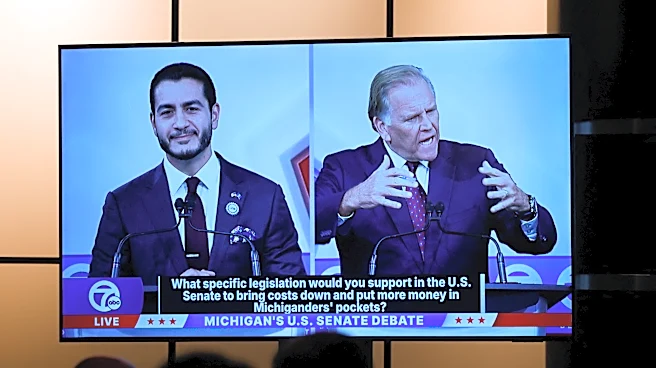
In one post, voters might see Michigan Democratic Senate nominee Abdul El-Sayed being interviewed on their X feed by Gen Z journalist Luke Radel, who works for news outlet Meidas Touch. But hop over to Instagram, and El-Sayed is posing for a photo at a campaign event with liberal podcast host Suzanne Lambert, who has almost 1 million TikTok followers. In another example, left-wing podcaster Hasan Piker, with a following of over 2 million, spoke at an El-Sayed event.
And while those partnerships can be an opportunity to talk to new voters, El-Sayed's appearances with Piker morphed into a campaign liability after controversial comments by Piker.
Americans are getting midterm news from social media content creators
More than three-quarters (77%) of Americans 18 to 34 years old rely on social media or YouTube for political information, according to a 2025 study by the Center for Information & Research on Civic Learning and Engagement, or CIRCLE, at Tufts University, which studies young voters.
After the 2024 election, in which President Donald Trump and Harris appeared on influencer video podcasts like Joe Rogan and "Call Her Daddy," and both the Republican National Committee and Democratic National Committee invited social media influencers to their conventions in Milwaukee and Chicago, the Pew Research Center reported that 21% of Americans were getting their information from new influencers. That rose to 37% for voters under 30.
An Oct. 6 poll by YouGov and SaySo – a new app for social creators focusing on news content – said that two-thirds of Americans are getting midterm information from creators, and that 36% of Americans trust news creators and traditional news equally. Fifty-two percent of U.S. adults in the poll said that creator content changed their opinion about a candidate, issue or the elections.
Comstock is working with Ohio treasurer candidate Seth Walsh, and says that while the office does not typically garner attention, a “vibrant social media strategy” is building attention around the Democrat, who is even being recognized on the streets by young voters. Since January, she says Walsh has built his social media presence and now makes daily videos.
She has worked on both paid and unpaid partnerships. This cycle, aside from her work with the Ohio candidate, Comstock had a paid collaboration with Sen. Ed Markey, who beat the younger Rep. Seth Moulton in the Massachusetts Democratic primary. She makes free content, though, with Maryland Gov. Wes Moore whenever he visits Boston.
Republicans lead the trend, and Dems are playing catchup
In the 2024 election, Republicans effectively employed social media creator collaborations, and Trump saw gains in his share of young voters compared with his 2020 performance with the group. That was particularly driven by young men swinging toward Trump after he appeared on popular "bro" podcasts such as "The Joe Rogan Experience," with over 21 million YouTube subscribers, and with comedian Andrew Schulz, who has 3 million subscribers. Subsequently, he received the public support of both hosts.
Trump’s campaign “made a deliberate effort to incorporate new media from the start,” according to a Republican social media campaign consultant, CJ Pearson. Pearson, 24, leads an agency where he works with creators and Republican campaigns and organizations to “reach American voters where they are.”
“More times than not ... that's going to be online,” Pearson said. “It’s going to be on their X feeds, going to be on TikTok. And so I think that’s become an indispensable part of any type of modern campaign strategy.”
He pointed to influencer war rooms talking in real-time about candidate debates. "War rooms" is a term coined for centralized messaging platforms, and the Trump War Room has 2.5 million followers on Twitter to deliver messaging points to creators. The Trump campaign priority carried into the White House, with the Trump administration adding a new media seat in the White House briefing room to allow non-traditional media to cover the administration.
“I think a lot of campaigns across the country have taken note of that,” Pearson told USA TODAY. “I got many phone calls throughout this cycle about how do we work with creators.”

Delanie Bomar, Deputy Communications Director of the Republican National Committee, told USA TODAY that the White House is "innovative in the way that they do and approach social media," and that it is a top-down example for the Republican Party and creators. She explained that new media "content has become much more of a priority across the spectrum," and that she "thinks the White House's lead on this kind of content is what a lot of people draw inspiration from."
This midterm cycle, Pearson has talked with the White House and candidates across statewide, House and Senate races, saying the candidates “realize that oftentimes voters are tuning out a lot of corporate traditional media infrastructure and they’re looking to independent creators to fill that gap.”
While many Democrats and their campaigns are working with creators, Comstock said the Democratic side has been slower to the trend, and that there’s an “old guard who can’t figure out how to make a commission on creators in the consulting class that is blocking real progress.”
“On the right, they’re doing it seamlessly, quickly, cost-effectively,” while the left struggles to figure out and implement creator strategy nationwide, said Comstock, who previously worked in political consulting.
Pearson agreed.
“Democrats are playing catch up."
The organized meetings behind midterm messaging
In October, Pearson attended a National Republican Senatorial Committee briefing with Chairman Sen. Tim Scott, R-South Carolina, to talk to creators about the midterm races.
This meeting was part of the NRSC's efforts this campaign cycle on "capitalizing on the growing new media and influencer space" that "is essential to reaching non-traditional voters and amplifying candidates' messaging," according to its New Media Director Sarah Gallagher.
"Working with online voices nationally across battleground states has been crucial in creating a surround-sound program as we work to project President Trump's Republican Senate Majority," Gallagher told USA TODAY.
The NRSC said that more than 30 influencers attended the call with Scott. The organization has worked this cycle with podcasters like Katie Miller (the wife of White House Deputy Chief of Staff Stephen Miller) and local podcasters who double as social media influencers. They encourage Republican senators and candidates to message in this space, and Sen. Ted Cruz, R-Texas, has even created his own podcast.
Such conversations are also taking place on the left. On Oct. 6, the creator campaign agency People First brought more than 1,000 creators – who collectively reach more than 100 million followers across social media - onto a call with Democratic leaders.
Former Secretary of Transportation Pete Buttigieg, Maryland Gov. Wes Moore, Massachusetts Gov. Maura Healy and Florida Senate candidate Angie Nixon were among the group that met with liberal creators like transgender Latina advocate Rose Montoya (790,000 TikTok followers) and comedian Tell Williams IV (with 3.7 million TikTok followers).
"The politicians spoke to sort of why this election matters and why people should get involved, and the creators spoke more tactically and strategically about how creators can be involved," Ryan Davis, the CEO of People First, told USA TODAY.
The organization, Davis said, supplied creators with a "get out the vote kit," with video clips and other resources to aid in messaging strategies ahead of the midterms. He said that People First has studied followers of creators who do and don't make political content, and of the latter group, there was a jump in identification of and learning about candidates in elections.
"It's really hard to track the direct impact, but you know if you look at the Pew survey, every year, more and more people are getting their news from creators, and not just young people," Davis said.
Aside from partnerships, candidates are shifting to their own creator content
Aside from partnering with creators, a key part of campaign communications in this cycle is candidates creating their own social media to organically connect with voters.
“Everyone talks about influencers, but does it get more influential than a politician who makes laws?” Pearson said. “I think that what politicians are actually realizing is that ... they are influencers.”
Pearson said that members of Congress come to him to ask questions about making TikToks, and that it “may not be their full-time job, but it’s certainly become a part of it.”
Comstock expressed a similar sentiment, noting that “the days of, like, the podium, especially in campaigns, are over.”
“A TV ad, you’re lecturing at a captive audience. With social media, you’re talking to an audience and you’re in conversation with, and you're building a community,” Comstock said.
This article originally appeared on USA TODAY: How social media content creators are influencing the 2026 elections