



Texans will see major changes to what's legal to buy and possess as new restrictions on hemp-derived THC products take effect.
The change starting Friday, July 31, follows a Texas Supreme Court ruling that allows the state to enforce a 2021 rule classifying most hemp-derived THC products as Schedule I controlled substances.
What's banned?
Texas bans the possession and sale of most synthetically derived hemp THC products, including:
- Delta-8 THC
- Delta-10 THC
- THCP
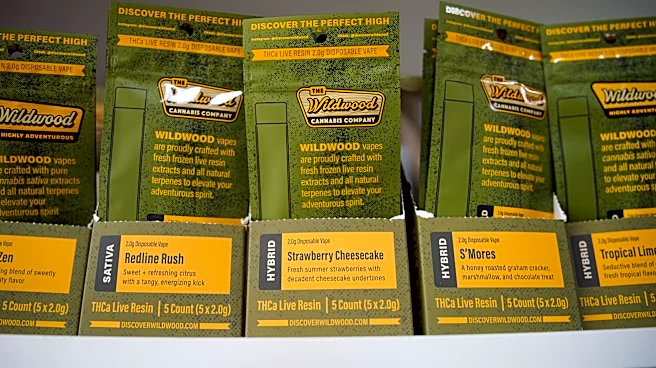
- THCA flower
- Other synthetic hemp-derived THC variants
What's still legal?
Not all THC products disappear.
Products containing delta-9 THC remain legal as long as they contain no more than 0.3% THC by dry weight, the federal definition of hemp established under the 2018 Farm Bill.
That means Texans can still legally purchase qualifying:
- Delta-9 gummies and other edibles
- Delta-9 beverages
- Delta-9 tinctures
A separate statewide ban on smokable hemp products remains tied up in court,
so qualifying delta-9 hemp flower also remains available for now.
Why are the rules changing?
The restrictions stem from a Texas Supreme Court decision that lifted an injunction blocking enforcement of a 2021 rule from the Texas Department of State Health Services.
That rule classifies synthetic hemp-derived THC products as Schedule I controlled substances, ending several years during which retailers continued selling products such as delta-8 and delta-10.
What are the penalties?
Possessing banned THC products could be prosecuted as a state jail felony, which carries penalties ranging from 180 days to two years in jail and fines of up to $10,000.
Businesses caught selling prohibited products could also face steep fines, lose their hemp licenses and face criminal charges.
What are delta-8 and THCa?
Delta-8 and THCa, or tetrahydrocannabinolic acid, are both products incredibly similar to the standard THC product that is illegal in Texas.
Both have a slightly different chemical structure than the standard delta-9, which is found in marijuana. The only difference between delta-8 and delta-9 is that the location of a double chemical bond occurs on the eighth carbon atom versus the ninth.
Is weed ever legal in Texas?
Traditional cannabis is illegal in Texas for recreational use under state and federal law. The state does have a limited medical marijuana program, but access is restricted.
For years, however, hemp-derived THC products created a legal gray area after the 2018 Farm Bill legalized hemp containing no more than 0.3% delta-9 THC by dry weight. Retailers began selling products such as delta-8 and THCA flower, which can produce intoxicating effects similar to cannabis.
That changed on July 31.
Under a Texas Supreme Court ruling that allows the state to enforce a 2021 rule from the Texas Department of State Health Services, most hemp-derived THC products — including delta-8, delta-10, THCA flower and other synthetic THC variants — are now classified as Schedule I controlled substances and are no longer legal to possess or sell in Texas.
The biggest exception is hemp-derived delta-9 THC products that contain no more than 0.3% delta-9 THC by dry weight. Those products, including many gummies, drinks and tinctures, remain legal.
THCA flower has drawn particular attention because it isn't intoxicating in its raw form. But when heated by smoking or vaping, it converts into delta-9 THC — the same intoxicating compound found in marijuana. Regulators have argued that conversion makes it effectively the same as cannabis, leading to its inclusion in the new ban.
How to get a medical marijuana prescription in Texas
Texas allows medical use of low-THC cannabis through the state’s Compassionate Use Program. It is not a traditional “medical marijuana card” system, according to the state government website. Instead, qualified doctors enter prescriptions directly into a state registry.
Under the program, patients may be prescribed low-THC cannabis made from Cannabis sativa L. The product must contain no more than 0.5% THC by weight.
It cannot be smoked. It is limited to oral use, such as oils, tinctures or capsules, depending on what a physician prescribes.
By law, the program is limited to patients diagnosed with:
- Epilepsy or seizure disorders
- Multiple sclerosis or spasticity
- Amyotrophic lateral sclerosis (ALS)
- Autism
- Terminal cancer
- An incurable neurodegenerative disease
There is no age limit. Patients under 18 may need a legal guardian involved in the process.
To access the program, a patient must:
- Be a permanent Texas resident
- Have a qualifying medical condition
- Be evaluated by a physician registered with the Compassionate Use Program
- Receive a prescription if the doctor determines the benefits outweigh the risks
If approved, the physician enters the prescription into the Compassionate Use Registry of Texas. Once a prescription is entered into CURT, the patient or guardian can go to a licensed dispensary to have it filled.
They will need to provide:
- A valid ID
- The patient’s last name
- Date of birth
- The last five digits of the patient’s Social Security number
Brandi D. Addison covers weather across the nation as the Weather Connect reporter for the USA TODAY Network and contributes to Texas Connect coverage across the state. She can be reached at baddison@usatodayco.com. Follow her on Facebook here.
This article originally appeared on USA TODAY: New THC rules take effect in Texas. What’s legal, what’s banned?