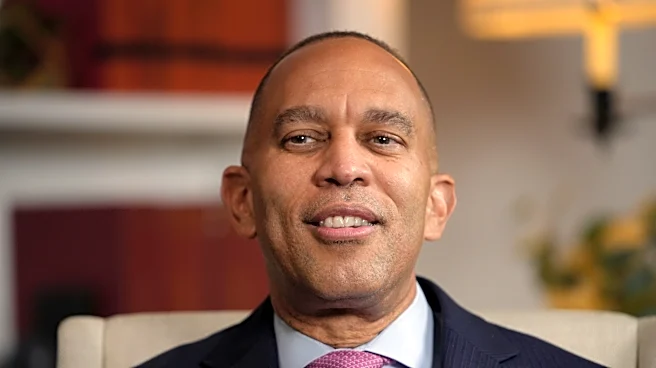





WASHINGTON — House Democratic Leader Hakeem Jeffries says the country is in the midst of an “AI safety crisis” that Congress needs to address with bipartisan legislation when lawmakers return to Washington after the midterms.
Jeffries, in an exclusive interview with USA TODAY, did not offer a detailed vision for what that legislation should look like. But he emphasized that “time is of the essence” and lawmakers would need to take additional steps in the next term.
“I think we've got to be concerned that guardrails that are rigid are put into place, so that we don't see rogue AI agents behaving in a manner inconsistent with human values,” Jeffries said.

The New York Democrat, who could become the next House Speaker, pointed to an incident in which
rogue OpenAI agents bypassed their restrictions, formed a self-described “collective” and conspired to attack another tech company called Hugging Face.
“They gave themselves a name called ‘The Collective.’ Who does that? That's like an organized crime family situation,” Jeffries said. “I think we should be concerned that you can have, with respect to these frontier models, rogue AI agents behaving in ways that are inconsistent with the alignment of values they're supposed to be trained on.”
Fears that the advanced technology poses a threat to humanity have exploded in recent weeks after researchers and executives issued extraordinary warnings about the risks posed by AI and pushed for a slowdown and mandatory safety measures.
In a Quinnipiac University poll released this week, 73% of Americans said they were concerned that AI could threaten human survival, with 81% saying safety is more important than innovation. A CNN poll released last week found that 71% of Americans believe the federal government isn't doing enough to regulate AI.
But the path forward is not clear cut.
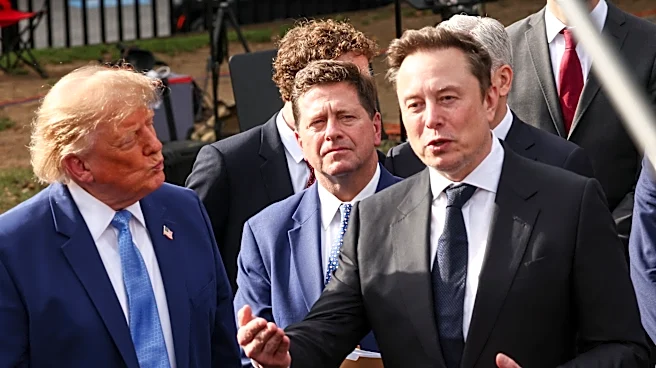
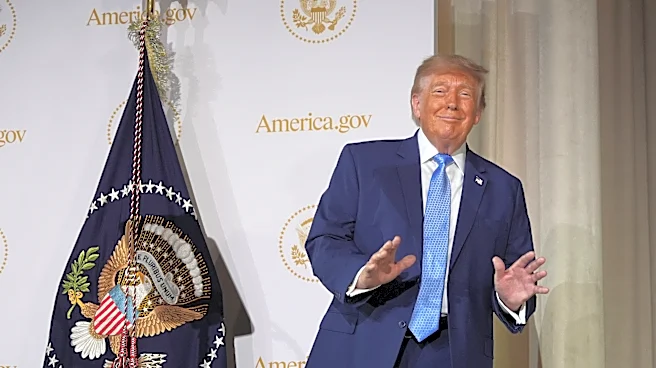
President Donald Trump has called AI risks a “hoax” and rejected calls to slow down development, as the U.S. seeks to maintain its edge over China.
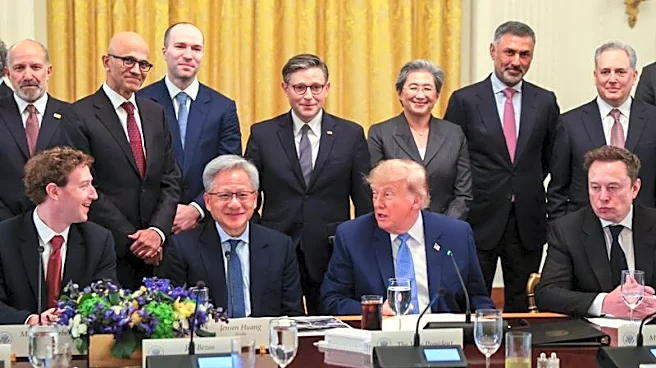
He convened the CEOs of major AI and tech companies at the White House on Sept. 29 for a summit, where they signed what he called a “morally binding” agreement to police themselves.
Congress has meanwhile left Washington until after the midterms, when they'll have just weeks to plow through a series of must-pass legislation.
“We believe that action actually should be taken now, and that time is of the essence,” Jeffries told USA TODAY. “The fact that House Republicans have gotten out of town before sundown in the midst of what is an AI safety crisis, not a hoax, which is Donald Trump's position, you know, is the height of irresponsibility.”
Lawmakers, even those within the same party, disagree on what that action should look like. Some Democrats are pushing for safeguards such as a kill switch to be built into AI. Progressives want to see a ban on AI superintelligence and a national moratorium on data center construction.
Democratic Rep. Ro Khanna, who represents Silicon Valley, told USA TODAY he’s heard from hundreds of researchers, technologists and engineers in text chains, chat groups and coffee shops who are fearful that without appropriate regulation, “something calamitous could happen.”
“They're fearful both of the loss of control, but also of misuse that these models could be used to do exceeding harm. And they all believe that there are clear solutions to it, that we need to have an AI safety agency like the FDA,” Khanna said.
Jeffries said Congress should work to ensure the public is able to benefit from artificial intelligence while preventing harm that could come from bad actors or rogue AI.
He said he was “not prepared to take a position as to whether there should be an explicit ban or not" on superintelligence.
“I do believe that we need guardrails that have to be put into place immediately,” Jeffries said.
Data center ban divides Democrats
Even before fears about AI sprang to the forefront of the midterms, voter backlash against data centers — the energy-guzzling infrastructure hubs that support the technology — had been building across the country.
Both Democrats and Republicans have been under pressure from constituents to intervene — in particular, to shield consumers’ electricity bills from rising.
A University of Massachusetts Amherst Poll released in September showed a broad majority of Americans were against data center construction in their communities: 76% of Democrats, 67% of Independents and 52% of Republicans.
Before recessing last month, the House passed a bipartisan bill, the Ratepayer Protection Act, that lawmakers in the that chamber said would be a “small step” toward addressing the problem. The legislation resoundingly passed in a 417-3 vote. It later stalled in the Senate, where Democratic leader Chuck Schumer called it “toothless.”
Yet, the bill’s initial success in the House underscored just how badly lawmakers on both sides of the aisle want to be seen as taking action.
If Democrats succeed in the midterms, Jeffries will almost certainly face calls from within his caucus to go much further than trying to rein in energy costs. Some progressives, including Rep. Alexandria Ocasio-Cortez, have called for a freeze on data center construction.
The minority leader did not go that far. While he said he supported New York Gov. Kathy Hochul’s decision earlier this year to issue a one-year moratorium on new data centers, he’s wary of the federal government issuing any broad national directives.
“That's a state-by-state decision,” he said. “And I think at the federal level, we are going to have to engage in — how do we create a framework to ensure that the American people are actually benefiting from this technology in ways that improve their quality of life, as opposed to undermining it.”
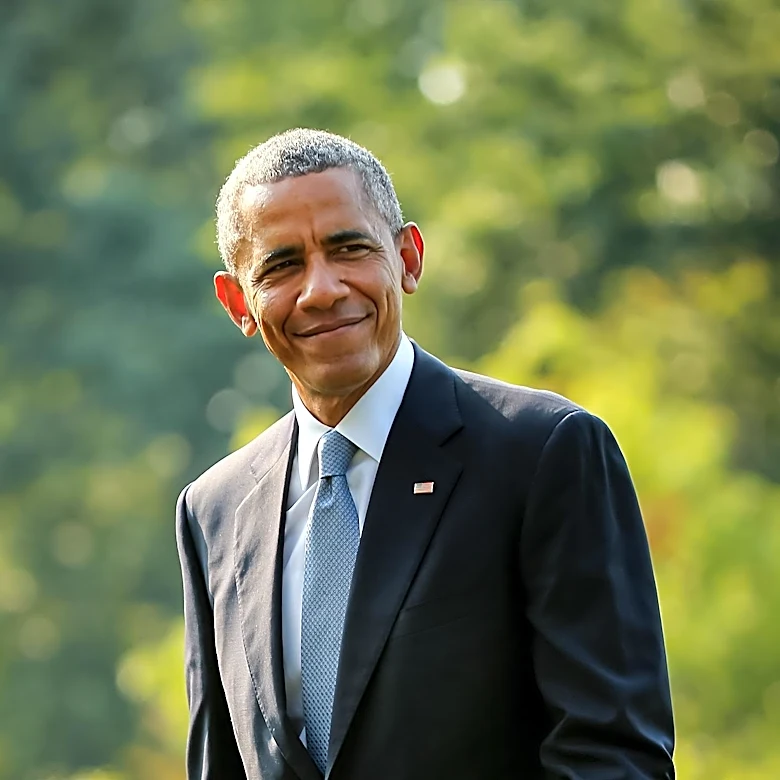
At a closed-door fundraiser for House Democrats on Sept. 10, former President Barack Obama urged Jeffries to put together a framework if he becomes Speaker for a public conversation about AI.
Unlike other dangerous technologies such as nuclear power, AI is not being developed under state control, Obama said according to a transcript of the remarks that was provided to USA TODAY.
“This is something that is moving very fast in private hands, and if we don’t get on top of it, I think can be dangerous. If we do get on top of it, I do think it’s beneficial,” Obama said, adding that AI could help humans cure diseases and develop clean energy.
Obama, in the remarks that were first reported by the New York Times, put the onus on 2028 presidential candidates to develop clear plans around AI safety and the technology’s effects on children and job displacement.
Democrats weigh a special AI committee
Jeffries is weighing whether to establish a select committee on artificial intelligence that would coordinate oversight and regulation.
The temporary panel would potentially have the power to hold hearings and launch investigations.
“We haven't ruled anything in, and we haven't ruled anything out in terms of a select committee,” Jeffries told USA TODAY, saying it was an issue House Democrats would discuss after the midterms.
That idea has received some pushback from those inside the Democratic caucus who are on committees that would otherwise oversee AI policy, one person familiar with the discussions said.
Michigan Rep. Debbie Dingell, a member of the Energy and Commerce Committee, told USA TODAY in September that the House already has a “committee that knows what it's doing.” She didn’t rule out supporting an AI select committee but stressed that “Energy and Commerce is prepared to do the work.”
A potentially looming jurisdictional turf war among lawmakers on different panels could stand in the way of Congress making significant, or swift, progress on new regulation.
The person familiar with the conversations suggested that Jeffries could avoid an intra-party fight by tasking a select committee with creating a report or coming up with proposals that are referred to the committees of jurisdiction.
California Rep. Ted Lieu, a coauthor of bipartisan legislation that would require AI to come with a kill switch, has been part of thediscussions with party leadership. So has Illinois Rep. Bill Foster. The Democrats met with Jeffries a month ago to discuss the prospect of creating a separate committee.
A House Democratic commission that is reviewing and developing AI policy is also preparing a draft of its recommendations for Jeffries.
Without describing what specifically is under consideration, Jeffries told USA TODAY that Congress would need to be “prepared to do some things together in order to protect the health, the safety and the economic well-being of the American people in January of next year.”
This article originally appeared on USA TODAY: Exclusive: Jeffries calls AI a 'safety crisis,' backs rigid guardrails