


A rediscovered draft of one of the most famous speeches of the 20th century will soon be displayed to the public before being sold.
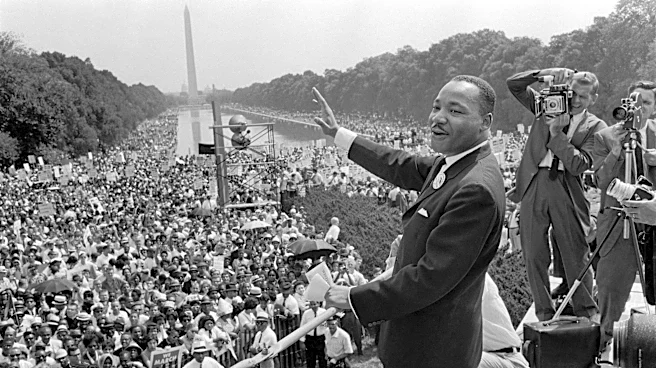
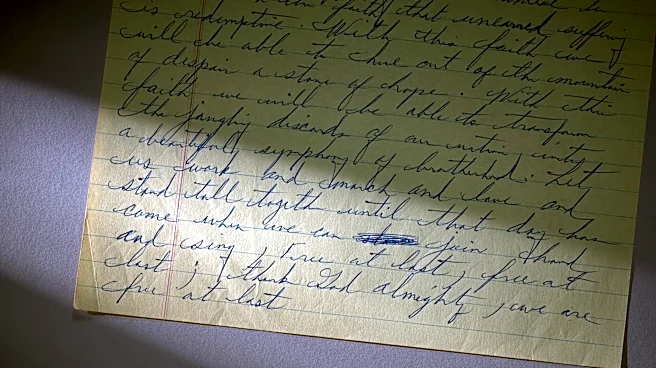
The handwritten draft of a speech delivered by Martin Luther King Jr. on Aug. 28, 1963 was rediscovered in 2024 and notably does not contain the words that have defined the speech's legacy: "I Have a Dream." King hadn't planned to say the famous refrain that punctuated the second part of the speech, which was largely improvised.
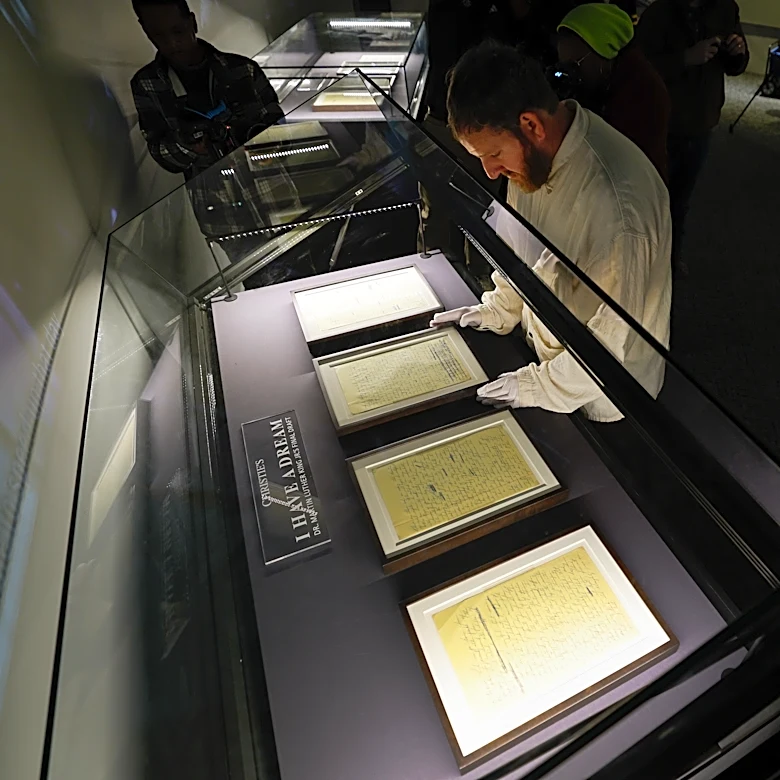
The draft on yellow legal pad pages shows words written and scratched out in blue ballpoint pen by King. It offers a glimpse into the thought process of one of the greatest orators our country has ever known.
Christie's, which specializes in fine art, luxury and collectible items, will auction
off the seven-page draft on Jan. 22. But before that, the pages will be on public display: From Nov. 16-22 at the National Center for Civil and Human Rights in Atlanta, at a still-to-be-determined site in Chicago and, from Jan. 15 (King's birthday) until Jan. 21, at Christie's headquarters at 20 Rockefeller Plaza in New York.

One historic speech, two themes
King spent hours preparing for his speech at the Lincoln Memorial in a Washington hotel, not finishing the draft until 4 a.m. on Aug. 28. Speakers were limited to five minutes each, and King tried to keep that in mind as he wrote his own speech, even as advisers told him he could go beyond the time limit.
"While King understood this would be an important speech, his primary concern was that no one would show up [for the March on Washington] and it would be a failure," said Peter Klarnet, a manuscript specialist with Christie's.
King had two themes for the speech in mind, drawing on sermons he'd given previously. But with just five minutes of time to speak, he thought he'd have to choose just one. The speech was initially titled "Normalcy, Never Again," and centered around the idea of our nation's Founding Fathers offering a freedom as a promissory note, one that Black Americans wanted to redeem.
"When the architects of our great republic wrote the magnificent words of the Constitution and the Declaration of Independence, they were signing a promissory note to which every American was to fall heir," King said in the speech.
"It is obvious today that America has defaulted on this promissory note insofar as her citizens of color are concerned. Instead of honoring this sacred obligation, America has given its colored people a bad check, a check that has come back marked 'insufficient funds.'"

King, Klarnet said, got through most of the speech and knew he had the crowd enthralled. He decided to keep speaking, and drew on ideas he'd already expressed in sermons: his dreams for the future ‒ not just his own, but his children's and grandchildren's future. A skilled extemporaneous speaker, King kept going, finishing with words that were in his final draft, and would go down in history: “Free at last, free at last; thank God almighty, we are free at last.”
Papers found, put away, found again
One of King's advisors, Edward T. Clayton, a journalist and author, had the draft among his papers.
Clayton, head of public relations with the Southern Christian Leadership Conference and a speechwriter and editor who worked closely with King, died in 1966. His wife, Xernona Clayton, a civil rights activist and broadcast executive, discovered the papers in a desk drawer in the 1990s in an envelope marked "speech." Clayton is currently the owner of the draft.

Her husband "liked to hold on to things," she said according to a Christie's news release, so she wasn't surprised to find the papers, and though she knew they were connected to King and had some historical significance, she didn't realize they were the only final draft of the speech. She put them away again.
In 2024, Clayton rediscovered the papers, telling Christie's, "I’m just glad I looked in the drawer."
She recalled her husband's work with King on his speeches: "The two of them gelled with writing and words. They would go back and forth and there was such respect. Dr. King said Ed was so good at getting his words on paper and putting them in the right place at the right time."
The draft is expected to generate $10 million or more, Klarnet said, likely from a private collector. A portion of the proceeds will benefit the Martin Luther King, Jr. Center For Nonviolent Social Change.
Phaedra Trethan is a national correspondent for USA TODAY, writing about history and Americana. Contact her by email at ptrethan@usatoday.com, on X @wordsbyphaedra, on BlueSky @byphaedra, or on Threads @by_phaedra.
This article originally appeared on USA TODAY: Rediscovered draft of famous Martin Luther King Jr. speech to be sold