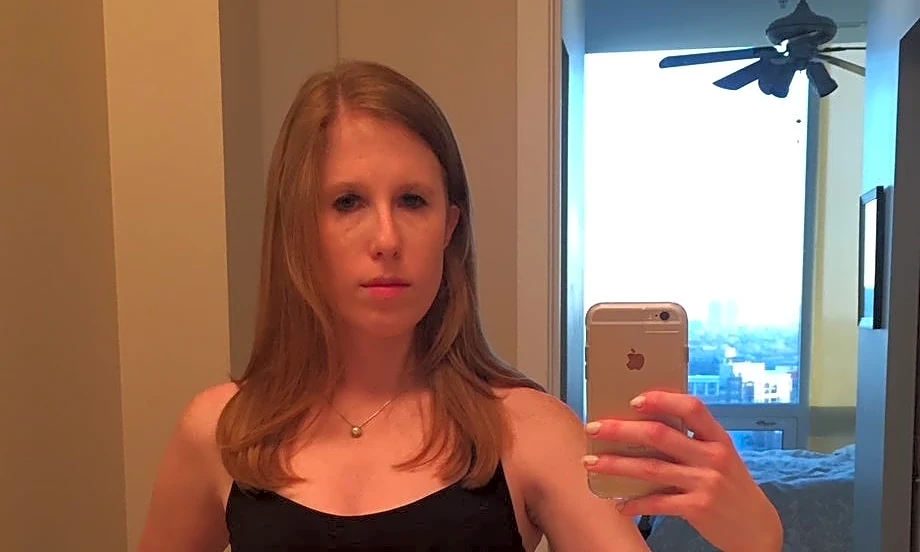









After a week of suffering, Nicole Leon took herself to the emergency room.
She was sure it was food poisoning. The then 32-year-old said everything in her stomach had been "coming out of both ends" for several days. Doctors suggested that if it wasn't food poisoning, maybe it was an ectopic pregnancy. Leon knew she wasn't pregnant, but her doctors insisted on a CT scan of her abdomen.
The results showed no ectopic pregnancy. But it wasn't food poisoning that was making Leon sick, either. It was a 17-centimeter tumor on her liver.
A slew of doctor's appointments, scans and tests later, doctors told Leon that she had liver cancer, despite being otherwise very healthy, with no liver disease or other underlying liver issues. They gave her six months
to live.
"When she said that, it was almost like an out-of-body experience where I felt like I was floating," Leon said, adding that her mom was with her when she found out her prognosis. "It almost felt like my world had just collapsed in front of me."
Leon went from being perfectly healthy, exercising six days a week, to figuring out her own funeral arrangements. "I was in complete shock," she said. But she never fully accepted "six months to live" as her fate.

"Immediately after that, I thought, 'How could this possibly be true?' I need another opinion," she said.
Leon's story is rare, her doctor told USA TODAY. Dr. Talia Baker, a liver transplant and hepatobiliary surgeon, doesn't think the average, healthy 30-something should be worried about liver cancer if they don't have a sick or scarred liver already. "In someone like Nicole's case, I don't think there was anything that she did, didn't do, could have done to have caught this earlier," Baker said, adding that liver cancer can go undetected for years. But something everyone can learn from Leon, Baker said, is how to advocate for yourself when it comes to your health. A positive attitude isn't going to cure cancer, Leon said − but patients should know their options and "shouldn't be afraid to speak up."

"I think everybody should be empowered to go get a second opinion," Baker said, adding that multidisciplinary medical teams are key. "A team with people who have different superpowers that they can bring to the table will often have a much more positive, optimistic outcome than if you just go to a single discipline."
'This one surgeon saved my life'
Leon took her initial diagnosis and prognosis across the country to three different medical centers, seeking different opinions. "Each place told me something different," she said, but most agreed that the mass on her liver was too large to remove via surgery.
Leon wasn't afraid of the riskier treatment options, she said, because she was so young. "What else did I have to lose?" She'd already been told she wouldn't see her 33rd birthday.
"I was going to keep seeking answers until I got the one that I thought was best for me," she said. "I had to advocate for myself. I had to ask questions. I had to understand the facts behind the tumor, the science behind my tumor, my specific treatment options and really weigh those options and figure out what was best for me."
Ultimately Leon underwent TheraSphere Y-90 radiation treatment at Northwestern University to shrink her tumor down to an operable size. Then, four months after Leon's emergency room visit, Baker went in and removed the mass.
"It was extremely risky because she didn't know if she'd be able to remove it," Leon said. But when she woke up the next day, she was told the entire tumor had been removed. "This one surgeon saved my life. And now I am almost 10 years cancer-free."

A journey to motherhood after cancer treatment
Once she was cancer-free, Leon started to focus on what mattered most: her family.
Her parents and sister had been extremely supportive during her cancer journey, she said, and her boyfriend at the time came with her for every single doctor's appointment.
Leon said she had sat down with her then boyfriend shortly after she was diagnosed, and told him she would understand if it was all too much to bear. "I didn't know if I'd be able to get married one day, to have kids one day, and to really give him a family, which is what we talked about," she said. "I told him it would be OK if he left."
He told her he didn't care if they had six months together, six years or 60 years, she said. "He wanted to be with me forever."

"He never left my side after that, ever," she said. "And a couple months after my surgery, when I was cancer-free, he proposed and we got married. And we also have two beautiful boys now."
Those babies were miracles, too. "My doctors didn't know if I'd be able to have kids," she said. "They didn't know if it would be smart to have kids." Her medical team monitored her closely during her pregnancies, since her tumor had been estrogen positive and pregnancy hormones carried risk of bringing the tumor back.
When she did give birth to her first child, who is 7 now, Leon and her husband wanted to honor the surgeon who had saved her life. They named their son Baker. Dr. Baker said she remembers when Leon and her family brought baby Baker to the clinic to meet her, at about three weeks old.

"I have three children of my own," Baker said. "And I have a ton of nieces and nephews, but that was, I mean, when you think about what a privilege it is to participate in people's journeys like this, it was pretty humbling and pretty wonderful."
Madeline Mitchell's role covering women and the caregiving economy at USA TODAY is supported by a partnership with Pivotal and Journalism Funding Partners. Funders do not provide editorial input.
Reach Madeline at memitchell@usatoday.com and @maddiemitch_ on X.
This article originally appeared on USA TODAY: She went to the ER for food poisoning. She was given 6 months to live