



Greg Bovino has been waiting nine months for this.
The former Border Patrol commander became the swaggering face of President Donald Trump’s street-level immigration sweeps, leading agents through Los Angeles, Chicago and, finally, Minneapolis, where the killing of two U.S. citizens by federal officers in January sparked national outcry, set off a political storm and ended his time in the field. He retired in March, convinced that the administration had lost its nerve.
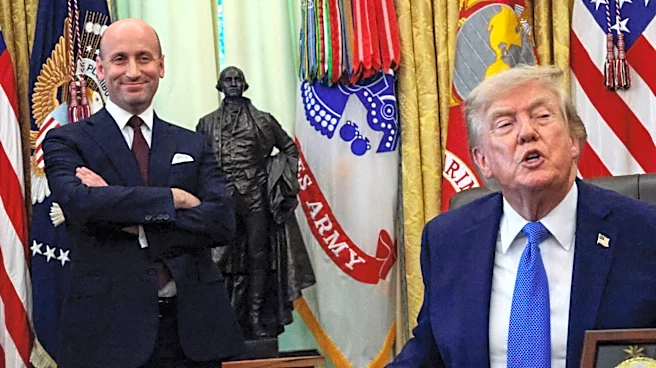
So when Trump announced Nov. 6 that Stephen Miller, then the White House's deputy chief of staff for policy and homeland security adviser, would become his new chief of staff, Bovino saw a correction – and vindication.
"I think President Trump finally realizes he got duped, and he brought
in the individual who was actually telling him the truth the whole time," Bovino said in an interview with USA TODAY.
Not all politicians in Washington share that view. Miller’s promotion came three days after an election in which Democrats won control of both chambers of Congress, and in which nearly 6 in 10 voters told exit pollsters the administration’s immigration enforcement had gone too far. Some Republican lawmakers have blamed Miller, who designed and directed much of that enforcement, for turning what had been one of the party’s strongest issues into a liability.
"Horrible decision," Rep. Marlin Stutzman of Indiana, one of several Republicans who had called for Miller’s firing in the days after the vote, told USA TODAY.
To Democrats, business leaders and immigrant advocates, the pick was proof that Trump intended to double down.
Sen. Alex Padilla of California, who in a statement called Miller the architect of "the cruelest immigration policies this country has seen in modern times," promised Democrats would answer with subpoenas and investigations once they take power in January.

The Department of Homeland Security did not respond to USA TODAY's request for comment. In a statement, White House spokeswoman Taylor Rogers defended the choice, crediting Miller with helping to deliver "the most secure border in history," as well as a record drop in fentanyl overdoses and crime and a new Homeland Security Task Force that she said has "decimated dangerous cartels."
"Stephen Miller’s dedication to making our country safer and wealthier will be even better suited to his new role as Chief of Staff," Rogers added.
Miller’s elevation has sharpened a dispute over immigration that has divided Republicans for much of the year. On one side are those who believe the administration’s aggressive mass deportation campaign, which has swept up tens of thousands of people with no criminal record, immigrants with pending cases and U.S. citizens, cost them the votes of Latinos and independents who had backed Trump in 2024. On the other are hard-liners like Bovino, who argue the party lost because it retreated after Minneapolis, trading highly visible raids for a quieter approach that left its most committed voters feeling betrayed.
"This was not a mandate for the Democrats," Bovino said. "This was a mandate for the feckless Republicans in the Republican Party. When you hear a politician or some special interest saying that immigration went too far, actually, it’s the opposite of what they’re saying. It’s the surrender in Minnesota, which Stephen Miller and many of us did not want."
How that argument is settled will shape the final two years of Trump’s presidency, and the lives of millions of immigrants living in the country.
For now, the president appears to be standing in both camps. In an interview with "60 Minutes" that aired Nov. 8, Trump said his deportations "might be too tough" and suggested he could reach a deal with Democrats for immigrants who have lived in the country for years. The next day, following a torrent of criticism from conservative influencers, the House Freedom Caucus and the Heritage Foundation, he told reporters there would be no amnesty.
Miller, 41, has given no sign that he intends to change course. Appearing alongside Trump on the day of the announcement, he praised the president for having "saved our border from annihilation" and pledging "absolute loyalty" to him.
He has spent much of his career working to defeat precisely the kind of compromise the president described, according to interviews with lawmakers and current and former administration officials. In 2018, the last time Trump appeared ready to strike an immigration deal with Democrats, the talks collapsed after a White House meeting that lawmakers in both parties blamed on Miller. Now he decides who gets in the room.
The architect
Allies and critics alike describe Miller as the most influential force behind Trump’s immigration policy for the better part of a decade. His views, they say, have barely moved.
"The one thing about Stephen is that it’s a constant," Mick Mulvaney, who supervised Miller as Trump’s acting chief of staff during the first term, said in an interview with Bill O’Reilly earlier this year. "Stephen was just as adamant and militant about this in the first term."
As a teenager in liberal Santa Monica, California, Miller railed against Spanish-language announcements at his high school. Jean Guerrero, whose 2020 biography "Hatemonger" traces Miller's rise, describes a young man drawn early to provocation and conservative talk radio. As an aide to Sen. Jeff Sessions of Alabama, he helped defeat the 2013 bipartisan bill that would have offered millions of undocumented immigrants a path to citizenship. In Trump’s first term, he drove the travel ban on several predominantly Muslim countries and the "zero tolerance" policy that separated thousands of migrant children from their parents.
What changed in the second term was his reach. As deputy chief of staff for policy and homeland security adviser, Miller drafted the executive orders Trump signed on his first day back in office, including one to end birthright citizenship. The administration suspended refugee admissions and later capped them at the lowest level in the program’s history, deported Venezuelan men to a prison in El Salvador under a rarely used wartime law and sent troops into American cities.
Miller, who was described as "obsessively hands-on" by a former Department of Homeland Security official, also reached directly into the machinery of enforcement. Miller set a goal of 3,000 immigration arrests a day and stayed in close contact with the commanders charged with meeting it, Bovino said.
"He wants results," Bovino said. "He doesn’t want rhetoric."
Miller had long argued that arrests alone could never achieve the scale of deportations Trump promised, Bovino said. The answer was what Bovino called "total spectrum immigration enforcement," a campaign to make life so hard for immigrants that they would leave on their own.
"That’s where Stephen Miller and the U.S. Border Patrol saw eye to eye," Bovino said. The idea was to squeeze every part of daily life, he said, until it became "too hard for them to work, live, play, procreate, or do anything else here in our country."

The operations that swept through American cities under then-Homeland Security Secretary Kristi Noem beginning in the summer of 2025 were the first test, Bovino said. Border Patrol agents moved through Los Angeles, Chicago, Charlotte and New Orleans in convoys, making arrests in parking lots and on sidewalks as cameras recorded them. The spectacle was intentional, Bovino said. The raids were meant to be seen – and to be feared.
"That visibility encourages self-deportations. That’s where we win this thing," Bovino said.
But not everyone in the Trump administration shared that vision, he said. A faction of senior officials, including former chief of staff Susie Wiles, the border czar Tom Homan and Rodney Scott, the commissioner of Customs and Border Protection, came to see the raids as a political liability and worked to rein them in, according to Bovino, who referred to them as "the gatekeepers."
The killings in Minneapolis gave that faction the upper hand, Bovino said. In January, federal agents shot and killed two U.S. citizens, Renee Good and Alex Pretti, during an immigration surge in the city. Miller’s description of Pretti as a would-be assassin and "domestic terrorist" drew condemnation from Democrats and Republicans alike. Trump told advisers he was uncomfortable with how far Miller had pushed "on some fronts," The Wall Street Journal reported, and Bovino believes the officials who had long opposed the operations seized on the deaths to end them.
"They used those casualties for their own machinations," he said.
Within weeks, the most visible figures of the crackdown had been pushed aside. Bovino was reassigned to California and retired in March – a removal engineered by "the gatekeepers," he said. Trump fired Noem that same month and replaced her with Sen. Markwayne Mullin of Oklahoma, while Miller, who for more than a year had been the crackdown’s most combative public defender, largely receded from view.
Enforcement continued under Mullin and Homan. But the convoys gave way to arrests carried out with far less fanfare, many of them by a growing number of local police officers deputized through what are known as 287(g) agreements. Still, DHS has touted record numbers of arrests over the last months.
For Bovino, the absence of spectacle is itself the failure.
"That’s what you call the softer approach, the cowardice approach," he said.
Rogers, the White House spokeswoman, said Miller had worked alongside Homan and Mullin to carry out "President Trump's America First immigration policies," calling him "an instrumental player." Her statement did not address Bovino’s account of his removal or his criticism of how enforcement has changed since Minneapolis.
What comes next
For a brief moment after the election, it seemed that compromise on immigration, which has eluded Washington for decades, might finally be within reach.
On "60 Minutes," Trump said immigrants who had lived in the country for a decade or more deserved a chance to "work a deal." The next morning, Mullin said he would be open to permanent legal status for young immigrants protected under the Deferred Action for Childhood Arrivals program, and that the president had encouraged him to talk with Democrats, POLITICO reported. Rep. María Elvira Salazar of Florida, a Republican who has spent years pushing a bill to legalize longtime undocumented immigrants, said Trump had described its very core.
The backlash from the right was swift. "NO AMNESTY GARBAGE UNDER ANY OTHER NAME," the House Freedom Caucus posted on social media. More outcry followed from the online right wing. By the afternoon of Nov. 9, both Mullin and Trump were promising there would be no amnesty.
Miller had already signaled where he stood. On a call with national security officials the day after the election, he pressed ahead with the enforcement agenda and made no mention of the party’s losses, according to an official familiar with the call, which The New York Times first reported.
For Mullin, the retreat was a familiar one. He had been overruled by the president over the summer, after suspending most ICE vehicle stops following two fatal shootings. In September, guidance directing some ICE officers to focus on immigrants with criminal records was rescinded within hours, after an outcry from hawks and a phone call from Trump to Fox News insisting the agency would continue arresting anyone in the country illegally.
A former DHS official, speaking on the condition of anonymity to discuss internal matters, said Mullin and Miller had clashed over enforcement.
In public, Mullin called Miller’s promotion "an excellent choice," and Defense Secretary Pete Hegseth praised him as a fighter who "never backs down."
The pressure from the other direction has been just as strong. About 58% of voters said enforcement had gone too far, according to NBC News exit polling, though Republicans kept a narrow edge as the party voters trusted on immigration.
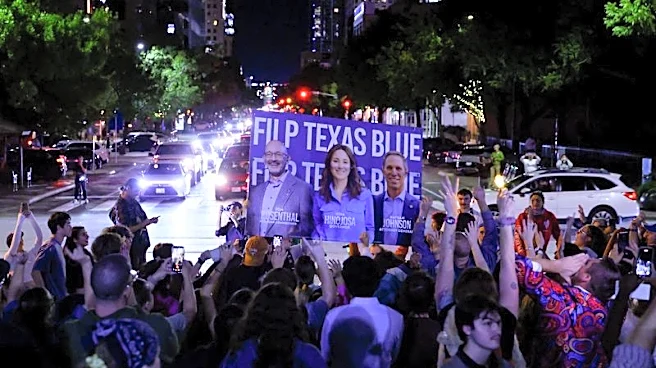
One of the sharpest breaks came among Latino voters. Republican House candidates won about a third of their votes this year, down from the 46% who backed Trump in 2024, according to NBC News exit polls. In Texas, where Democrats swept every statewide race, Stephanie Valencia, a co-founder of the Latino research firm Equis, attributed the swing in part to "immigration overreach and a set of broken promises from Republicans."
Those promises, she said, centered on deporting dangerous criminals. Yet about 70% of the people now held in ICE detention have no criminal conviction, according to Syracuse University’s Transactional Records Access Clearinghouse data.
Employers who depend on immigrant labor, many of them once Trump supporters, have joined immigrant advocates in denouncing the pick.
"Stephen Miller lost the Hispanic vote. He lost Texas," said Rebecca Shi, CEO of the American Business Immigration Coalition. "Trump is a businessman and fires people who underperform so this is senseless. Time will tell if Stephen Miller continues to wreck the economy, destroy families, tarnish the republican political coalition and obliterate Trump’s legacy."
Kica Matos, president of the National Immigration Law Center, said voters had made clear the administration’s agenda "is exactly the opposite of what they want."
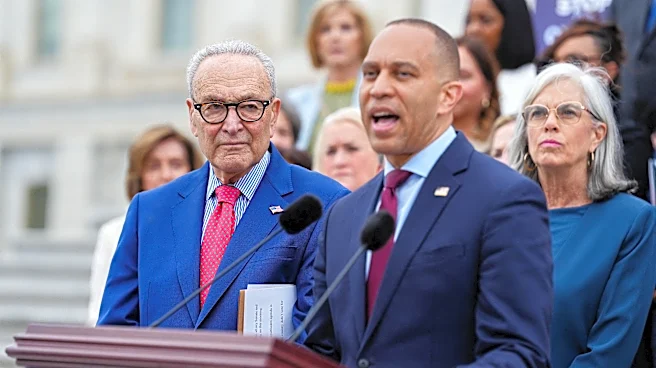
Democrats, who take control of both chambers in January, have shown little appetite for negotiating with Miller. House Democratic leader Hakeem Jeffries, the likely next speaker, said Nov. 9 that he had "zero interest" in working with him, and others have promised investigations and subpoenas. Marjorie Taylor Greene, the former Georgia congresswoman and onetime Trump ally turned critic, predicted the scrutiny would only drive Miller harder.
Miller "was kind of already running the White House in so many ways, so you can expect more of the same from the White House that you were probably already pissed off and frustrated about," Greene said in a video posted to X. "Only this time he’s going to go into a hyper, hyper mode because they’re about to get investigated in every way possible by the Democrats who are going to control the all powerful House and Senate committees."
Bovino is counting on it. Immigration enforcement is federal law, he said, and no Democratic Congress can stop it. Nor does he expect Miller to be deterred by subpoenas. He said he would return to the Border Patrol in a heartbeat if asked, and that he would not come back to a gentler version of the job.
"If you thought it was hard last time," he said, "what you saw before was child’s play."
This article originally appeared on USA TODAY: Stephen Miller’s promotion divides GOP over how hard to go on immigration