
Recently, I wrote about how mastering "crosswordese," the language familiar to puzzle creators and fans, can make you a stronger solver. And indeed, familiarizing yourself those words and phrases is key
to experiencing more aha moments while solving and eking out a speedy win. But beefing up your crossword vocabulary doesn't only mean mastering SAT words – it also means becoming an expert on all the abbreviations commonly used in puzzles, from ASAP to ZZZ.
And I have some good news and bad news for you about that.
Let's start with the bad news: There are a lot of frequently-included abbreviations (abbrs.) in crossword puzzles, covering a huge swath of categories ranging from movies to directions to job titles. But before you get overwhelmed, here's the good news: You probably know many (maybe even most!) of these abbreviations already.
After all, even people who've never picked up a crossword puzzle in their lives have most certainly seen XMAS used as a shortened version of Christmas or RIP standing in for "rest in peace," just to name a few examples. Abbreviations are a regular part of our language, and many (like FAQ or CEO) are so commonly used that they're even more familiar than their terms' full versions.
That said, crossword constructors like myself also tend to include abbreviations that aren't quite as popular (or, in some cases, are rarely used at all outside of the puzzle-sphere). If you've ever found yourself going "what the heck does that stand for?" while solving, take a look at the list below and find out.
Directions
You don't need to look at a map to know that NNE is short for north-northeast, or that SSW is short for south-southwest. Compass directions are often used in puzzles as answers to clues like "dir. from New York to Austin" (and the abbreviated form of "direction" in the clue tells you that the answer will be an abbreviation, too).
Education
Sure, you know what a PhD and B.A. are. But unless you solve a lot of crosswords, you might be less familiar with elhi (a shortened combination of elementary and high school), MEd (Master's of Education), or IEP (individualized education plan).
Text-speak
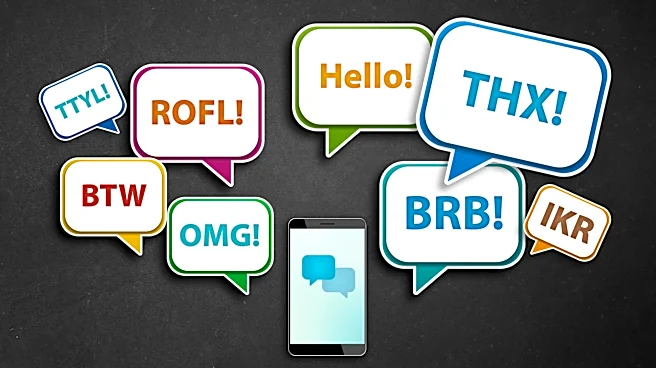
Long gone are the days when just knowing BRB and LOL was enough to make you seem text-savvy. Now, it's not uncommon to find TBH (to be honest), IMHO (in my humble opinion), FWIW (for what it's worth), OTOH (on the other hand), or even GOAT (greatest of all time) in a crossword puzzle. SMH, right?

Measurements
If you like to cook and bake, deciphering abbreviations like tbsp (tablespoon) or ozs (ounces) probably requires zero effort. But some crosswords also include more uncommon options like mgs (milligrams), as well as abbreviated measurements for distance like sqyd (square yard) or speed such as KPH (kilometers per hour).
Titles
Everyday abbreviated titles like Mrs. and Dr. are no problem for most crossword solvers. But it can be trickier to figure out that esq. means esquire (aka a lawyer) or that NCO stands for non-commissioned military officer, among other less-common examples.
Latin
No, you don't have to become an expert in Latin roots in order to improve your crossword skills. But it can be helpful to automatically know that et al is Latin for "and others," e.g. is "for example," pro tem is "for the time being," and op. cit is "in the works cited."
Rachel Simon is the PLAY writer for USA TODAY, bringing you the inside scoop behind our crosswords, games, horoscopes, and comics. Have thoughts on this story? Email her at RSimon@USAToday.com andsubscribe to our PLAY newsletter to get more content like this in your inbox every week.
This article originally appeared on USA TODAY: A guide to all those confusing crossword puzzle abbreviations