




WASHINGTON — President Donald Trump is throwing a big party to rally the GOP for the midterms, but not every candidate may be happy to get the invitation.
That's because some Republicans warn that it could backfire in battleground races.
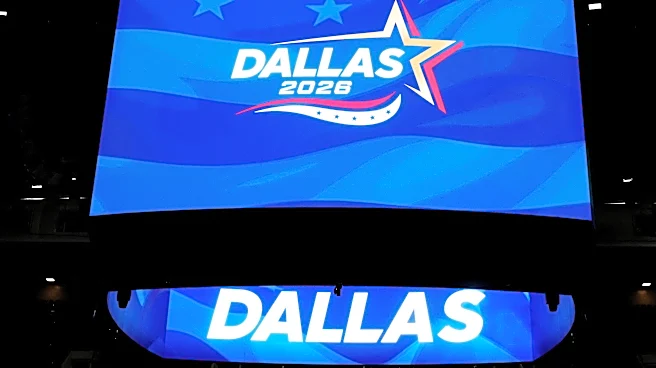
Trump took the unprecedented step this year of organizing a midterm convention, his party’s first, as he seeks to put his stamp on the election and stoke GOP enthusiasm, which has lagged behind Democrats.
Republicans will convene in a Dallas sports arena on Sept. 9 and 10 to hear speeches from Trump and Vice President JD Vance. Organizers are pitching it as an opportunity to build party unity, hone their message and reach voters who may not have tuned in. Yet some in the party say there is no upside for candidates
in close races to leave the campaign for an event in another state with a president floundering in polls ‒ and there are questions about who will attend.
“If I was in office running for re-election I would not be taking time going to Texas,” said former Michigan GOP Rep. Fred Upton. “I’d be connecting with voters. I’d have events . . . at home.”
The convention comes just after Labor Day, as the campaign season kicks off in earnest, requiring candidates to take time away from talking to voters less than two months before Election Day. Being too closely tied to Trump also could be problematic for candidates in tight races. Just four in 10 voters approve of the president in the Real Clear Politics average of recent polls.
“I can’t think of very many candidates whom it would help,” GOP strategist Charlie Black, who has worked on multiple presidential campaigns, said of a Trump-focused convention.
Two other Republican strategists, including one who worked in the current Trump administration, and a Republican member of Congress aligned with Trump questioned the value of the convention in interviews with USA TODAY. Their views ranged from seeing the gathering as pointless to potentially harmful for battleground candidates. The lawmaker said candidates will only benefit if they hold fundraisers in Dallas.

USA TODAY contacted eight GOP Senate candidates in top battleground states – North Carolina, Georgia, Michigan, Maine, Alaska, Iowa, Texas and Ohio – to ask if they are planning to be at the convention. Representatives for Michigan Senate candidate Mike Rogers and Ohio Sen. Jon Husted confirmed they are attending, but spokespeople for most of the candidates did not respond to multiple inquiries.
Republican Sen. Susan Collins of Maine was among the candidates whose representatives ‒ both from her campaign and Senate office ‒ did not respond to questions about whether she plans to attend the convention.
Collins has worked to distance herself from Trump as she seeks a sixth term representing a state that has voted Democratic in every presidential election since 1988. Collins did not attend an event Vice President JD Vance held recently in Brewer, Maine to tout the administration's efforts to combat state-level fraud.

'We're going to defy history'
Organizers say they expect a packed convention.
Republican National Committee Chair Joe Gruters said there is a "pretty full list of candidates and elected officials" attending, including nearly two thirds of GOP senators and 80 House members who already have indicated they’ll be in Dallas.
When it comes to marquee Senate races, Gruters said he’s not sure which candidates will be there, though.
“I don’t know,” he said, adding: “It’s probably a mixed bag.”
The convention will help bring the party together after a series of tough primaries and get the base motivated, Gruters said. If candidates think they’re better off skipping the event and campaigning in their districts “that’s great,” he added.
“But if you want to be part of history… we’re going to defy history and we’re going to win these midterms and this is the official start of us planting our flag in our efforts to do that,” Gruters said.
Cost is another potential factor. The National Republican Congressional Committee is asking House members to contribute a minimum of $25,000 to attend as a party fundraising effort, according to a source familiar with the plan. Gruters said that arrangement is "an internal deal they have with their caucus" but he suspects many House members won't have to pay to attend.
The RNC released aconvention program this week. Vance is speaking Sept. 9, while Trump is giving the keynote address Sept. 10. No other speakers have been officially announced, and Gruters said they may not be until the day of the event.
Instead, the program lists different topics that will be covered, such as border enforcement, tax cuts and healthcare affordability. Time is reserved each night for a “candidate showcase.”
'Continuing to hug Trump'
A relatively small number of races could decide control of the House and Senate. Republicans currently hold a 53-47 advantage in the Senate and 218-212 advantagein the House. The nonpartisan Cook Political Report rates 69 House races and 10 Senate races as competitive on some level, with the rest considered solid Republican or Democratic seats.
Upton, who served for 36 years in a Michigan swing district before opting not to seek re-election in 2022, said Republican candidates in swing seats won't benefit from attending the convention. He said they instead need to show some independence from Trump.
“Otherwise, the tidal wave will be pretty big,” said Upton, who voted to impeach Trump and later endorsed Democratic presidential candidate Kamala Harris.
Gruters said Trump can deliver the voters the GOP needs to win, and the convention will help amplify his message.
Many GOP candidates already are tightly bound to the president. They often owe their nominations, at least in part, to Trump’s endorsement and may be unwilling to risk his wrath by skipping the convention or breaking with him in other ways.
Trump's early endorsement helped propel Senate candidates in battleground states such as Iowa, Michigan and North Carolina to win their primaries, while the president came in late to help deliver the Texas Senate nomination to Attorney General Ken Paxton. Trump stayed out of the Georgia Senate primary, but the candidate who won, Rep. Mike Collins, is a strong ally of the president.

Southern Methodist University political science professor Calvin Jillson said Trump isn’t helping the GOP ticket, pointing to his low approval rating. But candidates know he is prone to lash out at those who cross him.
“So I don’t think people feel like they have much of an option other than continuing to hug Trump,” he said.
This article originally appeared on USA TODAY: Trump's having a midterm party. But it may not be a hot ticket