


His popularity is sinking, his party has lost control of Congress and the political world is turning its attention to the many prospects to succeed him.
But President Donald Trump still has plenty of power.
In the weeks since the disastrous midterm elections for the GOP, the 47th president has made it clear he could decide to escalate the war in Iran despite public opposition, to veto any bill the incoming Democratic Congress passes that doesn't incorporate his views, to defy Capitol Hill's oversight, and even to investigate the investigators.
While declaring he's open to bipartisan dealmaking, he is ready to bedevil Democrats who are now exultant over their sweeping gains in the House, Senate and governorships.
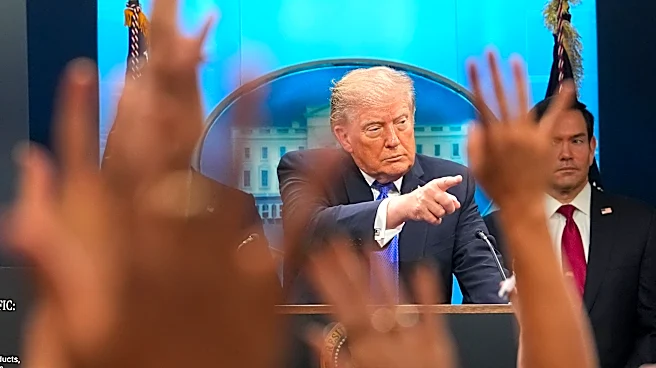
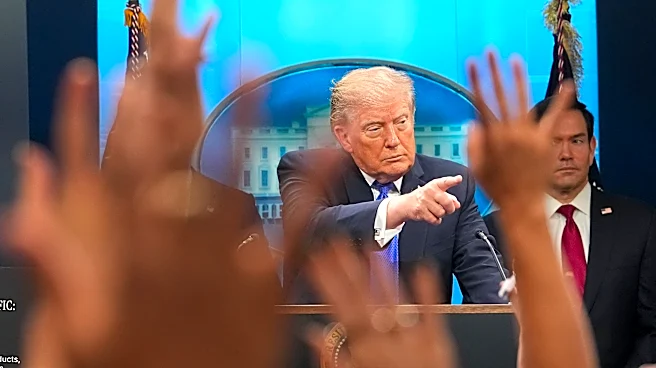
At a rambling 90-minute news conference
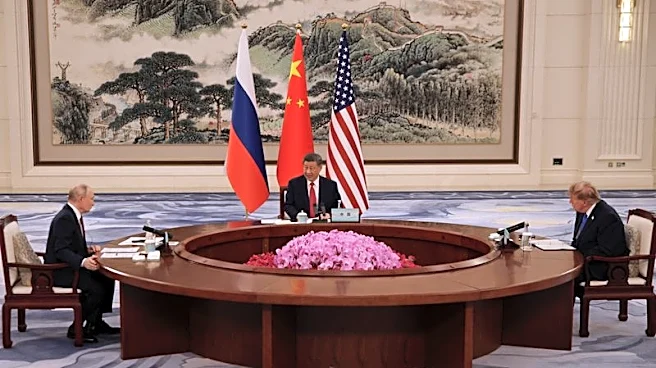
the day after he returned from a swing through Asia, Trump boasted about the glowing reception he had received abroad − including an unprecedented in-person greeting by Chinese President Xi Jinping at the Shenzhen airport − and marveled at the jam-packed room he had drawn back home in the White House briefing room.
"It's a great honor," he said of the standing-room-only crowd Nov. 20, suggesting it reflected "record turnout" by reporters.
His buoyant tone was a contrast to the rueful reaction of his predecessors after watching their parties lose congressional majorities in midterm elections. President George W. Bush in 2006 said he had gotten "a thumping" from voters. President Barack Obama described the results in 2010 as "a shellacking."
In 1994, President Bill Clinton moderated his policy agenda and overhauled his political strategy in response to a GOP takeover of Capitol Hill. Democrats, including him, had been "held accountable," he said.
But Trump's reaction this time?
"I wasn't on the ballot," he shrugged. "I hope you remember that."
In some ways, the political landscape has been transformed.
"A solid Democratic congressional majority can block judicial nominees, define the national policy agenda by passing legislation that requires Trump to sign or veto, and potentially with Republican crossovers," Bob Bauer, who was White House counsel during Obama's midterm reversal, told USA TODAY. "It can exercise its oversight and investigative functions to pressure the administration on various issues, raising the costs of actions that the White House might otherwise consider or take."
But Bauer added that there was "a significant 'yes, but,'" not only because of any president's constitutional powers but also because of Trump's willingness to ignore legal constraints and longstanding norms.
Trump has installed as his new White House chief of staff Stephen Miller, an architect of one of the administration's most combative policies, on mass deportation. While exit polls showed most voters viewed the election at least in part as a referendum on the White House, Trump didn't give ground on any issue, from his decision to invade Iran to his handling of the economy.
"No president has done what he has done over the last two years," Miller said of Trump when the president invited him to address reporters. "Under his leadership, the next two years are going to be the greatest two years in American history."
"I don't think I can top that," Trump said, smiling, when he stepped back to the podium.
Here are four of the ways he can continue to exercise far-reaching power.
Saluting the commander in chief
White House officials say Trump is considering whether to escalate the war in Iran, a conflict he initially predicted would take only weeks when it began on Feb. 28 but is now nearing the nine-month mark.
Meanwhile, congressional Democrats are debating whether to risk a government shutdown by refusing to appropriate more money for the war, a problematic step to take when U.S. troops are deployed in harm's way.
"The power of the purse is very difficult to wield in wartime − Congress tried many times during the later years of the Vietnam War − and Trump still has control over troop movements and military operations," Elizabeth Saunders, a political science professor at Columbia University and author of "The Insiders' Game: How Elites Make War and Peace," said in an interview. "Despite the Democrats' resounding midterm win, they cannot do much to constrain Trump's day-to-day foreign policy decisions."

With the possibilities of enacting domestic legislation constrained, lame-duck presidents often turn their sights abroad. During the final two years of his second term, Obama signed the Trans-Pacific Partnership, reached a nuclear agreement with Iran and restored diplomatic relations with Cuba − all steps Trump has reversed or rolled back.
In the final two years of his second term, Trump could try to force regime change in Cuba as well as intensify attacks on Iran, even though he acknowledged that voters punished Republican candidates to show their opposition to the war.
There's a precedent for that.
In 2006, Republicans lost control of both houses of Congress in large part because of opposition to the war in Iraq. But George W. Bush didn't respond by curtailing the conflict. Instead, he surged U.S. troops levels for another 18 months.
With the stroke of his pen
Trump dodged the question when asked whether he planned to meet with New York Rep. Hakeem Jeffries, poised to become the new speaker of the House. He offered an observation instead.
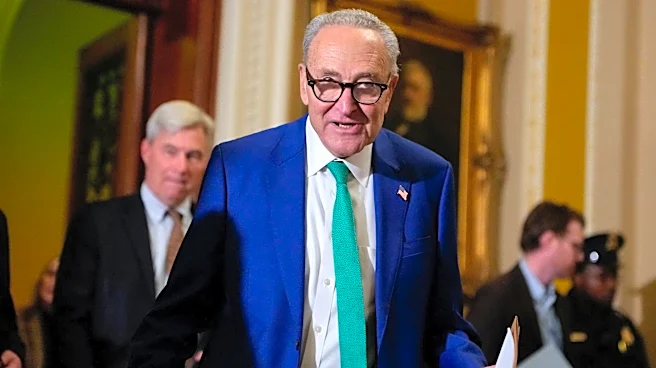
"You know, the president of the United States, meaning any president, has two extreme powers; one is the power of pardon and the other is the power of the veto," he said in comments that seemed directed at Jeffries and Senate Democratic leader Chuck Schumer. With his signature, a president can also issue Executive Orders with the stroke of his pen.

"So they're going to send things my way and I'm going to veto them and then they're going to send more things and I'm going to veto them and they could go on two years and one month because that's what we have and I'm going to veto them," he said. "But I think after a month or so, they're going to send things and I'm going to say, 'I'm going to veto unless you want to do this and this and this.'"
Indeed, Democratic legislators are now debating the balance between proposing an ambitious wish list of progressive legislation − showing their contrast with Trump − with negotiating compromises that might actually get the president's signature and become law.
"If they want to get things done, I want to get things done, too," Trump said, mentioning health care in particular.
That said, Trump took a similarly optimistic view at this point during his first term, when Democrats gained control of the House in the 2018 midterms. In an interview with USA TODAY, he predicted that he could strike a deal with California Rep. Nancy Pelosi if she became House speaker.
“If the Democrats get in, I think I will be able to work with them,” he said then. “They want infrastructure. So do I.”
No infrastructure bill passed. Instead, House Democrats would impeach him, twice.
Investigating the investigators
Congressional Democrats are now preparing to launch investigations of Trump, his administration and his family when they gain the power to subpoena documents and convene hearings in January.
"This is just the beginning," California Rep. Robert Garcia, expected to chair the House Oversight Committee, said as he released a dozen letters to Trump officials and family members demanding that they preserve documents that are likely to be subpoenaed.
White House counsel Will Scharf immediately responded with a letter of his own, effectively dismissing the demands because Democrats are still in the minority.

While the White House has said it would cooperate with congressional oversight it sees as legitimate, Trump has called the Democratic inquiries "extortion" and said he was "ordering the Department of Justice to look into this criminal act." Scharf had already issued a message to Garcia, saying the administration was monitoring and might launch criminal probes into what he called "abusive and capricious threats."
"Beyond being inconsistent with the clear, well-recognized constitutional limitations on your investigative functions, threats to executive branch officials designed to deter them from public service, or process designed merely to abuse or instill fear in the recipient may cross the line into blatant criminality," he cautioned. "And issuing unlawful subpoenas with the intention of depriving citizens of their constitutional rights and privileges may warrant further investigation.”
By the way, legal scholars describe Scharf's warning as a stretch, since the Constitution specifically protects lawmakers from criminal prosecution for official legislative acts as long as they are connected to a legitimate legislative purpose.
Pushing the envelope
Pushing the envelope has been a signature of Trump's presidency, a characteristic that isn't likely to change over the next two years.
During his second term, Trump has sought to expand presidential powers, challenging and sometimes ignoring traditional constraints of Congress, the courts and independent agencies. That has led to a flood of lawsuits, court decisions and appeals, many of them going all the way to the Supreme Court.
Critics call it an abuse of power.
"He can continue to threaten or pursue weaponized use of the Department of Justice to punish enemies and reward friends," Bauer said. "He can issue lawless executive orders with some immediate impact in domestic policy matters, and take unilateral actions in foreign and national security affairs, on no basis other than his belief that he can or should be able to do as he pleases."
Trump dismisses the criticism.
"I have the right to do anything I want to do," he has said, asserting a sweeping interpretation of Article II of the Constitution. "I'm the president of the United States."
For two more years.
This article originally appeared on USA TODAY: How Trump plans to double down despite Democrats' midterm wins