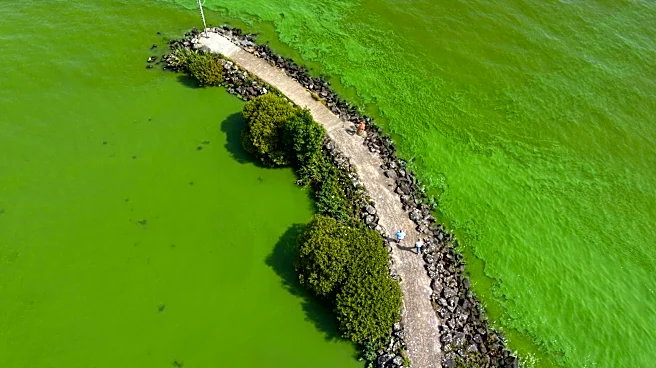





A large algae bloom stretching from the Gulf of Maine to the Massachusetts coast is being monitored by scientists who are studying its potential effects on marine life.
The bloom was detected several weeks ago and remains under observation. Scientists are particularly interested in its potential impact on shellfish and finfish.
Elizabeth Harvey, associate professor and chair of the Department of Biological Sciences at the University of New Hampshire, told WCVB the bloom does not pose a direct threat to people. But the particular species of phytoplankton involved can potentially harm marine organisms.
The bloom is notable because of its size. Satellite imagery cited by WGME shows the bloom extending along much of the Maine coast and potentially
reaching from Penobscot Bay south toward New Hampshire and Massachusetts.

What is causing the algae bloom?
WGME identified the phytoplankton involved as Karenia mikimotoi, a species that can form what scientists call a harmful algae bloom.
Darcie Couture, Harpswell's harbormaster, told WGME that the bloom has affected shellfish and finfish along the Maine coast, with some of the most significant impacts reported around Casco Bay.
The towns of Harpswell and Brunswick have been among the areas affected.
Algae blooms occur in the ocean throughout the year, but WCVB reported that scientists are paying particular attention to this one because of its size. The last major algae bloom in the region occurred during the summer of 2023.

What does the algae bloom look like?
The phytoplankton can change the appearance of the water when it becomes concentrated.
Couture told WGME that residents reported seeing brown or reddish-brown water in bays and coves, with some areas appearing almost coffee-colored.
Couture said satellite imagery showed the bloom off Casco Bay and much of Midcoast Maine. The imagery also suggested it could extend as far north as Penobscot Bay and south toward New Hampshire and Massachusetts.
Is the algae bloom dangerous to people?
Scientists say the bloom does not pose a direct threat to people.
Its potential effects are instead a concern for marine life. Couture told WGME that Karenia mikimotoi can harm shellfish, finfish and other organisms it comes into contact with.
The species does not produce the bioluminescent glow sometimes associated with algae blooms, according to WCVB.
How long will the algae bloom last?
It is not yet known how long the current bloom will last.
Couture told WGME that the bloom appears to be decreasing in some areas while moving into others. Officials are collecting water and shellfish samples, as well as samples of worms and other marine organisms affected by the bloom.
Couture said the information gathered could help officials better prepare if the bloom develops along the Maine coast again in the future.
Reporter Anthony Thompson can be reached at ajthompson@usatodayco.com, or on X @athompsonUSAT
This article originally appeared on USA TODAY: Large algae bloom stretches from Maine to Massachusetts