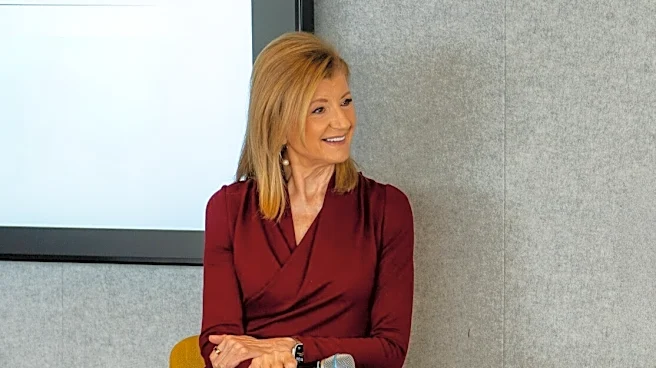









Arianna Huffington, perhaps like many of you, has noticed a growing trend: People are tracking all their health data on a microscopic level.
The 76-year-old has been wearing an Oura ring for years – this is the queen of sleep we're talking about – but she's observed people seeking endless numbers from a battery of medical tests. That's because many are available. Full-body MRIs
. Extensive blood panels. Biological age scores."There's such passion about the quantified self, and what has been missing is how do we turn all those numbers into real health insights and into actionable next steps?" she tells USA TODAY exclusively. That's why her behavior change and health company Thrive Global recently partnered with LabCorp to create the Thrive 5 Health
Test. It offers five key health metrics and recommendations you can follow to maintain or better your numbers. Any additional metrics you want to track, that's great, but not the point of this test.
"I'm very passionate about simplicity," Huffington adds.
 like many of you, is tired of tracking all her health data." id="92481348007">
What Arianna Huffington's new health test actually looks like
The five tests – which cost $159 to order, can be taken at any LabCorp center and are HSA/FSA eligible – give you a snapshot of your cardiometabolic health:
- ApoB, which measures cholesterol-related cardiovascular risk
- hs-CRP, a marker for inflammation
- HbA1c, which reads blood sugar and can detect prediabetes
- Blood pressure, an indication of cardiovascular health and stress levels
- Body mass index, an imperfect but easily scalable weight metric
Huffington hopes this gets people thinking about their own simple data.
"I'm a menace at dinner parties because I ask people. I say, 'do you know your numbers?'" she says. "And often these are really sophisticated people, even people who are obsessively measuring things, they measure so many things they don't know these basic numbers, and they're amazed about the importance of knowing these numbers and then tracking these numbers."
Patients will receive explanations along with each of these results that detail what each biomarker means, along with personalized advice from Thrive and small steps they can take to improve via a combination of artificial intelligence and professional insights. This way, they won't see alarming numbers and make unrealistic pronouncements like "I'm going to eliminate all sugar," or "I'm going to start going to the gym an hour a day." When they break those rules two weeks later, "then they feel like a sense of failure, and it's harder to get back on the horse," Huffington says.
Don't worry if you aren't perfect, though. It's OK to skip a day of exercising, to have a dessert, to stress out more than you intended.
"None of it matters," Huffington says. "What matters is what we do consistently, not what we do occasionally."

Arianna Huffington wants to 'end this delusion' of 'Don't Die' movement
It's difficult to remember simplicity is key when we're in the age of the "biohacker," or someone who gathers a ton of health data about themselves to try to improve their longevity, separate from the care they're receiving from their primary doctors.
"In its most defensible form, biohacking is just applied geroscience – using data, interventions and iteration to optimize healthspan," Dr. Eric Verdin, the president and chief executive officer of the Buck Institute for Research on Aging, previously told USA TODAY. "At its worst, it's self-experimentation dressed up in scientific language, often in service of product sales."
In some cases, people are feeding their symptoms and test results into artificial intelligence chatbots and getting an opinion there first. It's easy to see why: Many Americans don't have primary care providers, and a physician shortage is poised to only get worse. Health insurance costs have increased.
The Thrive 5 Health Test aims to split the difference. It minimizes data overload, though whether it's cost-effective depends on the state of your insurance and finances.
Huffington is also actively setting herself and her company apart from the extremes of the longevity industry that strive for immortality, like Bryan Johnson's "Don't Die" movement. Johnson, a longevity enthusiast, spends $2 million per year in a quest to, well, not die.
She's "obsessed with knowing that we are going to die, and to end this delusion of the 'Don't Die movement,' you know, how do we expand our lifespan and health span without any delusions that we are going to live forever."
This article originally appeared on USA TODAY: Arianna Huffington's problem with our wellness era, and her plan to fix it | Exclusive