


MIAMI — On the surface, they don't have much in common. Their brands are certainly in different places globally. But as Haiti men's national team manager David Badía prepares to lead Les Grenadiers into a Conacacaf Nations League quarterfinal against the United States, he's putting a little bit of FC Barcelona into Haiti.
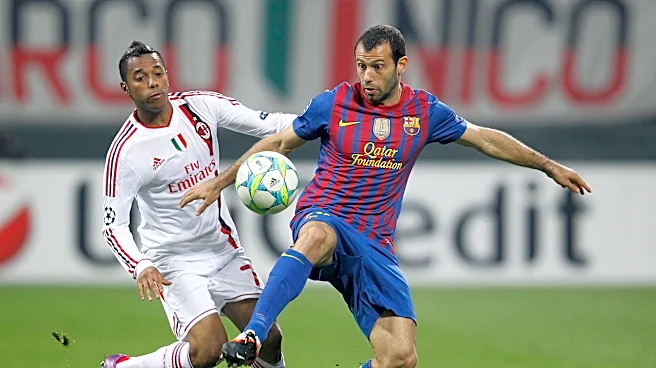
A native of the Barcelona area who worked with the club's famed youth teams in the early 2010s before taking over the team's operations in Istanbul, Turkey and moving into first-team coaching, Badía brings many of the team's philosophies with him to Haiti.
Of course, he knows it's not possible to have Haiti playing like the La Liga champions, but it is possible to add a bit of that Barca DNA into the national team.
"I come from
the Barcelona school, but at the same time have worked in a lot of different countries where exporting that Barcelona culture can’t really be done directly," Badia told USA TODAY Sports this week. "You have to make adaptations to the culture, to history, how players have been developed in these countries, if they’re foreign players. That experience of coaching abroad has helped me give that adaptability with the philosophical base of Barcelona in countries where you can’t do the same thing."
Haiti's soccer culture is rich, and its teams have been playing well before Badía arrived. He admired their performances at the 2026 World Cup from afar, then found himself doing so in a different context after being hired for his first national team job in August, replacing Sebastien Migne. He saw a team that wanted to be on the front foot, that transitioned quickly from defense to attack, and one that used the ball to get to positions on the field where it had advantages.
"Those concepts can create a base that comes from Barcelona but is adapted to more pragmatic things in the national team, more realistic," Badia said.
With just two full training sessions before his debut, Badía tried to keep things simple and led Haiti to wins over Trinidad and Tobago, Costa Rica, and a famous 4-1 victory in the Dominican Republic in front of a raucous pro-Haitian crowd.
He has had more time ahead of the showdown with the U.S., though he knows the team goes in as underdogs and he is coping with key absences with injuries to Wolves midfielder Jean-Ricner Bellegarde and AEK Athens forward Frantzdy Pierrot adding to a crisis at center back.
In the short-term, the goal is to beat the U.S. over two legs and get Haiti into the Nations League for the first time. Long-term, "the team has to have an identity," the coach said. "It has to know what it’s doing. When a new player comes in, that having seen matches on television he understands what the team is trying to do."
How will Haiti try to play against the USMNT?
Top teams in the Concacaf region are used to seeing opposition that plays one way on tape against 'lesser' squads and then goes into a shell when it faces the U.S., Mexico and other regional powers.
Badia said Haiti can't play the same way against the U.S. that it did against some of the teams it met in the Concacaf Nations League, especially when it comes to where it tries to press the talented American defenders who are comfortable on the ball. But it is not in Haiti's spirit, nor its ideal playing style, to bunker and try to get lucky on a long ball over the top.
"It’ll be a really tough challenge for us, but we’ll try our best play our game, try to defend as we can, attack as well as possible and obviously we’ll go out to win," he said.
Badia knew games like this would come when he took over Haiti, but it does feel sudden that he finds himself in this situation, playing the region's top team for a bid in the CNL Final Four and the 2027 Gold Cup.
It is a change from his previous stops after Barcelona, where he worked in Turkey, Cyprus and Poland.
Will Haiti add more top players through recruitment?
One element of Badia's job that is unlike any of those past stops is the element of recruiting. Even as political turmoil and gang violence in the country has made it impossible for Badia or his predecessor to touch Haitian soil and scout young players, the team has improved in recent years. Part of that is a resilient youth setup that continues to outpace expectations even with the challenges on the ground. Part of it is adding new players eligible for Haiti thanks to their parents or grandparents.
Les Grenadiers may be set to miss out on center back Neil Pierre, who will be cap-tied to the U.S. if he appears against the country where his parents are from.
But there are plenty of targets with Haitian ancestry who could join the team like Sunderland forward Wilson Isidor, Hungary-based Lenny Joseph and defender Hannes Delcroix did in the last year. Two players answered their first call this month, with Michigan-born Kayden Pierre and Sweden-born Patrick Nwadike hoping for their debuts.
Badia compared them to apples falling from a tree, some ready to drop because they've reached maturity, while others hang on for longer
"I think it’s normal, it’s logical. It’s a national team that has grown that is growing and is a process of improving and I think it’s more and more attractive to play for your country, defend the country where you were born or where your parents were born, where your culture is from and where you’ve felt at home with your family," Badia said. "We’ve spoken with some of them. Some of them are with us, and we’re very happy they’re with us. It’s a process."
For now, though Badia is confident that his team can compete in the competitions it is in with the players it has. He is getting to know the players better in the second camp after a breakneck start to life as an international coach. The raw material to take this team from a World Cup qualifier to a contender for Concacaf trophies, he said, is there.
"I found players with very good characteristics in all aspects: Physical, mental, technical and tactical. It’s very good.," Badia said. "I’m very happy with what I was able to find and with an excellent attitude, a desire to work and joy in the game. Obviously when you win, everything comes from that and is much easier, but it came together and that’s why I’m very happy."
Happy now. Outright thrilled if Le Rouge et Bleu start to find a bit of that Barca Blaugrana and bear a resemblance to the teams that formed Badia's football philosophy.
This article originally appeared on USA TODAY: Haiti manager David Badia bringing Barcelona base into USMNT match