


WASHINGTON – Donald Trump rose to power on an anti-China platform that attacked Beijing as a currency manipulator and accused its government of robbing the United States.
He spent the first year of his second term waging a trade war against China and has taken an aggressive stance on artificial intelligence growth, in the face of tech industry and lawmakers' calls for the two countries to work together to slow down AI development.
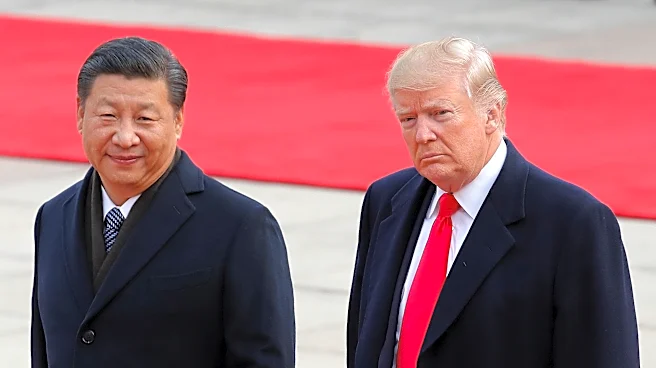
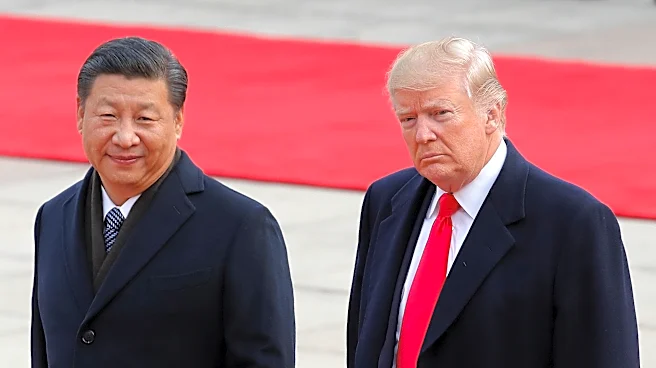
Trump’s hard-changing stance against China as an economic challenger stands in contrast to his full-fledged embrace of its authoritarian leader, Xi Jinping.
"He sees President Xi as a great leader of a great country and in that sense, a mirror of himself,” said Graham Allison, a professor of government at Harvard who
has written about the power rivalry between the United States and China.
The businessman-turned-American president traveled nearly 7,000 miles in May to attend a state dinner in Beijing. He’s anticipated to return to China in November for a gathering of Asian-Pacific economies.
Trump will fete the Chinese president during a state visit this week in Washington. He’s planning to host Xi again at a December summit for world leaders that he’s putting on at his Miami-area golf resort. All told, the leaders are expected to meet four times in 2026 alone.
“He's a great gentleman; we get along great,” Trump said Sept. 4. “You know, they're a competitor and all of that, but we have a very good relationship with President Xi.”
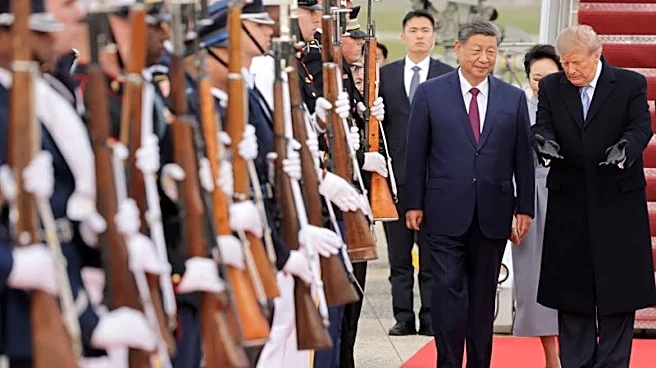
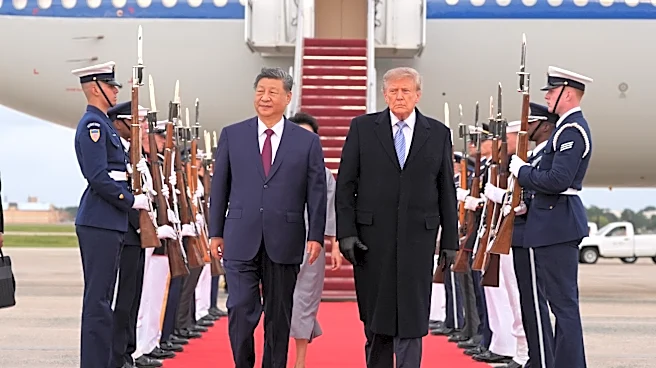
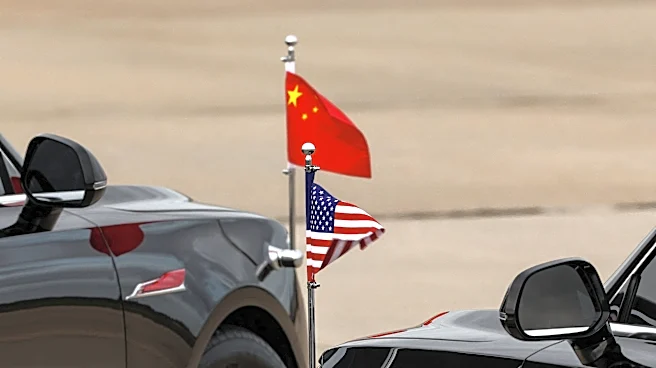
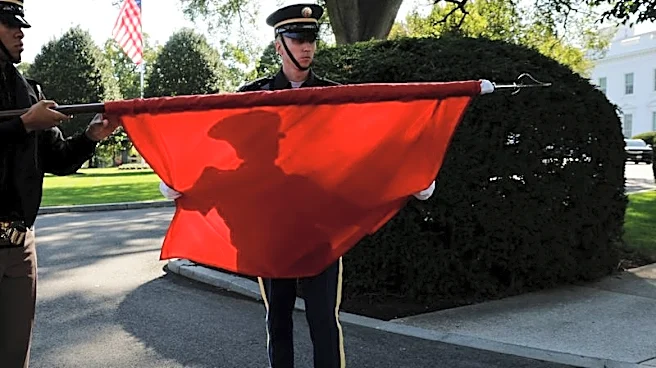
The multi-day visit to Washington by Xi and his wife, Madame Peng Liyuan, formally began Sept. 23 after the Chinese leader touched down outside of Washington, DC. Trump will welcome them with flags, trumpets, bugles and a fife and drums at a grand arrival ceremony on Sept. 24 that will stretch across the White House’s South Lawn, Rose Garden and State Floor.
“You're going to see a president focused on delivering a perspective of power and prestige,” Biden-era Deputy Secretary of State Kurt Campbell told reporters during a briefing ahead of Xi's visit to Washington.

The U.S. military might will be a feature of the welcome ceremony. It will include flyovers from a B-2 Spirit bomber, like the one used to take out nuclear facilities in Iran, and four F-22 Raptors, an advanced, supersonic fighter jet.
A total of 479 U.S. service members from every branch of the military will participate, the White House says.
The public display, said Campbell, who was a top China adviser in the Biden administration, is meant to wow the senses.
“This is really the historical reincarnation of what we often refer to in antiquity as single combat,” Campbell said. “Really powerful guys – each representing their civilization – kind of measuring, and going toe-to-toe.”
Outdoing China
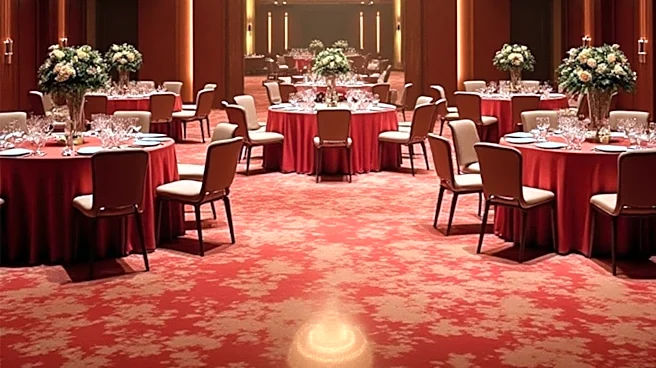
Trump lamented in the days leading up to the visit that the 90,0000-square-foot ballroom he’s building won’t be ready in time for a Sept. 24 state dinner for Xi.
Instead, he’ll host a banquet for the Chinese leader in the East Room of the White House, a space that he said can hold about 98 seats.
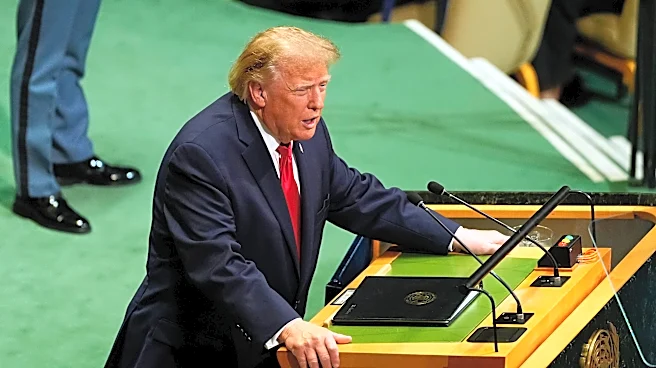
“We're building a military complex and a ballroom that will be second to none, anywhere in the world,” Trump said at a Rose Garden event on Aug. 24. “I was over in China two months ago, and we saw the Great Hall of China. Well, now we're going to have a great hall, too, in the United States.”
The dinner will boast a tech-heavy presence, with industry leaders such as Nvidia’s Jensen Huang, Apple’s Tim Cook, Tesla’s Elon Musk and Open AI’s Sam Altman among those in attendance. Congress is in recess until the midterm elections but at least one lawmaker, House Speaker Mike Johnson, intends to join.
Demand to attend the dinner was high, the president said Sept. 2. “It's going to be very tough,” he said of the guest list. “Everybody's fighting for tickets.”
On Sept. 25, Trump and his wife, first lady Melania Trump, will host Xi and his wife for tea, and give them a tour of the National Archives, the building that houses historical documents, including the Bill of Rights and the U.S. Constitution.
Visit comes amid lawsuit over media access
Xi’s visit comes amid a high-profile dispute between the president and media outlets over White House access and the First Amendment. CNN, MSNBC and POLITICO banded together to sue Trump this week after he banned their reporters from the government building and accused them of national security violations.
Forty-nine media organizations, including USA TODAY, submitted an amicus brief in support of the outlets and the First Amendment on Sept. 23.
California Rep. Ro Khanna, the ranking Democrat on the House committee on China, said the press ban and the insults Trump routinely lobs at U.S. allies are compromising American leadership.
“It's not a good look in seeding America's biggest advantage in the world, which is our freedom,” Khanna said in an interview during the congressional recess.

Trump’s decision to roll out the red carpet for Xi has come under criticism from some members of his own party.
Senate Armed Services Committee Roger Wicker said Sept. 22 that Trump should “keep in mind that his guest is a brutal, unelected and oppressive dictator.” The Mississippi Republican urged Trump to press Xi on alleged human rights abuses that China is committing against the Uyghurs and other ethnic minorities.
“Quite frankly, had the White House asked me for advice, I would’ve suggested the president not invite Xi Jinping to Washington for such a lavish welcome,” Wicker said in a speech on the Senate floor.
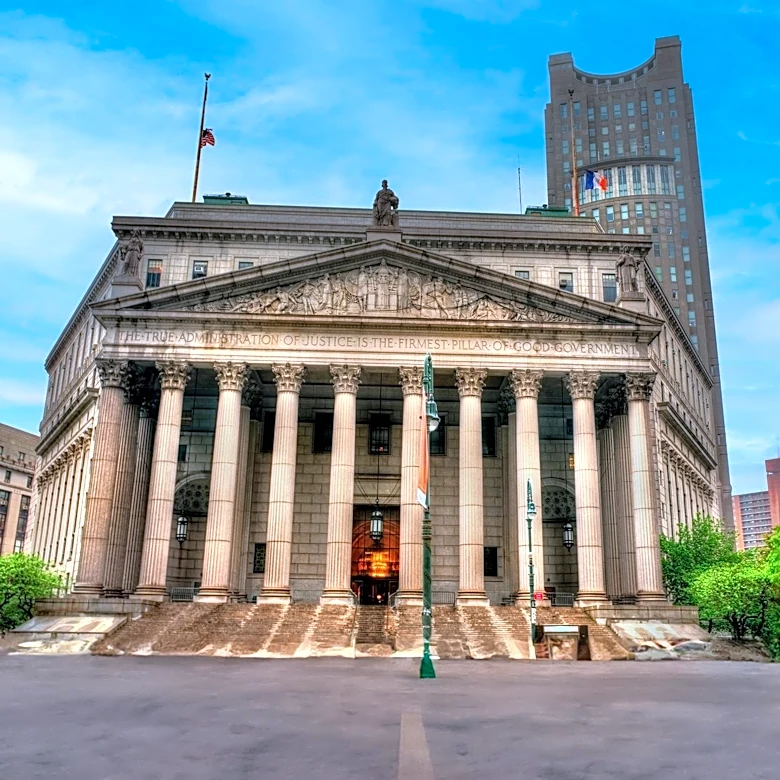
Secretary of State Marco Rubio clapped back at Wicker in a Sept. 23 press conference in New York City. He said the United States and China are the two largest economies in the world and the relationship between the two global powers will define the 21st century.
“The idea that we would not interact with them at the highest levels is irresponsible. It’s outrageous. We have to,” Rubio said. “That doesn’t mean we don’t have strong disagreements.”
AI on the menu
Trump is expected to push Xi to cut back on Iranian oil imports, release detained Americans and curb the spread of fentanyl precursor chemicals. The U.S. ban on Chinese auto imports and the potential for a reduction in tariffs on non-strategic goods is also expected to be discussed.
But the most-watched topic of the summit will be the AI arms race between the United States and China that has industry leaders delivering dire warnings that the technology is developing too rapidly.
Open AI’s Altman, Anthropic CEO Dario Amodei and Hugging Face founder Clément Delangue said in remarks to the United Nations on Sept. 23 that humanity could lose control of AI if the technology is not handled carefully.
“If managed poorly, I even believe AI could be a risk to humanity as a whole,” Amodei said. He called on the international community to work together to address the technology’s safety and security risks.
Treasury Secretary Scott Bessent announced the establishment of a “U.S.-China AI dialogue” after a meeting in New York on Sept. 20 with He Lifeng, the vice premier of China.
But AI leaders want world leaders to go further. Amodei called on the U.N. Security Council to ban the use of AI to develop biological weapons.
Republican Rep. Michael McCaul, of Texas, a China hawk who’s been sanctioned by Beijing, said in an interview that the warnings coming from Anthropic and other AI companies “are disturbing.”
“But we are in the AI race with China,” McCaul said. “I would question a detente with China on AI, whether I could trust and verify that.”
Trump has shown little interest in slowing down or working with Xi to regulate the pace of development. The president says he’ll be launching an “AI Force,” that’s similar to the Space Force, a branch of the military he founded during his first term.
“We're leading China in AI. We're the most sophisticated country in the world,” Trump told reporters earlier this month in Ireland. “And frankly, I want to keep it that way, because whoever wins AI wins.”
Khanna, a sponsor of legislation that would ban self-improving AI, said the U.S. should continue to lead in frontier models – but it should do so in a way that is safe and doesn’t take away jobs.
“Winning an AI war is like winning a nuclear war. What does it mean to win if you devastate civilization?” Khanna said of Trump’s remarks. “So we need to make sure that there are safety checks on a loss of control or misuse so that there is not incredible devastation.”
Chris Lu, the U.S. ambassador to the U.N. for management and reform in the Biden administration, said AI is currently developing at breathtaking speed.
“The mood is shifting,” Lu said. “The only person who has not shifted on the topic is Donald Trump.”
Other countries have no choice but to hope that the two global superpowers decide to heed their warnings, said Lu, who spearheaded the first-ever UN resolution on artificial intelligence in 2024.
“The rest of the world is watching this with concern because they understand that whatever happens between the United States and China will affect them – in both good and bad ways,” Lu said.
This article originally appeared on USA TODAY: Friend or foe? Trump rolls out the red carpet for China's Xi Jinping