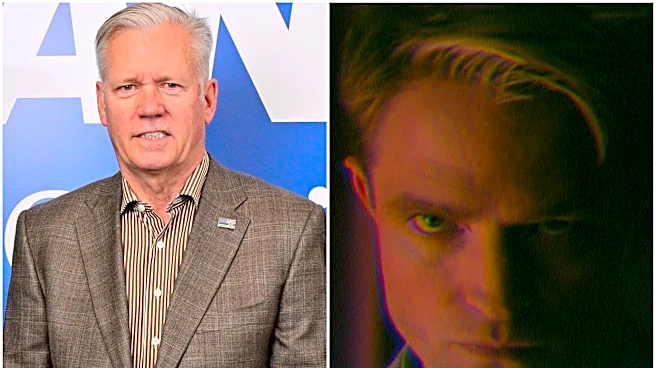






Chris Hansen is ready to have a seat.
Over the last month, the veteran TV journalist has spoken out repeatedly against “Primetime” (in theaters Sept. 25), a gritty new drama starring Robert Pattinson that imagines the former “To Catch a Predator” host in the midst of a dark mental spiral.
Now, “I'm going to go see it like everybody else tomorrow night at a theater,” Hansen tells USA TODAY during an early morning phone call on Wednesday, Sept. 23, having just made himself a post-workout protein shake.
“I'm going to watch it in New York City,” he adds. “We're going to bring a crew along, interview some theatergoers afterward and put together a little piece for one of my podcasts, ‘Predators I've Caught.’ ”
According to Hansen, the film’s distributor,
A24, reached out to him in late May to share the trailer, and then again last month to invite him to an early screening. But he wouldn’t sign a nondisclosure agreement, which “had a paragraph that was very restrictive for me,” he says. “I said, ‘Just let me see it,’ and they wouldn’t.”
USA TODAY has reached out to A24 for comment.

The “Dateline NBC” segment “To Catch a Predator” became a pop-culture sensation before ending in 2007 amid controversy surrounding a TV sting operation in which an alleged pedophile killed himself. To this day, Hansen conducts online predator stings through streaming show “Takedown With Chris Hansen” on his TruBlu true-crime network, and he also recently signed a book deal to write thrillers inspired by his work.
Based on what he’s seen and heard, “Primetime” doesn’t “represent what the investigative series was then or continues to be today,” Hansen says. “I think one of the reasons why they never reached out to me until after the film was completed was they didn't want to hear anything good about it because that wasn't their vision of the film. They wanted to do an overly dramatic version of events.”
Hansen, 67, shares his thoughts on the film and the legacy of “To Catch a Predator.”
This interview has been edited and condensed for clarity and length.

Question: When I spoke to "Primetime" director Lance Oppenheim, he said he wanted to make something “more conceptual” and “closer to a fever dream than an authorized, conventional biopic.”
Chris Hansen: But then you ask the question: If it is a fever dream, why was it important that he used my name, image and likeness? The answer is because it's got commercial value. They wanted to exploit the brand that I've built over the last 45 years. You can decide whether that's ethical or legal or identity theft or however you look at it. But it seems a little exploitive, as Hollywood often is.
Do you believe there is a place for art that is more interpretive or doesn't purport to be telling a straightforward, true story? Or when does it cross a line?
It crosses the line when they use your name, image and likeness. I have no problem with Robert Pattinson; he's a very talented actor and he does a great job. He's been very kind in his words toward me and I have been back toward him. It's not his fault. He was hired to do a job and to pretend to be me. But they put him in a difficult situation because I think most actors would want to at least talk to the person they're portraying. When Tom Hanks portrays Sully Sullenberger, he has a meeting with him and says, “Hey, this is an interpretation of your story. Not everything you see in the movie is going to be exactly the way it happened in your life. But it's not going to be anything that's going to embarrass you or be untrue.” That's not what they did in this situation.
Do you feel there is any potential benefit or good that could come out of this movie being released?
Yeah, I think there is. That's why we purchased ads. Right before folks see the movie, they're going to see me walk into a kitchen, tell everybody in the theater to have a seat, and remind them that this important work continues along with all my other documentaries and projects on my streaming network TruBlu. So we've tried to stay ahead of this and obviously benefit from it in any way we can, because we believe in the work we do.

In one of the early scenes in the movie, a decoy actor shows up late to his first day of work and is essentially thrown into a scenario with an alleged predator, with almost no preparation or rehearsal time. How would you respond to that depiction?
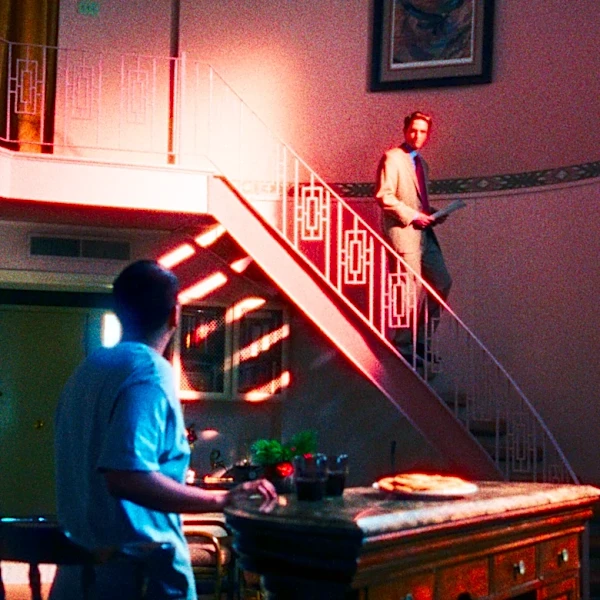
Like many other things in the film, it never happened. I mean, I never yelled at my staff. I never sat shirtless in front of a Hollywood theatrical mirror in a dressing room. I never said any of the things that I've seen them portray me as saying, except the “I'm Chris Hansen” and “have a seat” lines. There was never any dramatic walk down from a staircase. They portray my producer as being this power-hungry, unethical producer, and that's just not the case. I mean, it's a complete work of fiction.
The other thing about the real series ‒ as is the case today ‒ is that we have been painstakingly transparent about our methodology. There are no secrets here. We show everything and we have from the very beginning. Anybody who's actually seen the show will know better.

With the release of the movie, many people are reexamining the legacy of "To Catch a Predator." With the benefit of hindsight, is there anything you would have done differently?
We evolved with the things we learned. Obviously, in the first investigation, we didn't know what was going to happen. We had partnered with Perverted Justice and I didn't know if we were going to get anybody showing up. Yet, there we were over 2½ days in Long Island and 17 guys surfaced, including a New York City firefighter. We did it again in suburban Washington, D.C., and even more guys showed up, including some prominent people. It became clear we had to collaborate with law enforcement to have some sense of social justice and responsibility.
We've evolved since then to find what I think is an ethical and appropriate balance between our storytelling and law enforcement and appropriate prosecution. So in hindsight, would I have done anything different? We did the best we could with these stories from the very beginning, and we told everybody exactly how we did it. There was nothing held back.
Are there any particular criticisms of the series that you want to clear up?
The body of work speaks for itself. Critics can say what they want, but I'm very comfortable with my work in the “Predator” realm. It's a public forum. People are allowed to weigh in and say what they think. But at the end of the day, most of the people who are highly critical of it seem to have some attachment to the predators, either criminal defense lawyers or people who've had relatives who've gotten busted in similar situations. I welcome a thorough review of it and a conversation about it. We've never hidden from anything.
For people who say that the show felt exploitative or sensationalist or profited off people's trauma – do you feel that was more a product of the media landscape at the time?
There's a very easy way to avoid being the focus of one of those investigations: Don't try to sexually exploit children. If you don't do that, you'll never have the issue. It's pretty simple. The rest of it's an academic conversation that has very little impact on the real world of this stuff.
What do you feel is the biggest misconception about you?
People who follow my work have a pretty good sense of who I am as a journalist, as a television producer, and as a man. We have created a legacy of awareness and dialogue that didn't exist before. It's rare that I'm out in public and don't have somebody approach me and say, “Hey, thank you for doing this. This happened to me as a child.” It's also allowed me to be involved with a number of advocacy groups that give victims and survivors a resource to get justice. I do a lot of things that aren’t necessarily shown on television to promote those causes.
Are you still considering legal action over “Primetime?”
We'll wait and see – that’s up to the lawyers. We'll take a look at it and figure it out. I'm not looking to create a prolonged legal battle. It’s a full-time job being Chris Hansen (laughs). Lawyers who are more schooled in these issues than I am are watching it. I guess you can't rule it out, but that's really not where my head's at.
How do you feel that A24 is launching an Oscar campaign and selling merchandise for the film?
They’re going to exploit this financially as best as they can. That's the business aspect of Hollywood. Look, I own a network; I understand capitalism. We sell merch, too. But they'll do what they do and we'll do what we do.
This article originally appeared on USA TODAY: Chris Hansen slams 'Primetime' movie as 'identity theft' | Exclusive