








While playing middle school football in 2006, Zackery Lystedt, 13, suffered a concussion. There was less awareness then about brain injuries, so after a short rest, he returned to play. He collapsed at the end of the game, was airlifted for emergency care and was found to have bilateral head bleeds. He survived, but now relies largely on a wheelchair. He has spent his life advocating for the concussion guidelines and protocols to protect youth athletes nationwide.
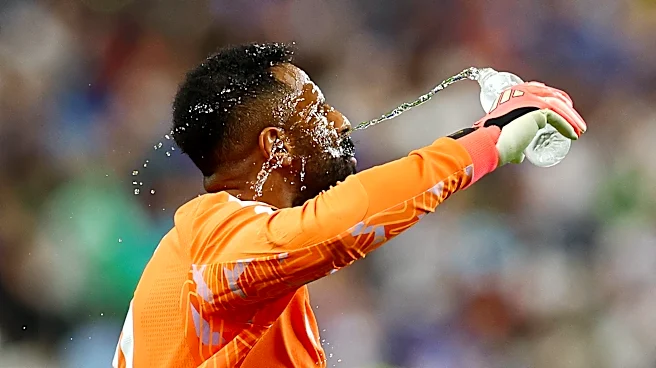
It's way past time we did the same for extreme heat. More than 9,000 high school athletes are treated for heat illness every year. We’ve now experienced record heat for 11 consecutive years, and the number of cases could easily grow as that record is expected to break again for the next
several years.
In 2025, legislation named for Jordan McNair – a University of Maryland freshman football player who collapsed from heat stroke during an outdoor workout in 2018 and died two weeks later – was introduced in both the House and Senate. It would require high school and college athletic programs to implement heat illness emergency action plans in consultation with local emergency responders. But the bill has languished in Congress.
That’s a tragedy. As a result, more young athletes may needlessly suffer. In fact, unlike much of sports medicine, there can be no ambiguity: Adverse heat stroke cases and deaths in athletics are considered entirely preventable.
What's missing isn't the science. It's the Lystedt Law equivalent for extreme heat conditions: a protocol that takes the decision to keep playing out of the hands of an athlete, coach or parent in the moment that adrenaline says, “Push through.”
But even with record-breaking heat this summer, there is still no unified national standard to protect youth athletes from heat and air pollution, which compound each other. Such a standard could be built with the combination of expertise and experience of professional, collegiate and interscholastic sports organizations as well as public health agencies and parks departments.
2026 World Cup showed what heat safety looks like

We're calling on these bodies to come together and do just that – develop and implement a fully funded, mandated national action program, modeled on what concussion care has become. At minimum, this new protocol should include:
- A single accessible information hub consolidating research for parents, coaches, trainers and athletes.
- Mandatory heat-safety certification for coaches and trainers, renewed regularly, the way lifeguard CPR certification works.
- A signed permission-and-education form required at enrollment.
- A certified athletic trainer with licensed Emergency Medical Services coverage at every practice.
- Mandatory water stations, scheduled breaks and cooling access – the same measures we just saw implemented at the World Cup.
And because children’s lungs, faster breathing rates and still-developing immune systems make them more vulnerable to both excessive heat and air pollution, any standard must address them together, not separately.
Part of the problem is a knowledge divide. There is growing awareness of heat dangers among health professionals and athletic trainers, but parents, coaches and young athletes often lack the same resources.
And heat illness typically strikes outside official games – at practice, where a health professional or trainer is least likely to be present.
A study in the American Journal of Preventive Medicine showed that more than one-third of heat illness cases occurs when no medical professional is present. Early warning signs get missed because a kid wants to stay in the game and assumes they're just tired and hot.
Moreover, heat illness isn't always easily recognized. Symptoms initially can mimic fatigue and dehydration. Delayed recognition can lead to life-threatening situations.
The pattern repeats every year. Tragically, athletes die.
August generally sees the most heat illness reported, and the pattern repeats every year: athletes who aren't just flushed and sweaty, but vomit, faint and collapse. Tragically, several die annually.
From 1955 through 2021, there were 159 exertional heat stroke fatalities documented among youth football players, and according to the Centers for Disease Control and Prevention, heat illness is the third leading cause of death among high school athletes.
They are all needless deaths. We well know that heat exhaustion converts to heat stroke fast without intervention.
One of us is a pediatrician who has treated many children with heat illness over the years. One football player arrived in our emergency room after a hot-day practice with a headache, vomiting and severe dehydration. He needed days of IV fluids to recover.
And we believe these problems don't fall equally on all athletes. Black Americans are more likely than the general public to carry the sickle cell trait, a condition that appears to put them at higher risk, according to the CDC. They also are more likely to be exposed to air pollution and can face other health issues rooted in racism.
As women of color, mothers and grandmothers, and climate advocates, when we first compared notes on how persistent and poorly understood this threat is, we knew we had to use our platforms to address a problem that is solvable.
The solution requires dedicated resources and messaging, especially for communities that may face greater risks. It means partnering directly with organizations already trusted inside these communities – such as sickle cell advocacy groups, Black athletic trainer associations, sports medicine programs of historically Black colleges and universities, and youth football leagues serving predominantly Black communities. They can build heat-safety materials, screening guidance and coach training programs to reach athletes of color specifically, not as an afterthought bolted onto a general campaign.
More than 27 million youth play organized sports in the United States. A comprehensive national standard on heat illness means they can all compete safely.
Almeta Cooper, JD, is national manager for health justice at Moms Clean Air Force, and Lisa Patel, MD, Master of Environmental Science, is a pediatric hospitalist and the executive director of the Medical Society Consortium on Climate & Health.
This article originally appeared on USA TODAY: We protect young athletes from concussions. Why not heat? | Opinion