






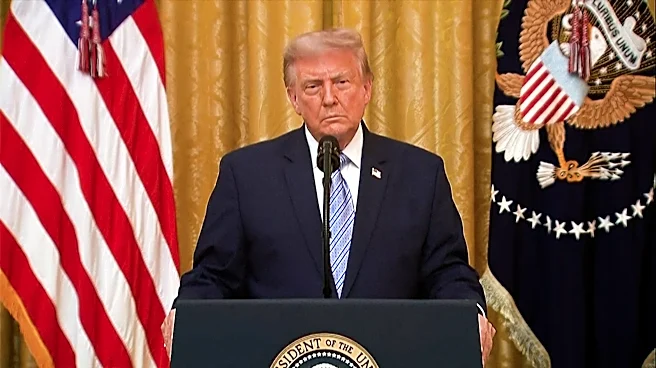
President Trump is attempting to lower diesel prices by boosting the use of red-dyed fuel and waiving some federal gas taxes. But critics wonder if the moves will meaningfully lower prices.
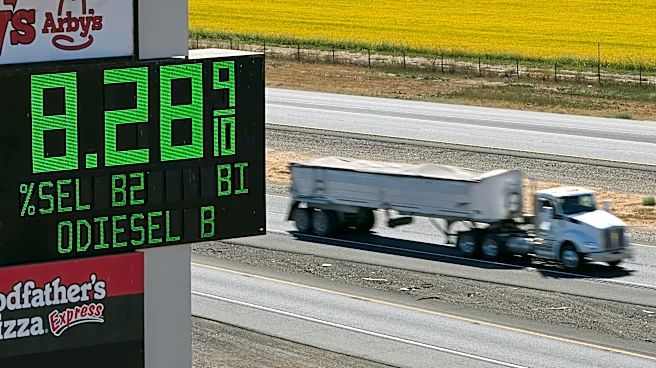
Trump's moves, announced in an executive order he signed Oct. 6, come as the national average price of a gallon of diesel gas reached $6.30
on Oct. 7, according to AAA. That's up from an average of $5.90 on Sept. 7, and an average of $3.68 on Oct. 7, 2025.Trump said in a statement that he signed the executive order because "for many years, farm vehicles, construction equipment, and other off-road vehicles have used what is known as ‘red dye’ diesel… which is exactly the same as normal diesel, but is sold tax-free for off-road vehicles and big trucks."
Critics
are skeptical allowing dyed diesel will make much difference pump prices, pointing out that truckers would save less than 25 cents per gallon at a time when diesel prices remain above $6 per gallon.
"The dyed (red) diesel order sounds big, but most drivers won't benefit," Patrick De Haan, head of petroleum analysis at GasBuddy. "States still enforce their own rules, it's not truly tax-free, and it doesn't add a single gallon of supply."
the dyed (red) diesel order sounds big, but most drivers won't benefit. states still enforce their own rules, it's not truly tax-free, and it doesn't add a single gallon of supply. I broke down why in my latest blog: https://t.co/u3aJutIGGx
— Patrick De Haan (@GasBuddyGuy) October 6, 2026
What is red dyed diesel and will it lower prices?
Red diesel is fuel that has been dyed to mark it as being tax-exempt, according to the website ScienceInsights.com. Before Trump's executive order, it was limited to off-road vehicles such as farm equipment.
The federal government usually collects more than 24 cents per gallon in gas taxes on diesel purchases, which is higher than the 18.4 cents per gallon it applies to regular gas. Trump's order calls for the diesel gas tax to be suspended until the end of the year.
The White House said no taxes on diesel purchases would provide immediate relief to weary truckers.
"This action will put money directly back in the pockets of American farmers, truckers, and workers, for example saving truckers over $100 per refill," the White House said in a fact sheet.
De Haan, the GasBuddy analyst, said in a blog post Trump's move would likely do little to move the needle on diesel prices.
"On paper and in the press, it sounds like it might be significant, especially ahead of the midterms," he said, referring to the coming November elections.
"It's a bit more complicated on paper," he continued. "It does circumvent the need to get Congress to act to cut the 24.4c/gal federal diesel tax, but complications including that framework and patchy enforcement prevent the entire national fleet of diesel consumers from benefitting."
Why does diesel fuel cost more than regular gas?
Diesel fuel was historically cheaper than regular gasoline, except during extremely cold winters when there was greater demand for diesel and other heating oils, but that trend started reversing around September 2004, according to the U.S. Energy Information Agency.
The agency attributed the higher diesel costs to these three factors:
- Higher global demand for diesel fuel, especially in Europe, China and India, and also in the United States.
- Increased diesel production and distribution costs due to the transition to less-polluting, lower-sulfur diesel fuels in the United States.
- Higher federal gas taxes for on-highway diesel fuel (24.40 cents per gallon), which is 6 cents per gallon higher than the 18.4 cents per gallon federal gas tax.
Why are people upset about high diesel prices?
According to American Trucking Associations, which lobbies in Washington, DC, for major trucking companies, nearly 73% of the nation's cargo freight was moved by diesel trucks in 2024, which is the most recent data the group has made publicly available. That translates to 1.27 billion tons of freight transported by trucks that now cost shipping companies a lot more to fuel up.
Consumer advocates say customers were already being squeezed by higher prices caused by factors such as inflation before diesel prices started spiking this year.
"On top of the direct impact of excessively high gasoline and diesel prices, family budgets are crushed by the inflationary impact those fuel prices have on essential, everyday commodities like eggs, bread, milk, and clothing – all of which require diesel fuel to get to our markets or homes," David Holt, president of the Houston-based Consumer Energy Alliance, which lobbies for energy policies that benefit consumers, said in a statement.
How has Trump previously tried to lower gas prices?
The Trump administration has made several attempts this year to lower gas prices as voter concerns about pain at the pump have mounted.
In July, the White House touted the launch of 25 Freedom Fuel gas stations in the northeast United States, all selling fuel at $3.47 a gallon, to great fanfare. But the stations were concentrated in Pennsylvania and New Jersey, and they appeared to have had little impact on prices at the pump in those states. The average price of regular gas in Pennsylvania on Oct. 7 was $4.55 per gallon, and the average price at the pump in New Jersey on Oct. 7 was $4.28.
Diesel prices in those states averaged $6.54 and $6.35 on Oct. 7, respectively.
The president has also previously pressured gas retailers to lower prices at the pump, accusing them of price gouging at a time when oil barrel prices were starting to fall.
Trump has been pushing Congress to pass legislation that would allow sales of higher-ethanol gasoline as U.S. lawmakers grapple with rising gas prices that have upset many Americans in an election year.
De Haan said in a blog post that gas prices are likely to remain elevated as long as there is an ongoing military conflict in the Middle East.
"The scale of ongoing geopolitical escalations makes meaningful price relief unlikely in the near term," De Haan wrote. "Motorists should brace for continued volatility ahead.”
Keith Laing is an automotive reporter on the National Trending Desk at USA TODAY. Contact Keith at klaing@usatodayco.com.
This article originally appeared on USA TODAY: What is red-dyed diesel, and will Trump's plans to lower prices work?