






A look back at history reveals the American Revolution was filled with women who helped the United States gain its independence, stories being retold 250 years later.
Some of the women are well known: Abigail Adams was a sounding board for her husband, John, exhorting him to "remember the ladies" and running their farm during his prolonged absences. Eliza Schuyler Hamilton defended her sometimes-unpopular husband, Alexander, and preserved his legacy – while forging her own for helping others after his death. Martha Washington joined her husband to raise the troops' (and likely his) morale as he led the Continental Army.
But some women went beyond aiding the war effort through morally, intellectually and materially supporting their husbands.
"We
know of many women who supported the Revolutionary cause through their actions," said Adrienne Whaley, director of education and community engagement at the Museum of the American Revolution in Philadelphia. "They, like the men around them, were immersed in Enlightenment ideals" of freedom and equality, "hearing sermons in churches and discussions in their homes."
Women made muskets and sewed tents and clothing for soldiers. They kept farms and businesses running while men were away at war.
And women actually went to war, joining their husbands on the battlefield ‒ even disguising themselves as men and earning praise for their bravery in combat. Here are some of their stories.
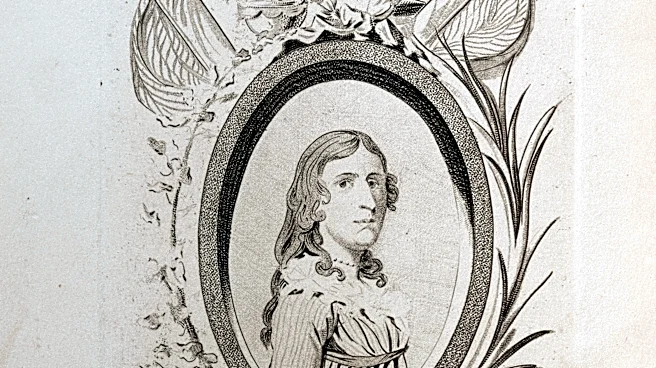
Deborah Sampson: Teacher, weaver, warrior
Deborah Sampson always seemed to know how to fend for herself, a biography at the Museum of the American Revolution explains: The Massachusetts woman was born poor and became an itinerant weaver, eking out a living. In 1782, she dressed in men's clothing and, calling herself Robert Shurtliff, enlisted in a Continental Army regiment ‒ at least the second time she'd employed the ruse to enlist.
She was shot, and, afraid she'd be discovered, removed the ball herself. Her luck ran out, though, in 1783. Stricken with fever while serving in Philadelphia, her disguise fell apart when a doctor treated and later reported her. Given an honorable discharge, Sampson returned to Massachusetts and married, and petitioned the state legislature for back pay for her service. She worked with an editor, Herman Mann, to publicize her story, but Whaley explained that much of it was sensationalized, and even fabricated.
But there is at least one contemporary account of Sampson: A corporal named Abner Weston wrote in a 1782 diary entry that Sampson, whom he'd known from their town of Middleborough, tried to join the Continental Army. He called it an "uncommon affair," noting that she was discovered.

Mary Ludwig Hays and Margaret Corbin: the 'Molly Pitchers'
Whaley called Mary Ludwig Hays "the archetype of the woman who steps in to serve," though she was likely only one such woman, historians say.
"Mary was one of the models for Molly Pitcher," Whaley explained. Margaret Corbin was another example of what the Smithsonian Institution describes as a composite of at least three women. Both were married to soldiers in the Continental Army, and, lore has it, stepped in when their husbands could no longer fight.
Ludwig Hays was at the Battle of Monmouth, a "camp follower": one of many women who'd accompanied military units (British, American, French and Hessian) serving as laundresses, nurses and cooks. Ludwig was "already there" when her husband was hurt, and stepped into the fight.
Corbin was in the 1776 Battle of Fort Washington, according to the American Battlefield Trust, dressed as a man as she followed her husband into battle. He was killed, but she continued firing the cannon he'd operated. She was severely wounded, nearly losing an arm. Her male counterparts were so taken with her bravery that they detailed her acts of heroism to their superiors, and Corbin was awarded a lifetime pension, the first woman to receive one (though hers was just half the amount male soldiers received).

Tyonajanegen: Two Kettles Together, an Oneida fighter
Tyonajanegen, also known as Two Kettles Together, fought alongside her husband in the Battle of Oriskany in New York. Han Yerry Tewahangarahken (“He Who Takes Up the Snowshoe”), her husband, was believed to be Mohawk and had a German father, but lived among the Oneida and, when the war broke out, the couple were among some of the wealthiest Oneida in the region, according to an exhibit at the Museum of the American Revolution.
Ahead of the 1777 battle, Tyonajanegen warned of the impending arrival of the British and Natives fighting with them, and during the fight, she fired pistols of her own and helped her husband reload his weapon after he was wounded. Others among their people who had aligned with the British later destroyed the couple's farm.
Anna Maria Lane: From camp follower to fighter
Anna Maria Lane went "above and beyond the call of duty to make a difference" during the American Revolution, according to the National Museum of the United States Army, which includes her likeness in its special exhibition, "Call to Arms: The Soldier and the Revolutionary War." Though little is known about her early life (including the exact year she was born, which is believed to be in the mid-1750s), by 1776 she was married to John Lane.
The couple ‒ yes, both of them ‒ joined the Continental Army in 1776, where John served under Maj. Gen. Israel Putnam. Anna Maria was initially a camp follower, like many other women who followed their husbands during the war.
Lane, though, went further, dressing as a man and fighting in battle, the first documented female soldier from Virginia to fight with the Continental Army. Of course, the ragtag American military likely wasn't turning away able-bodied soldiers, so both Lane and her husband fought in campaigns in New York, New Jersey, Pennsylvania and Georgia ‒ including in the Oct. 3, 1777, Battle of Germantown in what is now Philadelphia, under Gen. George Washington.

Ahead of the battle, Washington forbade female camp followers to accompany men to the battlefield, and some historians believe that Lane, wounded in battle, refused treatment lest she be found out. She continued fighting until 1781, and in 1783, the couple returned to Virginia, both with lingering war wounds. When the state government began issuing pensions to Revolutionary War veterans, John received the standard sum of $40 annually. His wife, though, received $100 per year, in recognition that she “in the Revolutionary War, performed extraordinary military services at the Battle of Germantown, in the garb, and with the courage of a soldier.”
Lane died in 1810 and her service was largely forgotten until 1928, when a magazine editor, John Archer Carter, submitted a letter to the Daughters of the American Revolution Magazine about "A Virginian Heroine." Subsequent research in the 1970s and 1990s helped bring her story to light again.
Phaedra Trethan is a national correspondent for USA TODAY, writing about history and Americana. Contact her by email at ptrethan@usatoday.com, on X @wordsbyphaedra, on BlueSky @byphaedra, or on Threads @by_phaedra.
This article originally appeared on USA TODAY: These Revolutionary women took up arms and fought for freedom