







Love is one of the most universal parts of the human experience, but what do we really understand about it? What can science teach us about how we experience it?
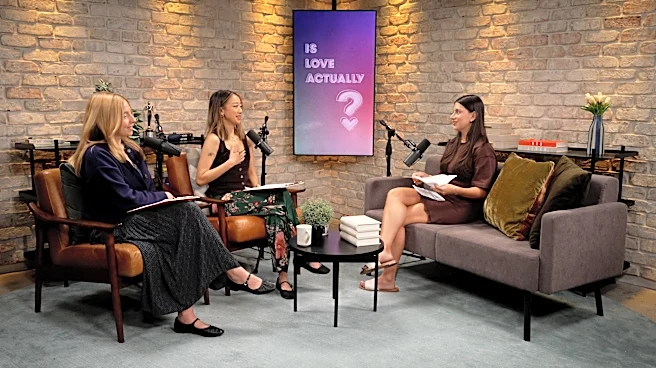
These are just a couple of the questions at the heart of "Is Love Actually?," a new five-part vodcast series from Humankind and USA TODAY. This series, produced in partnership with the Greater Good Science Center at UC Berkeley, explores how love shapes our lives and impacts the world. All five episodes premiere at the beginning of World Kindness Week, starting November 9, 2026. You can watch or listen to the entire series now.
This brand new series puts claims about love under a microscope, as hosts Madeline Gunderson and Ronnie Li embark on an investigation to understand the different
facets of our relationships. Each episode tackles a different dimension of human connection to reveal the complex science at work behind our bonds, journeying through romantic and platonic love. The series examines what love looks like in action through compelling real-life stories and revelatory conversations with scientists and thinkers. It also offers new perspectives and expert advice that people can implement in their own lives.
Does distance make the heart grow fonder?
Distance doesn't affect every relationship the same way. Separation can put a strain on social bonds, but time apart can also bring a renewed sense of appreciation and care for people we miss, especially when we are reunited.
The first episode of "Is Love Actually?" explores the emotional pull of separation and the power of reunion. From military families navigating deployments to long-distance relationships, the episode explores how powerful our attachments can be, asking questions like:
Emotional reunions of family members across continents
Episode one of "Is Love Actually?" follows Rachel and Emelie, two sisters adopted to different countries who discovered each other on social media. Until that point, Rachel had no idea she even had a sister. This remarkable story of a decades-long separation highlights the emotional resonance of reunion.
Rachel joined the "Is Love Actually?" vodcast on set and shared what it's been like reuniting with the rest of their biological family. The "surreal" experience offers a glimpse into the complicated emotions of forging connection after years apart.
Neuroscience explains why we miss our loved ones
Neuroscientist Dr. Zoe Donaldson breaks down the science of separation and reunion. In her lab at the University of Colorado Boulder, Dr. Donaldson researches the biology of social bonds by scanning the brains of the prairie vole, a rodent unique for its monogamous pair bonding. Their monogamy makes them a useful study subject for understanding human relationships, since "just like humans, they can cheat on each other, they can form new bonds, so there's all kinds of dynamics that mirror what we do."
Her work reveals why separation can feel so devastating, and how feelings of longing can be a crucial part of maintaining connections. According to Dr. Donaldson's research, missing our loved ones is a healthy response to being far away from them. We have a biological mechanism that drives us to seek out the individuals we love and stay close to them. This impulse is what helps us maintain our relationships over time, but the urge to stay in loving relationships comes with a painful side effect: Grief. Grief is what we feel when we can't be with our loved ones, but still feel the drive to seek them out.

According to her research, distance actually can make the heart grow fonder, but only up to a point. Feelings of longing can help sustain a relationship, but only if a reunion occurs again. Once a certain amount of time apart is reached, our brains start to undergo an adaptive grieving process. For prairie voles, they start to move on and seek new partners after about one month of separation. This length of time roughly corresponds to their gestation period.
"For us, a month doesn't sound very long. But for a prairie vole, it's a good chunk of their lives. I like to think about this in terms of reproduction... I think that four-week timeframe is really saying: if you were pregnant, you have given birth. Now you have the opportunity to get pregnant again, and you should probably start looking for a new mate."
Dr. Donaldson says this time limit is different for every person and every relationship. As it turns out, human relationships are much more complex than those of prairie voles.
The episode offers a simple invitation to listeners: Reach out to connections you've lost touch with and invest time and care into your relationships.
You can watch or listen to "Is Love Actually?" now. The series is available on all podcast platforms, including Spotify and Apple Podcasts
Funding for the project was provided by the Greater Good Science Center and the Templeton Foundation, in conjunction with the GGSC’s “Spreading Love Through the Media” project.
This article originally appeared on USA TODAY: New vodcast series explores the science and spirit of love