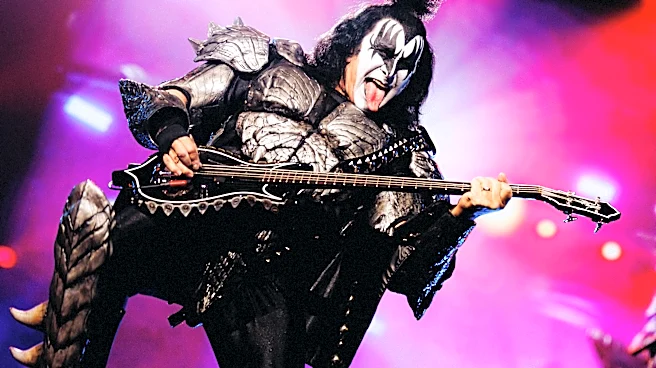



Gene Simmons dribbling blood onstage during his “God of Thunder” schtick was a familiar sight toKISS fans for decades.
Gene Simmons slumped over his bass in a chair, staring at a pool of his own vomit after nearly passing out from performing in extreme heat? Not so much.
More than 40 years ago, KISS triggered a seismic shift in rock lore when they wiped off the greasepaint synonymous with their onstage characters and went “unmasked” for an MTV interview.
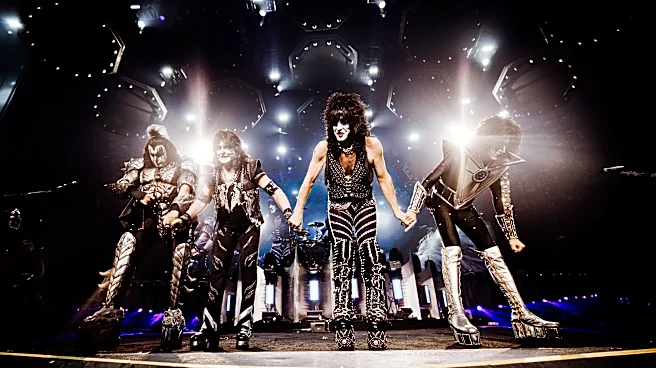
But the true unveiling of Simmons, frontman Paul Stanley, guitarist (since 2002) Tommy Thayer and drummer (permanently since 2004) Eric Singer – comes with “KISS: End of the Road.”
The extraordinary documentary – two parts, two-plus hours – is available on kissonline.com for on-demand screening
through Dec. 1 for $16.79 (but since this is KISS, of course there are several bundles with other merch). The future home of the film is yet to be announced.

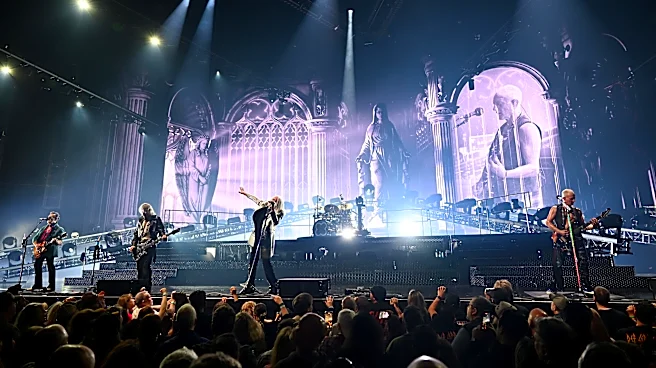
Centered on KISS’ End of the Road World Tour, a nearly five-year affair (including a pandemic pause) that stretched 250 shows and five continents until its Dec. 2, 2023 finale at Madison Square Garden in the band’s New York origins, the documentary provides unfettered insight and honesty from the quartet, family members and longtime manager Doc McGhee.
The early dates of the tour, by their own admission, were lackluster. The avatar film shown at the close of the final show to signal KISS’ next chapter was as puzzling to the band as the fans in the venue.
And during the lengthy run, these men were not immune to illness. Along with Simmons’ heat exhaustion, Stanley was leveled by the flu 11 days before the band’s MSG swan song.
But their sense of enjoyment – even with KISS always being as much a business as a band – is fully evident, especially Singer giving the camera crew a middle finger as his primary contribution to the film.
In a recent interview with USA TODAY, Stanley elaborated on some of the standout moments in “KISS: End of the Road.”

Question: Many times in the documentary, Gene seemed more outwardly emotional. How did your differences help KISS survive for 50 years?
Paul Stanley: I have no hesitation telling him or everybody that I couldn't have done this without him and vice versa. Those differences are what made our success. Those differences never conflicted with our sense of pride in what we were doing and our sense of commitment and obligation to the fans and to the band. It's interesting to be a member of the band, but also be a fan of the band. I think that that's never been lost on Gene or myself. What we have accomplished has made us that much closer. We started off living in our parents' homes. And here we are with families, and two of our sons who play together in a band. It's a better story than you could make up.
You’re honest about saying you didn’t always treat your road crews well in the early days. But your evolution is obvious in the way you handled some of the snafus on the final tour.
In all circles of life, you're only as good as your team. Whether it's the head of a company or the head of a country, who you surround yourself with is a reflection of who you are. And very rarely is one person responsible for success ... But I think that everyone who worked on the End of the Road tour understood both the legacy and their participation in making it memorable. It was easier for our crew knowing that we don't take any shortcuts ourselves.

Or if something happens like in Brazil when Gene got sick on stage because of the extreme heat, that's just life and fans understand.
Yeah, and (toward the end of the tour) I was in a hotel room pretty much for a week with an IV in my arm. I wasn't sure if the next step was dying. I was really, really, really ill. I've always really made sure that my kids and our road crew and anyone around us understands that you go out and give 100%, and if you can't, then you don't show up. The fans who are there, this is their singular night, and they deserve and expect you at your best.
There is a great moment when Gene finds out the band had been offered a lot of money to continue. He says, “I like money.” And you retort, “I like pride.” Was there a dollar amount that could have changed your mind?
No, I think it comes down to something very simple for me. At the end of the day, when you look in the mirror, do you like who you see? There's no fooling yourself. And if you are, you're truly a fool. It’s always been about being able to live with my decisions. I've always felt, whether it's family or anything else, that you lead by example. So money's a blessing. Money gives you the ability to stop worrying about money. But at what cost? For me, there's never been a way to rationalize what I believe is selling out.
It’s been almost three years since the last show. Tell me about the timing of this release.
There’s something surreal about it being almost three years. I remember seeing athletes who might be watching old videos or films of them in their prime, and I didn't really understand what that would feel like. At this point, to sit back and look at Madison Square Garden or those shows or videos from the ‘70s with some distance, I'm pretty impressed … It’s hard to put into words what we have accomplished and what we have made possible for the future so that KISS continues.
KISS always had this aura of being rock superheroes, but seeing you rolling BioFreeze on your back and Gene eating spaghetti with his stage gear on, those were such highlights to see you as people.
And that behind this multimillion dollar extravaganza are people who this means the world to. We are so – and were so – committed to living up to our past and what we built initially with Peter (Criss) and Ace (Frehley) and then for the last 30 years with Tommy and Eric. It's not easy. It's a joy to do it, but it's a full-time job.

I loved the moments with you and Gene in the deli talking about Peter and Ace and honoring their contributions to KISS.
I've said it time and time again: We couldn't have started this without Peter and Ace and we couldn't have ended it with them. It was the combustible nature of the four of us that created this and laid the foundation. The commitment had to always put the band first, and at some point, human frailties and vices and differences made that impossible. Tommy and Eric have been so dedicated and loyal to everything this band ever was. When we would go on stage for the last 20, 30 years, I would always think, this is the band I always hoped for. So I can't say enough about Tommy and Eric, and I can't say enough about Peter and Ace.

Having not toured for a few years now, what do you genuinely miss?
Well, you can only be in one place at any particular time. So as blessed as I have been to do shows, which is exhilarating, it means that you're not with your family. The days that you miss and the times that you miss seeing your children and your wife, that can never be brought back. So that was part of the consideration. Also physically, there are no 72-year-old football players, basketball players, but there I was on stage, held together with staples and chewing gum and paper clips and doing the same thing I had done my whole life.
So that part you don’t miss.
But there's nothing that can replace 50,000, 100,000 people who are there because of what you've given them and likewise, what they're giving you. I can fill that time, but nothing can take the place of it. Do I miss it? Yes. Do I crave it? Do I yearn for it? No. That means that you're not living in the present. If you wish for the past, then you're doing something wrong today. But the live aspect of that interaction with fans and being up there doing my damnedest to give my best … I miss that.
This article originally appeared on USA TODAY: Paul Stanley says KISS chose pride over money when deciding to retire from touring