




On the Wednesday, August 5, 2026, episode of The Excerpt podcast: On the Wednesday, August 5, 2026, episode of The Excerpt podcast: The federal government has released a new framework for managing the shrinking Colorado River after seven states failed to agree on how to share the cuts. Arizona Republic environmental and climate reporter Brandon Loomis explains why Arizona could face the steepest reductions, while conservation in the Upper Basin remains voluntary. He also examines how shortages could raise food prices nationwide, why the dispute could end up in court and what remains unsettled.
Hit play on the player below to hear the podcast and follow along with the transcript beneath it. This transcript was automatically generated, and then
edited for clarity in its current form. There may be some differences between the audio and the text.
Podcasts: True crime, in-depth interviews and more USA TODAY podcasts right here
Dana Taylor:
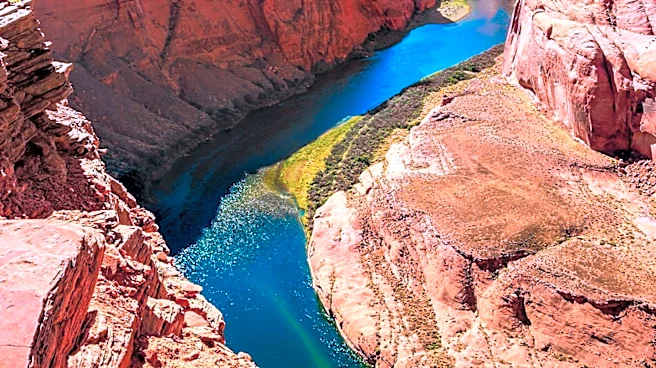
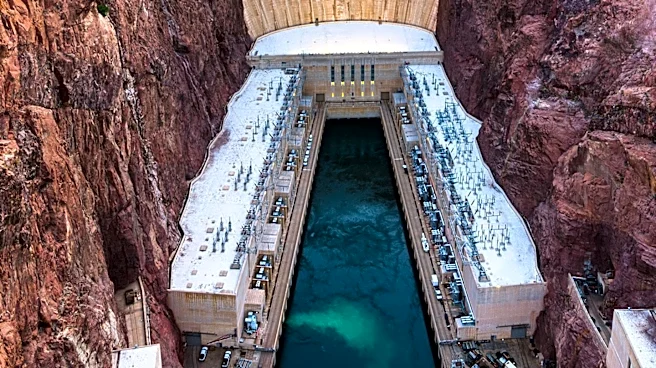
From grocery stores to the electric grid, the Colorado River touches more of American life than most people realize. It supplies water to one in 10 Americans, supports farms that produce about 15% of the nation's food, and generates power for millions. For years, the Colorado River debate has centered on how to create or conserve more water. Now the federal government is confronting a harder question. Who gets less? Hello, and welcome to USA TODAY's, The Excerpt. I'm Dana Taylor. Today is Wednesday, August 5th, 2026. Brandon Loomis covers environmental and climate issues for the Arizona Republic, part of the USA TODAY Network, and has been reporting on a new federal framework. Brandon, thank you so much for being here.
Brandon Loomis:
Thank you.
Dana Taylor:
Let's start with what's new. What has the federal government decided so far and what's still up for negotiation?
Brandon Loomis:
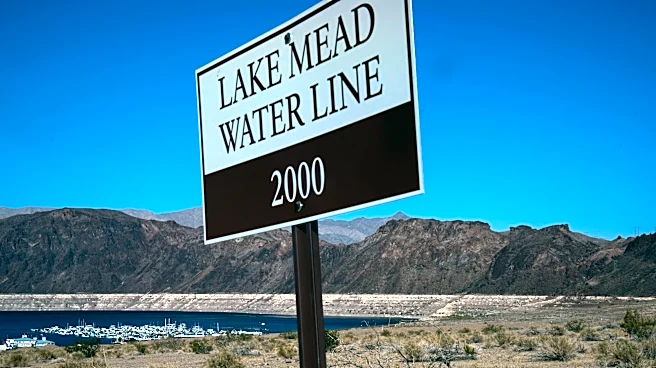
The reservoirs have been dropping, the big reservoirs, the biggest two reservoirs in the country are now something like a quarter full. And for the last few years, the government has been trying to get the states, the seven states that use the river, to come up with some kind of agreement about how each state would react, how much less water we would use, and we haven't been able to agree to that. So this framework seeks to do that from the federal perspective, and it's going to last for 10 years. With each two years, we take another look and see how we have to adapt to what's coming down the river.
Dana Taylor:
So walk me through how this framework works. What would happen during the first two years, and then what could trigger deeper cuts later?
Brandon Loomis:
So one detail that we're still waiting for is exactly the details about what the next two years will bring. Within that framework, basically, there's a range of options from bad to worse for the people who are downstream of the reservoirs in Arizona, in California, and in Nevada. And so we're waiting to hear the details of how bad it's going to be during the first two years. From everything we're hearing from state sources, it seems that they're probably going to accept a deal that those three states offered, which is to reduce our share of the river by about one and a half million acre-feet a year. And to put that in perspective, an acre foot is kind of a wonky term, but it's how they measure water. It's the volume that would cover an acre to a one-foot depth. And it's about 326,000 gallons, which is enough to support a few households in this region for a year, but most of the water is applied on farms.
So the one and a half million acre-feet is out of a share of supposedly half the river flow was going to be back in the last century. The half that these three states are entitled to was going to be seven and a half million acre-feet. So that's the supply they've got before in years past before they had to start cutting back already. And now for the next couple of years, it looks like if they accept that offer, that that's the reduction that these states will face. But if we have particularly bad winters, like this last winter was the snowpack in the Rockies that feeds this river, was the worst on record, and the flow was very nearly the worst on record. So if we have another year like that or two, then within two years you can imagine that we'll be in for worse. And this framework allows for a cutback of twice that much, which would be really painful.
Dana Taylor:
So help me understand how the cuts would be divided between Arizona, California, and Nevada.
Brandon Loomis:
If we assume that what we call the lower basin plan, those three states are the lower basin, if their offer is what the federal government imposes for the first two years, the bulk of it would go to Arizona, 760,000 acre-feet per year, California would get 440,000 acre-feet per year, and Nevada, I think 50,000 acre-feet. And California has the biggest share of the river. Arizona's share, if times were good, would be 2.8 million acre-feet. So giving up 760,000 is substantial, although we've already, under emergency measures, been giving up more than 500,000. Nevada's is very small. Their share of the river is quite small, although very important because it's essentially the only water supply for Las Vegas.
Dana Taylor:
I'm not picking sides here, but why does Arizona stand to lose the most water, even though California has the larger allocation?
Brandon Loomis:
It's a long story, and it goes back to conflict between those two states, which they've kind of become allies in this battle in the last several years, because they both recognize that if Lake Mead dries up and we can't get any water out of it, we're both out of luck. But the history is that, as I said, California was entitled to, in the good days, 4.4 million acre-feet, Arizona 2.8 million acre-feet. But we also have this, what they call legal priority within the states. And that basically means that the first people who use the water, they get to use that water with a higher priority. So if you were first in line to use the water, then in bad times, you're going to be the last one to be cut off.
So we have a system in Arizona, a canal system called the Central Arizona Project, which has been delivering water from the river, pumping it across the desert to Phoenix and to Tucson for some decades now. But when it was approved back in the late 1960s, it needed congressional authorization and financing. And part of that compromise was that Arizona had to accept a lower priority for that portion of the water. So California basically could sit back, not take any cuts, and that canal could go dry. So that's why Arizona now has to take the biggest cuts first. California actually has stepped up and said, "We'll take our share earlier than that priority would call for."
Dana Taylor:
When people hear water cuts, they probably picture taking shorter showers or restrictions on watering their lawns. What would cuts at the scale we're talking about look like, and how might someone living outside the West feel them?
Brandon Loomis:
I'll take the second part first. On a national level, most of this water goes to farms. In Southwest Arizona, we grow a lot of vegetables, salad greens and so on. Southern California likewise. Also, a lot of animal feed for beef, for dairy production. So the big, I guess, nationwide concern would be those prices would go up for those commodities if there's less of it to go around from the big production that happens here. On the local level, it's hard to say exactly what will happen. In the shorter term, if we assume that the lower basin plan is what we get for the next couple of years, we probably won't see a big change for instance in Phoenix where I live.
Interestingly, the city and others in Arizona over the years, since the mid-1990s, have been taking Colorado water that they didn't need, but that they were entitled to, and putting it in the ground. So there's going to be an effort now to start retrieving some of that, and that should be good to sort of backfill the supply for some years. It's not the only water we use. For the city of Phoenix, it accounts for something like 40% of the supply. But again, a lot of that has gone into the ground rather than into people's homes. So there'll be some adaptations that happen before we face real scarcity, I guess. But if we do continue to have bad winters and things get worse and these larger cuts come under this framework, yeah, you could imagine that things would start to change, that our city's drought emergency plans could be rewritten to have bigger restrictions. And that might look like something like what Las Vegas does.
Because Las Vegas has a smaller supply that comes directly out of Lake Mead, that's at risk, they've been kind of a leader in basically water policing. If you have a lawn, for instance, well, first of all, they've sort of banned new lawns if they're not functional, what they call functional turf where kids might actually play on them or something. You just don't plant grass that's ornamental. But then if you are watering, they'll give you certain days and times or a certain amount of time that you can water. And when they come around patrolling, if they see any water leaking off onto the street, you can get ticketed. So in Arizona, we're not quite there, but the state water authorities have over the last few years started to say we probably should be in the near future. So I think you could see something like that happening.
Dana Taylor:
I understand that the upper basin states, Colorado, New Mexico, Utah, and Wyoming, they would face voluntary conservation rather than mandatory cuts. Where are the two basins treated differently?
Brandon Loomis:
It goes back to something called the law of the river, which is a more than a hundred-year-old sort of evolving system of how we share this river. And basically the compact that was written and agreed to by the seven states in 1922 split us into two basins. The upper basin is Wyoming, Colorado, Utah, and New Mexico. And they were supposed to be entitled to half of the river. So 7.5 million acre-feet was what we thought in those days. They've never developed quite all that water, so the lower basin uses more, that's point number one. If you're going to cut back, you should go where the water's being used, is the argument. But they do use substantial water, and maybe more to the point, they don't have these big reservoirs above them, they have basically snow in the mountains. They do have some smaller reservoirs, but they rely on what comes every year in the snowpack.
And so their argument is, hey, when there's not enough snow above a ranch, for instance, that rancher's ditch has to go dry. And so they're already taking a cut even if it's not mandated by the government. The lower basin says, yes, that's fine, but you're cutting off one rancher so the next one, say, within Colorado, can use that water. It doesn't lead to more water getting downstream to the lower basin where the lower basin is also promised it's 7.5 million acre-feet.
Dana Taylor:
USA TODAY and the Arizona Republic have previously reported on emergency releases from upstream reservoirs as akin to taking money out of a bank. The federal government is tapping one such reservoir, Flaming Gorge again this summer. How much time can those releases buy, and what happens as those reserves shrink?
Brandon Loomis:
They're really emergency measures. They can't buy a lot of time. Flaming Gorge, which it's up on the Wyoming-Utah border. It's on the Green River, which is the largest tributary to the Colorado. It holds about three and a half million acre-feet, I think, when it's full. And what the Interior Department is trying to do is to prop up Lake Powell, which can hold something like 24 or 25 million acre-feet. So the one million acre-feet that they're releasing or might end up releasing in total this year, really is only a stopgap. It's to keep it from reaching critical levels this year. And I mean, Lake Powell only has like five and a half million acre-feet right now, so it's meaningful, but it's not going to reverse the decline on its own. How long can you keep doing that? It really depends.
If there's a lot of snow in Wyoming next year, maybe they can do it again, and so that's part of this framework is there'll be some consultation on what we do with those reservoirs in the future. But whenever they're tapped, it's really just kind of an emergency measure.
Dana Taylor:
Arizona is prepared for the possibility of litigation over what the Colorado River Compact requires from the upper basin. Can you spell that out and what a court fight might mean for a water shortage issue that needs action now?
Brandon Loomis:
The fear that a lot of people have had and why they've been trying to reach a deal rather than going to court is there's all this uncertainty. Who knows what courts will decide? Who knows how long it will take them? It could take many years. And as you suggested, in the meantime, the river could struggle. So we're not really sure how it would be managed in the meantime. I guess there are a couple of possibilities for lawsuits. One would just be there are going to be water users, there are going to be tribes along with the states that may want to challenge whether interior really has the authority to cut them off in the way that they have. That would be one possibility.
Dana Taylor:
And finally, the federal government plans to revisit these operating rules roughly every two years, as you noted. Does that give the states needed flexibility here or does it leave them in a cycle of constant negotiation? What are you watching for next?
Brandon Loomis:
I think it does both. You hear a lot of concern from these states and the lead negotiators for them who have been negotiating pretty much nonstop for the last two or three years, that this just perpetuates the cycle and they're going to have to be doing this for another 10 years, basically nonstop. And that it creates an uncertainty for water users within the state. If you don't know for sure what's going to happen two years from now, how do you invest? So those are the problems, but also it does create the flexibility so that if climate change continues to worsen the supply, we're going to have to do something more. So within two years, every two years you have the option to do that.
Dana Taylor:
Brandon Loomis covers environmental and climate issues for the Arizona Republic, part of the USA TODAY Network. I'm in Florida, I found this absolutely fascinating. It was so good speaking with you, Brandon.
Brandon Loomis:
Thank you.
Dana Taylor:
Thanks for listening. I'm Dana Taylor. If you enjoyed today's episode, we hope you'll like and subscribe to USA TODAY's The Excerpt.
This article originally appeared on USA TODAY: Colorado River cuts could reach far beyond the West | The Excerpt