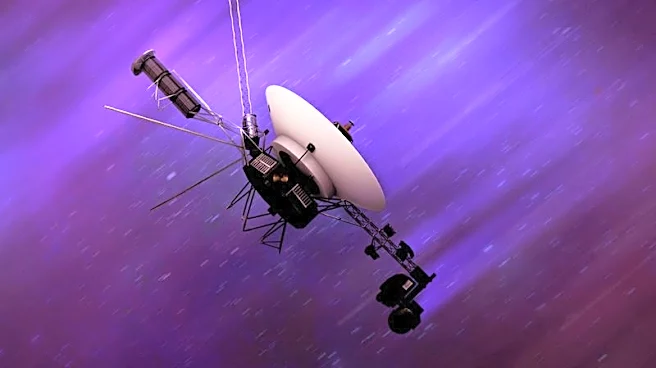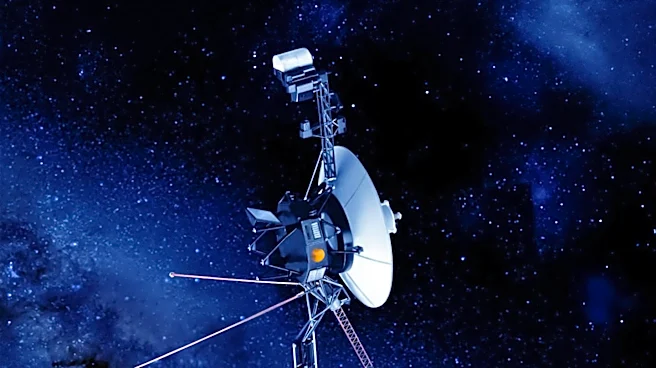


As it races through interstellar space, Voyager 1 is on the verge of another record where no human-made object has ever reached: one light-day from Earth.
On Wednesday, Nov. 18, Voyager 1 will hit a historic
milestone, reaching more than 16 billion miles from Earth at 5:16 a.m. ET, according to NASA. That's one light-day away, meaning light would need a full 24 hours to cover the distance, compared with just over eight minutes for sunlight to reach Earth.
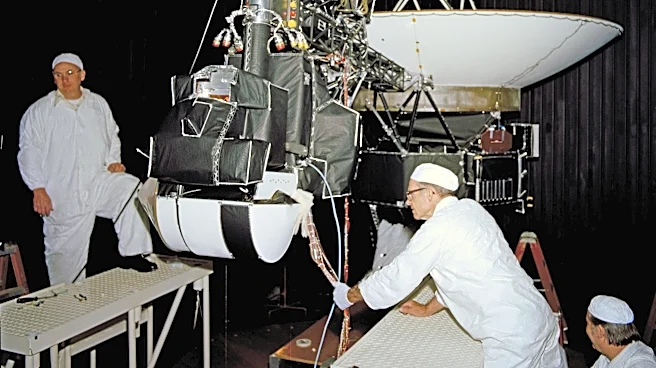
Nearly 50 years ago, NASA launched Voyager 1 and Voyager 2 from Cape Canaveral, Florida, to explore the outer reaches of the solar system. Decades after completing their primary mission, the twin spacecraft continue their journey through space. Of the two spacecraft, Voyager 1 is approaching its remarkable milestone first. Voyager 2 is expected to reach the one light-day milestone about nine years later, in November 2035.
Voyager 1 location in interstellar space
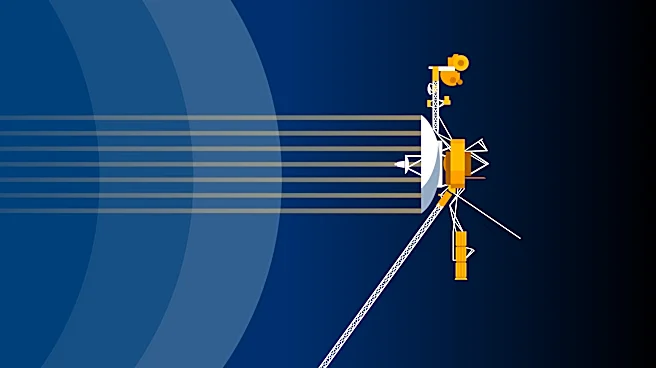
Voyager 1 and its twin, Voyager 2, are the only spacecraft ever to venture beyond the heliosphere, the vast bubble of charged particles and magnetic fields created by the sun. Thanks to its higher speed and a more direct path through the solar system, Voyager 1 pulled ahead of Voyager 2 just months after launch. It flew past Jupiter in 1979 and Saturn in 1980. In 1998, it surpassed Pioneer 10 to become the most distant human-made object from Earth, according to the Planetary Society.
Voyager 1 remains the most distant human-made object ever launched, a record it has held since passing Pioneer 10 in 1998, according to NASA.
Unable to view our graphics? Click here to reload page.
Where is the Voyager spacecraft going?
The Voyager 1 spacecraft is headed toward Gliese 445, a distant star more than 17 light-years away from Earth. Although the spacecraft has been speeding through space at nearly 38,000 mph since 1977, it will still take about 40,000 years to make its closest approach.
Voyager 2 continues its journey through interstellar space beyond the sun's protective bubble, traveling southward and away from the plane of the planets. The spacecraft is headed toward the constellation Pavo.
Profile of the Voyager spacecraft
Voyager 1 reached interstellar space in 2012, with Voyager 2 making the crossing six years later after following a different path through the solar system.
Both Voyager spacecraft are powered by radioisotope thermoelectric generators, which produce electricity from the heat released by decaying plutonium. As that fuel supply slowly declines, each probe loses about 4 watts of power every year, according to NASA. Nearly 50 years after launch, their available power has become increasingly limited, forcing mission engineers to conserve energy by shutting down nonessential systems.
Voyager 2's power source has been gradually fading, so engineers have shut down some non-science equipment and are relying on "lower-power alternatives" that remain effective at keeping the spacecraft warm, NASA officials said in a statement.
Voyager spacecraft planetary encounters
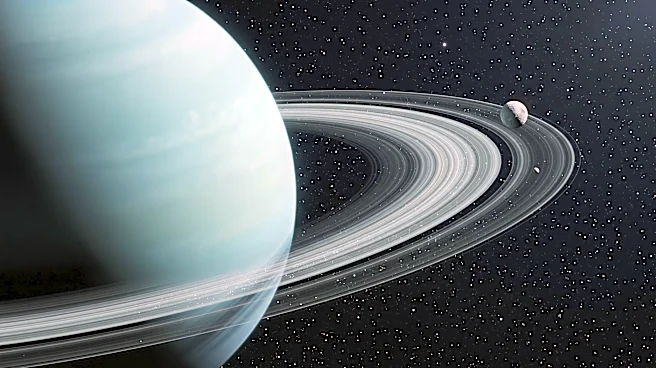
During their flybys, both spacecraft extensively photographed several planets in our solar system, including Jupiter in 1979, Saturn in 1980, Uranus in 1986 and Neptune in 1996. Voyager 1 discovered volcanic activity on Io, a moon of Jupiter, as well as three previously unknown moons orbiting Saturn. It also revealed intricate structures within Saturn's icy rings.
SOURCE: NASA, Jet Propulsion Laboratory, The Planetary Society, Smithsonian Magazine, Space.com and USA TODAY research
This article originally appeared on USA TODAY: Voyager 1 spacecraft nears historic one light-day from Earth