







A 16-year-old can ace her biology exam, excel at basketball and still think about ending her life. Her parents love her. Her teachers believe she’s thriving. But she has learned to keep her pain to herself.
A brief mental health screening at school may be her first chance to reveal something is wrong. She doesn’t have to initiate a frightening conversation. She only has to answer a few questions.
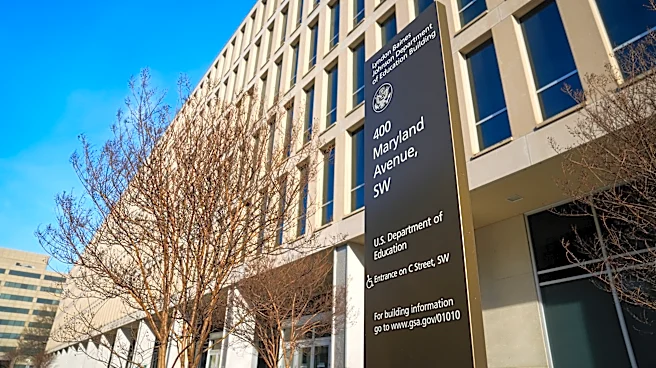
In August, the U.S. Department of Education issued guidance reinterpreting federal law to require written parental permission for school mental health screenings nationwide. On Oct. 30, the department escalated its position, demanding that Illinois revise its screening guidance or risk federal enforcement. What sounds like an obscure bureaucratic dispute
over permission slips now has immediate implications for schools across the country as states and districts weigh how to respond.
The stakes are substantial. One in three American high school students experienced persistent sadness or hopelessness in 2025. Fewer than one in three of those students received counseling or therapy. Schools are the most scalable places for mental health support, but they cannot respond to distress they never detect.
Even attentive, loving adults can miss their children’s distress. In a study of more than 5,000 families, half of the youth who reported having contemplated suicide had parents who were unaware. Adolescents describe family opposition, misunderstanding and fear of burdening their parents as reasons not to seek support.
Universal screening offers brief questionnaires to all students, not just those whose difficulties have caught an adult’s attention. In a randomized trial of nearly 13,000 Pennsylvania students, universal screening increased the odds of identifying depressive symptoms nearly sixfold and of initiating treatment more than twofold. Nearly one-third of students who requested support through screening said they hadn’t discussed their mental health with anyone in the previous year.
How opt-in policies affect depression screenings

At issue is the Protection of Pupil Rights Amendment (PPRA), a federal law dating to 1974 that requires written parental consent for certain required surveys involving sensitive subjects, while providing opt-out rights for other surveys. The administration now argues that students may feel compelled to participate in a survey simply because school staff administer it, triggering requirements for written parental permission.
That concern warrants consideration. However, schools have long used procedures to notify parents and ensure students have meaningful opportunities to decline. We’ve seen firsthand students exercise that right even when their parents hadn’t opted out. The possibility of pressure calls for meaningful safeguards, not the presumption that student choice is impossible.
The difference between opt-in and opt-out procedures is not trivial. In one study, participation in school-based depression screening dropped from 85% to 66% after a district switched to written opt-in consent. That’s nearly 200 fewer students screened per 1,000. Active parental permission requirements can also disproportionately exclude students with elevated behavioral health risks and those from disadvantaged backgrounds.
School mental health staff’s experience with screening highlights what students stand to lose through opt-in requirements. Antaniece Carter, a director of social-emotional learning in East St. Louis, Illinois, has shared that students often use universal check-ins to “communicate that they feel unsafe at that moment of time or they have struggles in the home setting the night before.”
Those disclosures allow school staff to reach out precisely when help is needed. When screening requires advance parental permission, a form that goes unreturned can cost students opportunities to disclose concerns or connections to immediate support. But an unsigned form isn’t necessarily a parent’s informed refusal.
For students with obstacles to mental health care, this creates another

The form may be lost, overlooked or forgotten. Under an opt-in system, administrative silence becomes a barrier to screening, potentially excluding children already facing obstacles to care.
This federal shift arrives as states expand prevention efforts. Massachusetts has required school-based substance use screening since 2016. Illinois has enacted plans for annual mental health screenings beginning in the 2027-28 school year.
These efforts, among many others, recognize that waiting for children to ask for help is not an adequate public health strategy. Although schools offer an unparalleled opportunity to identify and support students, they may now hesitate to implement programs for fear of jeopardizing federal funding.
We are clinical psychologists and parents. We value parental authority, and we know children sometimes need ways to disclose distress before adults recognize it. Those commitments need not conflict.
Schools must respect parental notification and choice, protect student privacy, ensure participation is genuinely voluntary and establish reliable pathways to services that students can access in ways that work for them.
Meeting these challenges requires thoughtful policy, adequate resources and collaboration among school stakeholders. Yet the administration’s new guidance risks doing the opposite: erecting barriers that could leave vulnerable children unidentified and unsupported. Whatever its stated intentions, those consequences cannot be ignored.
The question isn’t whether parents deserve a voice in their children’s mental health. They do. The question is whether a missing permission slip should silence a child who is ready to ask for help.
That 16-year-old should not have to reach a crisis before someone notices. Parents deserve a voice in decisions affecting their children. Young people deserve a voice in asking for help. Sound policy can honor both.
Randi M. Schuster, PhD, is an associate professor of psychology at Harvard Medical School and the founding director of the Center for School Behavioral Health and Shajii & Azar Family Endowed Chair in Behavioral Health at Massachusetts General Hospital. Her research focuses on developing and evaluating scalable, evidence-based approaches to preventing mental health and substance use problems among young people, with an emphasis on expanding equitable access to early identification and intervention in schools.
Jessica L. Schleider, PhD is an associate professor of medical social sciences, pediatrics and psychology at Northwestern University, where she directs the Lab for Scalable Mental Health. Her work focuses on developing brief, targeted mental health supports, especially single-session interventions, to bridge gaps in existing systems of care.
This article originally appeared on USA TODAY: When kids don't ask for help, school screenings fill the gap | Opinion