
One year after the fatal shooting of Charlie Kirk rocked the nation on Sept. 10, 2025, the legal battle against the man accused of assassinating the conservative activist has cleared a key hurdle but no
trial date has been set.
Just days ago, the criminal case against Tyler Robinson, 23, advanced when a Utah judge ruled Robinson must stand trial on the seven charges against him, including first-degree murder. Robinson pleaded not guilty to all charges.
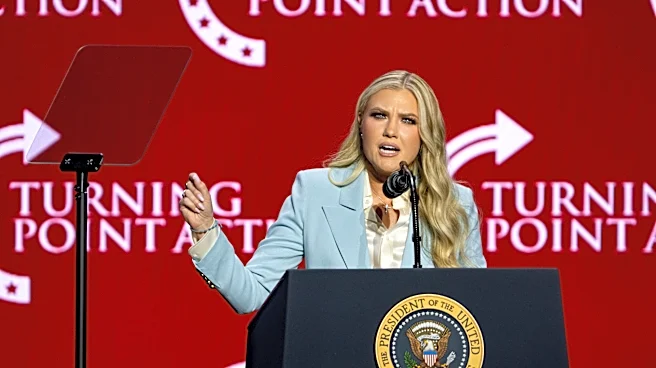
The ruling from Judge Tony Graf was the culmination of a critical hearing that began in July during which prosecutors gave a fuller glimpse at the evidence they say links Robinson to the shooting and defense attorneys attempted to cast doubt on that evidence. Erika Kirk, Kirk's widow who took over his role as leader of Turning Point USA, said the decision "marks an important step in our family’s pursuit of justice for him."
"As the next phase of the judicial process begins, our family remains united in our love for Charlie, our commitment to the pursuit of justice, and our prayer for a transparent and timely process," she said in a statement shared on social media.
Graf's ruling means Robinson could potentially face the death penalty if found guilty. A trial date could be set at the next hearing in October, but Robinson's attorneys have suggested there's still a long way to go before the case reaches a jury.
Here's what to know about where the case stands.
What happened in Charlie Kirk's shooting?
On Sept. 10, 2025, Kirk, 31, was answering questions in front of a crowd of about 3,000 people on the campus of Utah Valley University in Orem, Utah. Prosecutors say Robinson fired a fatal shot at 12:23 p.m. from the rooftop of a building on campus that hit Kirk in the neck and created chaos on campus.
Robinson then fled into a wooded area on campus where a rifle believed to be the weapon that killed Kirk was later found wrapped in a towel, prosecutors say. Robinson remained on campus for hours after the shooting, hoping to retrieve the rifle, and was even stopped by a police officer on campus who took down his license plate number, according to testimony and evidence presented by the prosecution at the preliminary hearing.
The following day, Robinson returned to his apartment in St. George, Utah, where he confirmed he had shot Kirk, "started crying a little bit, and said he wishes he hadn’t done it," his former roommate and romantic partner, Lance Twiggs, told investigators in a recorded interview played in court.
Later that evening, a family friend reached out to the Washington County Sheriff’s Office and indicated that Robinson had confessed and wanted to turn himself in, officials have said. Robinson was then arrested, putting an end to a frantic 33-hour manhunt.
Utah County Attorney Jeff Gray announced he intends to seek the death penalty, a move supported by Kirk ally President Donald Trump.
Graphic videos of the shooting spread quickly online, sparking an outpouring of grief and shining a spotlight on the nation's increase in political violence. Hundreds of people also lost their jobs after criticizing Kirk online, leading to free-speech lawsuits and at least $3.4 million in settlements.
Key hearing reveals prosecution's evidence in Charlie Kirk killing
The court case against Robinson has proceeded steadily since his arrest, with his attorneys repeatedly urging the court to limit media coverage of the pretrial proceedings and pushing to get the death penalty taken off the table. Erika Kirk and her attorney have advocated for cameras to remain in the courtroom and urged the judge to keep proceedings moving swiftly.
Court documents have revealed some details about what the investigation into Robinson has uncovered, but prosecutors more fully laid out their evidence during a highly anticipated preliminary hearing in July. In addition to Robinson's alleged confessions, Deputy Utah County Attorney Ryan McBride told the court a "mountain of evidence" proves Robinson shot Kirk, including video footage of him on campus and DNA evidence linking him to the alleged murder weapon.
McBride said Robinson targeted Kirk "because he disagreed with him," citing Kirk's views on homosexual relationships, Robinson's relationship with Twiggs and messages etched on ammunition found in the gun.
"It's not difficult to understand the motive here," McBride said in his closing argument.
Meanwhile, Robinson's defense team questioned expert witnesses about the DNA and ballistics evidence in the case. The defense argued that prosecutors had overstated the strength of the forensic findings, did not present sufficient evidence that Robinson targeted Kirk because of his beliefs, and failed to prove Robinson knowingly endangered anyone else during the shooting – an aggravating factor that makes him eligible for the death penalty.
"The state has utterly failed to prove that there’s a particular political expression that Mr. Robinson took issue with,” Richard Novak, one of Robinson's attorneys, said Sept. 1.
The preliminary hearing was not to determine Robinson's guilt or innocence, but whether there is probable cause for him to face trial. Graf, who was required to evaluate the evidence "in the light most favorable to the prosecution," concluded that there was.
When will the Charlie Kirk murder trial begin?
Graf and an attorney for Kirk's family have said they want a trial date set during the next hearing in the case on Oct. 23. One of Robinson's attorneys, Kathryn Nester, shed some light on what the defense and prosecution still need to hash out before that occurs.
"This is obviously a complex case that is going to involve some lengthy discussions with the state that involve pre-trial motion litigation, that involve expert litigation, that involve discovery litigation, that involve many, many phases of trial before we even get to the trial," she said in courton Sept. 1.
This article originally appeared on USA TODAY: Who killed Charlie Kirk? Murder case awaits trial a year after killing