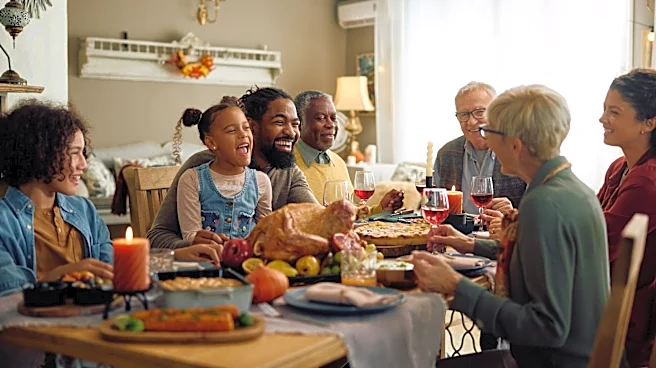

It’s as predictable as pumpkin pie. Minutes into Thanksgiving dinner someone brings up politics, or makes a snide comment about the sibling who missed an aunt’s funeral last year, and it’s off to the races
with the family drama.
Does Thanksgiving have to come with family stress? Maybe, but here’s how to handle it if “please pass the gravy” turns into a sparring match.
“Some people manage difficult family relationships by creating physical distance, such as moving away, or emotional distance, such as limiting contact. Holidays can bring everyone together again, sometimes placing people back in dynamics they have worked hard to step away from,” says Shannel Elhelou, neuropsychologist and founder of Brain Centric Neuropsychology in Westlake Village, California. “There are also different personalities in the mix, and some relatives may only see one another at holidays or major celebrations. Those occasions can bring pressure to get along and celebrate, even when there is unresolved tension.”
Here’s how to handle it.
Prepare ahead of time
Take a moment to think about what situations may feel difficult and how you would like to handle them if they arise, Elhelou recommends. “Rather than expecting the day to be perfect, consider what would make the experience feel meaningful or manageable for you. Focus on what you can control, such as setting boundaries, taking breaks or deciding how much time you want to spend at the gathering,” she says.
You can also find a go-to support person, and use breathing or calming strategies if it’s too much.
Give a little grace for the day
Remember it’s already a hard time for some people. Holidays can be filled with emotion, exacerbated by the stressors of travel. In 2025, AAA estimated that nearly 82 million people traveled at least 50 miles from home for Thanksgiving. That creates a lot of potential for family flare-ups.
“A seemingly small comment can bring up an old wound, and your emotional response may be shaped by more than just what was said in that moment,” Elhelou says. That doesn’t mean you have to brush off insults. Sometimes it can just mean addressing them directly later in a more private setting.
Keep in mind it’s very normal and common to have disagreements with family at the holidays. A 2024 survey by Trust & Will, an online estate planning platform, found that almost 40% of families report having disagreements during the holidays. The topics that are most likely to lead to arguments are predictable: politics, past family grievances, relationships, finances and parenting. You are not alone, but you can handle it better than most with some planning and skill.
Avoidance might be the best policy this once
This is a time where avoidance is sometimes the best strategy. Nobody needs to ruin six hours of cooking with grievances that can be aired another time. Mayo Clinic recommends limiting family stress by setting aside issues and avoiding bringing up “hot topics.” Other stress-relieving tips include taking breaks, saying “no” when you need to and maintaining healthy habits like eating and sleeping enough.
It can help to tell yourself, "this is hard right now, and I'm allowed to take a moment to figure out what I need," Elhelou says.
If you have to 'go there' use this formula
Sometimes it’s best to respond directly, head-on, rather than waiting for another day. Elhelou recommends the following formula:
“When a comment feels hurtful, pause before responding. Having a script to fall back on can help: ‘When you ___[specific action], I feel ___ [feeling word]. I’d appreciate ___ [clear request].’ Keep your request specific, explain how it could help the conversation and stay focused on what you need while remaining open to a workable compromise,” she says. “You can be respectful while also honoring your boundaries and self-respect.”
Of course, when in doubt, just change the subject to “Who’s ready for more pie?”
This article originally appeared on USA TODAY: How to instantly defuse a Thanksgiving family argument