









Oct. 14 marks the long-awaited event of the year for about 75 million Americans – it's the day they find out how big Social Security's cost-of-living adjustment will be for 2027.
So far, analysts estimate Social Security checks will increase by about 3.5%, the largest increase since 2022, when 40-year high inflation pushed the COLA up to 8.7% and larger than the 2.8% bump Social Security beneficiaries received at the start of this year.
COLA is based on averge inflation from July through September compared to the average of the same three months last year. September inflation will be relased on the morning of Oct. 14, with the final COLA officially announced a short time later.
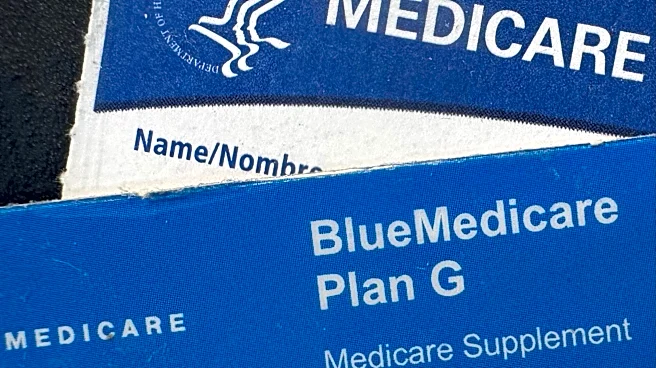
At 3.5%, the COLA would outpace the Medicare Trustees' expected 3.25%
increase in Medicare Part B premiums, something that doesn't happen often. Part B premiums have increased faster than COLA in the last three consecutive years and in seven of the last 10 years, according to The Senior Citizens League, a nonprofit that fights for senior citizens' benefits. Over this decade, Part B premiums have increased by an average of 5.3% per year, while COLAs have only averaged 3.1%. The final 2027 Medicare Part B premium announcement is expected between late October and early November.
"Unfortunately, while the government does have some measures in place to protect seniors from their healthcare costs rising faster than their incomes, those measures generally fall short," TSCL said in a blog.
How accurate are Social Security COLA estimates?
COLA is only based on July, August and September inflation each year, but analysts begin issuing monthly forecasts early in the calendar year based on the latest inflation report. Those early forecasts usually aren't as accurate because of their distance from the actual months COLA is based on. Inflation can fluctuate throughout the year.
For example, the 2027 COLA estimate was 1.2% based on inflation in January before the conflict with Iran caused energy prices to surge, a figure far from the current 3.5% forecast. The final COLA can still edge up or down, depending on September's inflation report, too.
"Could the COLA push higher to 3.6% given recent climbs in gasoline and utility prices?" said Mary Johnson, an independent Social Security and Medicare analyst. "To achieve that, there would have to be a very stiff jump in inflation, a jump so high that there was only one other time in the past 26 years, in 2005, when month-to-month inflation from August to September was that high. Perhaps not very likely, but our world and the U.S. economy today are teaching us never say never."
Last month, AARP, a nonprofit advocate for seniors, predicted a 2027 COLA of 3.6%.
But based on Johnson's historic models of inflation from August to September, she sees a 50/50 chance COLA could edge down to 3.4% from her 3.5% forecast. TSCL also forecasts a 3.5% COLA.
"I opted to estimate 3.5% based on existing inflation data," she said, but "if (September) inflation is lower than expected, then we might be looking at 3.4%. ... The difference of 0.1 percentage point would mean about $20 a month for someone with an 'average' Social Security benefit of $2,000 – less than the average price of a daily cup of coffee."
Committee for a Responsible Federal Budget, a nonpartisan think tank, forecast last month 2027 COLA of 3.4%.

Why start projecting COLA so early?
Although early-in-the-year COLA estimates aren't the most accurate, they're useful for retirees to budget and plan, analysts said.
"These monthly check-ins can give a glimpse of what the actual inflation data indicates for the third quarter (July through September months), and that can be useful in making retirement financial decisions such as renewing a CD or budgeting,” Johnson said.
COLA may outpace Medicare, but what else?
Any of the 2027 COLA predictions between 3.4% and 3.6% would top the Medicare Trustees' forecast for a 3.25% increase, or $6.60 monthly, for Medicare Part B premiums, to $209.50 for 2027, but maybe little else, analysts said.
The following items are among those expected to eat up the rest of people's COLA and more, analysts said:
- Heating a home this winter with heating oil is expected to cost 50% more than last winter, according to the National Energy Assistance Directors Association, the nonprofit that represents state directors of the federal Low-Income Home Energy Assistance Program.
- Ongoing fighting in the Middle East is expected to keep gas and diesel prices high for the foreseeble future.
- Zero-dollar premiums for Medicare Part D plans will be eliminated for enrollees who do not receive low-income subsidies (LIS). According to nonprofit health researcher KFF, 28% of prescription drug plan (PDP) enrollees without LIS, or 4 million PDP enrollees, paid no monthly premium in 2026. "My Part D plan had zero premium in 2026 but is going up to more than $19 per month in 2027," Johnson said.
Medora Lee is a money, markets and personal finance reporter at USA TODAY. You can reach her at mjlee@usatoday.com and subscribe to our free Daily Money newsletter for personal finance tips and business news every Monday through Friday morning.
This article originally appeared on USA TODAY: Social Security 2027 COLA may outpace Medicare cost but not much else