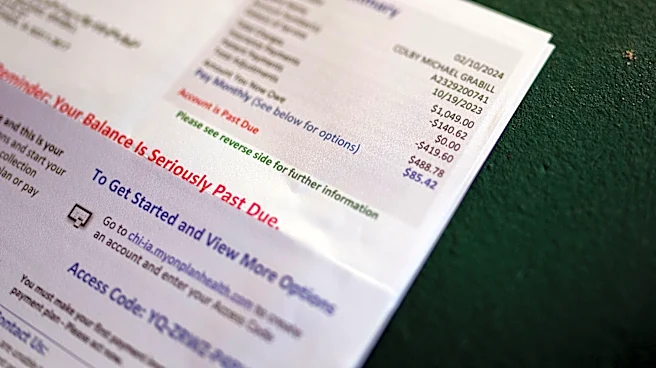

One in three working-age adults with private health insurance owe money to a hospital, doctor or other health care provider, a sign of how many struggle to afford medical bills even with insurance, a new
survey shows.
Consumers can run up medical debt quickly. Nearly half of insured adults with unpaid bills or medical debt owed $2,000 or more, according to a survey released Sept. 17 by the Commonwealth Fund, a private foundation that focuses on equitable access to health care
The survey shows how millions of working-age Americans grapple with the cost of health care even if they are insured through an employer, the Affordable Care Act or another private insurance plan. Insurance plans often require consumers pay a deductible, or a set amount before most coverage kicks in. People also typically are responsible for copays or coinsurance, or a percentage of a medical bill.
The survey comes amid rising prices charged by hospitals, doctors, drug companies, pharmacies and other health care providers, experts said.
"We're struggling to pay for rent and we're struggling to pay for other costs we have," said Patricia Kelmar, senior director of health care campaigns at U.S. Public Interest Research Group, or PIRG. "We're struggling to pay for medical bills that are due in 90 days and then sent to collections."
Why are health costs rising?
Other recent surveys show employers that sponsor health benefits for most working-age Americans are preparing for the largest cost increasesin two decades. Large employerssuch as Starbucks and Walt Disney are taking steps to rein in expenses next year, while 73% of small- to mid-sized businesses are considering dropping traditional health benefits due to rising expenses, according to eHealth, an insurance agency and adviser.
Meanwhile, hospital consolidation has allowed hospitals to charge higher prices and extra fees that boost health care expenses even morefor employers and consumers alike, Kelmar said.
Hospital stays, E.R. visits, and diagnostic tests boost debt
Among those with medical debt, about 2 in 3 adults said their debt stemmed from hospital bills, either from stays in a hospital, emergency room visits or non-emergency care from a hospital-owned clinic, the survey said.
People seeking routine care also endured medical debt, with 43% indicating debt came from doctor’s bills and 38% from lab work or diagnostic tests.
According to the phone and online survey of 6,353 adults over three months in 2025, 36% of respondents didn't have adequate savings to pay an unexpected $1,000 medical bill within 30 days. More than half of Black, Hispanic and moderate-income households − those who earn no more than two times the federal poverty level − were unable to cover a bill of $1,000 or more within a month.
More than two-thirds of respondents said they were worried or anxious about the unpaid bills. In follow-up focus groups, participants said they were overwhelmed by aggressive collection efforts by health care providers or bill collectors. Some hospitals have sued patients to obtain payments. Over a 15-year period in Virginia, one study found hospitals, doctors and medical providers brought 1.15 million lawsuits to collect $1.4 billion in medical debt from consumers.
While many health care pundits see medical debt as a problem among the uninsured, the survey shows that many people with health insurance also are incurring medical debt, even for routine care, according to Sara Collins, the study's co-author and Commonwealth Fund senior scholar for expanding coverage and access and tracking health system performance.
"When insured people are left owing thousands of dollars for their care, coverage is falling short of its most basic purpose: protecting people financially when they get sick," Collins said in a statement.
Stressed consumers blame health insurers first
The survey said 64% of consumers blamed health insurers for their medical debt while 57% cited the health care system.
"Health insurance companies are the easiest to point to because they're the ones right in front of you when you have a denial of a claim or trouble with your coverage," said Sabrina Corlette, co-director of Georgetown University's Center on Health Insurance Reforms.
Corlette said root causes of rising health care prices are more complex. Factors such as drug prices, consumers use of health care services and upcoding − billing for more expensive services than were performed − are pushing prices higher. Large health conglomerates that own hospitals, clinics and other entities are gaining market power and demanding higher prices, too, Corlette said.
"This is not your father's health-care system," Corlette said. "Patients have become human ATM machines to a lot of these entities."
Reach the reporter at alltuck@usatoday.com.
This article originally appeared on USA TODAY: New survey shows how many insured Americans still owe money on medical bills