



O.J. Simpson fueled up on fame. Nearly a decade after the late NFL star was acquitted of the double homicide of Nicole Brown Simpson and Ron Goldman, he and a crew decided to put together a hidden-camera TV show.
In it, Simpson pulled pranks on strangers dressed as a Ford Bronco salesman, a durag-wearing rapper, a pizza delivery man, an Elvis Presley impersonator and an elderly, white man. At the end of the gag, he'd say, "You've been juiced." Some welcomed the surprise. Others were left with a sour taste in their mouth.
"Juiced," which was broadcast on pay-per-view and available on DVD, is the subject of the Investigation Discovery docuseries "O.J. Unseen: Exploitation of Evil" (streaming now), which chronicles Simpson's dire attempt to restore
his celebrity status, the ethically questionable skits and the production challenges that stunted the series.
To crew members, Simpson was a man with charisma and a short temper. To director Rebecca Halpern, who combed through more than 60 hours of behind-the-scenes footage, "Juiced" offers a rare, two-week case study of Simpson's unfiltered psyche.
"O.J. Simpson used 'Juiced' as a vehicle to prove to the world that he is a beloved figure, that people actually still adore him and that the way the media had characterized him as a pariah was unfounded and wrong," Halpern tells USA TODAY. "And where I think O.J. was misguided in his thinking, he was conflating people wanting to take pictures with him, being wowed by this mythological figure in real life. He was conflating that with actual adoration and respect."
From a "Cheaters"-esque prank to a risque music video, here are the takeaways from the four-part docuseries "O.J. Unseen: Exploitation of Evil."
Where did 'Juiced' draw inspiration from?
In the 90s and early 2000s, shows like "Girls Gone Wild" and "Fear Factor" celebrated absurdity, violence and objectification. When crafting "Juiced," the show creator Rick Mahr, known for his "ruckus"-style videos, drew inspiration from Ashton Kutcher's "Punk'd." Director Halpern described shows like "Juiced" as offering an unvarnished glimpse of the most famous or infamous celebrities. Mahr licensed the footage for the documentary.

"You can't say that 'Juiced' is not an important piece of pop culture," Halpern says. "When you think about when it was made in 2006, this is before YouTube, when the reality television boom was happening, it was like the Wild West. You had a lot of fallen stars making their own reality TV shows as ways to have a comeback."
'Juiced' and its parallels to O.J. Simpson's life
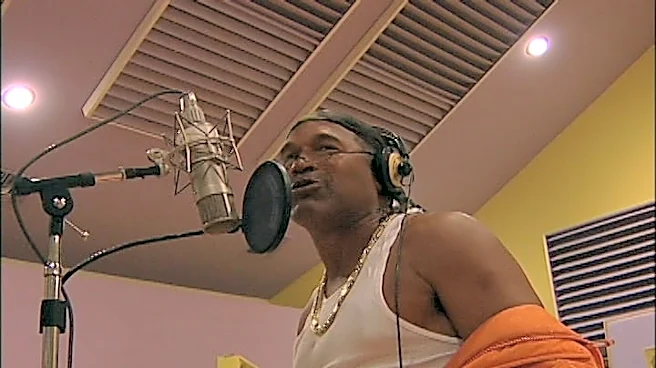
Many of the show's skits had direct parallels to Simpson's life. In one of them, Simpson played a rapper working on a new album, wearing a durag, a white tank top and gold caps over his teeth. The women in the skit were under the impression that they would sing the hook on a celebrity single or perform as background dancers. However, crew members described a change in mood when Simpson began flirting with the actors. Santos, one of the women featured in "Juiced," said in the documentary, "I didn’t have any control and it made me feel vulnerable."
The prank show also often drew direct parallels to Simpson's grisly double homicide accusation,including the pretrial deposition that detailed a relationship filled with profanity, violence and infidelity. One sketch − drawing inspiration from "Cheaters," the hidden-camera show that infamously caught unfaithful partners − featured a man walking into a motel room and catching Simpson with his wife. By the sketch's end, which employed actors instead of real people, the cast laughed it off.

Then there was the Ford Bronco reference. About 95 million Americans tuned in on June 17, 1994, to watch Simpson flee in his white Ford Bronco on a slow-speed chase across a Southern California freeway. So, naturally, in a "Juiced" skit, Simpson was tasked with selling a white Ford Bronco with a bullet hole. In the show, Simpson made lighthearted jokes about a dead body in the car, acknowledged that he made the vehicle famous and added, "If you ever get in some trouble and you got to get away, it has escapability."
"O.J. and what the whole trial of the century became, and what the Bronco chase was to pop culture in that moment in time, took on an outsized place in our collective consciousness, which makes him more of a meme than a man per se," Halpern says.
'Juiced' featured O.J. Simpson doing apparent 'whiteface' prank
Other clips leaned into the more profane and ethically ambiguous. In one scene, Simpson put on a prosthetic nose and a face of white makeup to impersonate an elderly, white man eager to call the numbers at a bingo game. In the documentary, Mahr and Todd Lewis, the "Juiced" director, pushed back on claims that they put Simpson in whiteface.
"Todd and Rick plead ignorance or innocence when it comes to any deeper meaning to any of the sketches," Halpern says. "Whiteface wasn't whiteface."
Simpson was also seen drinking or asking for alcohol in several behind-the-scenes videos. Although the crew did not ply Simpson with alcohol, Halpern argues that there wasn't any pushback. Alcohol would loosen him up and any talk about the trial would drive ratings, she says.
"You see him in the car at night talking about the bloody Bronco, bloody Bronco, or you hear him making jokes about his ex-wife and her murder when they bump into these people who are looking at an open house in Las Vegas," Halpern says. "If his moral compass was better aligned with how the world perceived him, joking about the murder of his children's mother should not have even ever entered into the equation, and certainly not doing it on camera."
O.J. Simpson's ex-girlfriend in new footage and a risque music video
Episode 4 of "O.J. Unseen" features a previously recorded interview of Christine Prody, Simpson's former girlfriend, who said that they had relationship troubles. She described Simpson as possessive and jealous but said, "He never rose a hand to me, not one time."

In 2023, Prody shifted her narrative after previously accusing Simpson of domestic violence. The docuseries highlights a bruise on Prody's arm at the time of the interview, with director Lewis noting that he stayed out of their relationship.
The final episode of the four-part docuseries highlights a racy, rap music video featuring Simpson sitting in a throne and wearing a zebra-lined suit as women danced and swayed around him. One cast member called the backup dancers "Nicole look-alikes." And despite pushback from a crew member, an archived clip captured a director saying, "We're going R-rated," and ordered the women to go topless. Prody was backstage as Simpson filmed the video. Amid filming, Simpson later requested to have the woman keep their distance, adding, "I have two teenage kids," in an archived clip.
What happened to O.J. Simpson's show 'Juiced'?
Before anyone could see the hidden-camera prank show, a crew member leaked the show's details, which was later ridiculed on evening talk shows and angered the families of Nicole Brown Simpson and Ron Goldman. As a result, "Juiced" was canceled before the planned DVD release.
Halpern described "Juiced" as ahead of its time due to its inappropriateness and shock factor. Now, the prank show lives on through projects like "O.J. Unseen" and clips found on the internet.
"What O.J. Simpson was trying to do with Juiced is not so different than what you're trying to do when you're unboxing your Birkin… or when you're trying to make people set their hair on fire for money, or whatever it is that we're doing these days to get the clicks, to get the eyeballs," Halpern says. "We're all complicit in the attention economy."
This article originally appeared on USA TODAY: O.J. Simpson's bizarre 'Juiced' show exposed in new doc with unseen footage