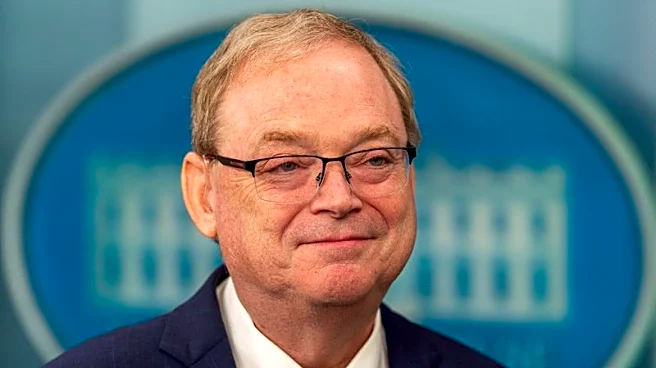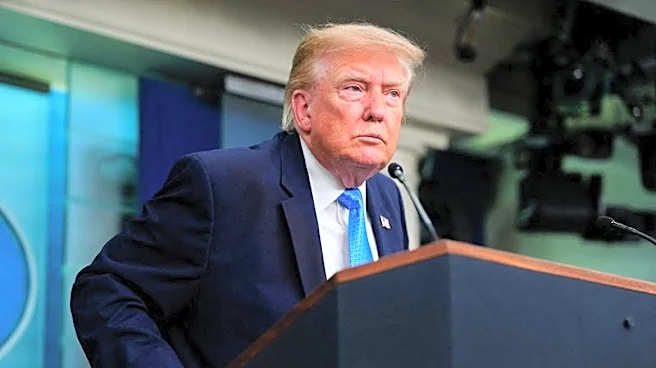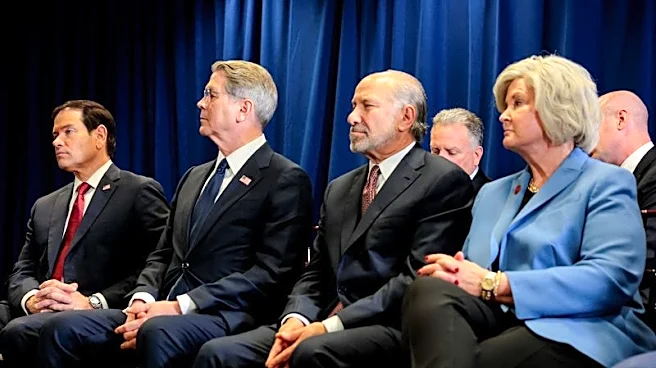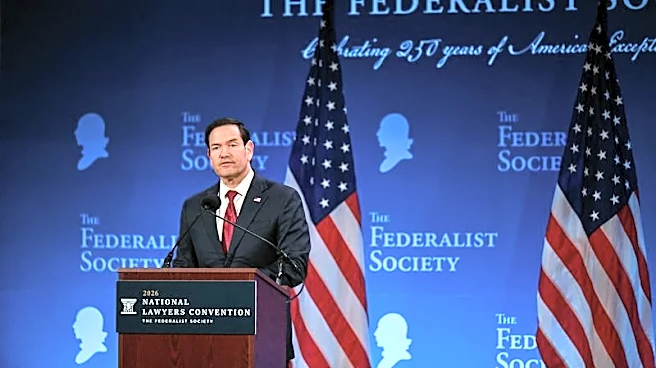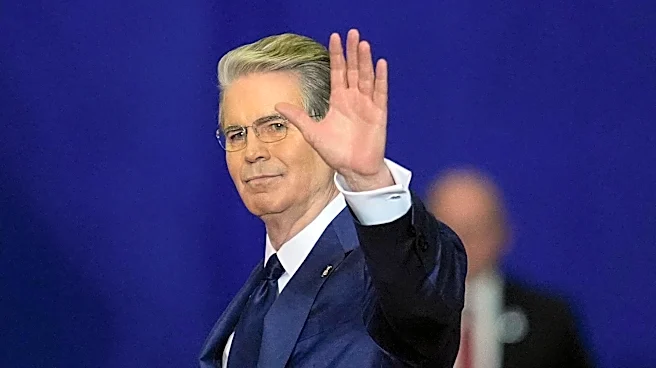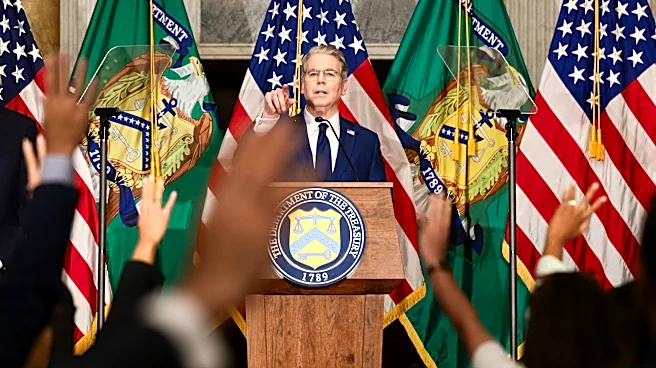



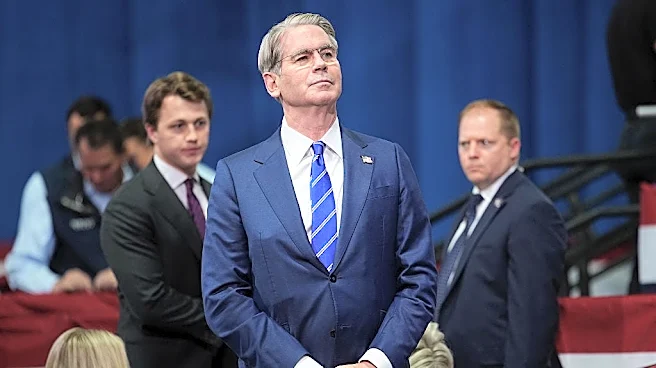
WASHINGTON – The U.S. war against Iran has driven Treasury Secretary Scott Bessent out of his Washington-area home and onto a military base, putting him on a growing list of senior Trump administration figures under U.S. protection against alleged retaliatory threats from Tehran.
Bessent confirmed the move Nov. 13 in an interview with CNBC, saying Iran is trying to retaliate against him – and other Trump administration officials he did not name – for pressing a war-related economic sanctions effort known as Operation Economic Outcast.
“I’m not going to be cowered that they have initiated death threats against me," Bessent said. "The other members of the cabinet – we’re not going to be cowered. And it means what we are doing with Operation Economic
Outcast is working.”
“President Trump constantly receives death threats,” Bessent also said, adding that the Iran military’s Islamic Revolutionary Guard Corps, or IRGC, is acting “like a dangerous cornered animal.”
“So I follow the Secret Service instructions and have moved from my home to a military base,” Bessent said.
Attorney General Todd Blanche has also been living on a military installation in the Washington area for months, according to three sources cited by Fox News Digital. Secretary of State Marco Rubio, Defense Secretary Pete Hegseth and White House Chief of Staff Stephen Miller have also moved into military housing, according to news reports.
The relocations – which come as the U.S. war continues into its ninth month – underscore something U.S. national security officials have feared for decades: that the Islamic republic has a global network of assassins, terrorists and other operatives that the IRGC can – and does – deploy against foreign adversaries abroad and on U.S. soil.
“The Iranians have shown both in Europe but also in the U.S. that this is a clear and present danger to U.S. officials,” said Magnus Ranstorp, an Iran expert at the Swedish Defense University who has been studying its global operations since the 1990s. “They have been targeting them and they are using proxies, including organized crime elements, to hit senior officials in retribution” for the U.S. war against Iran and other adversary actions by U.S. allies around the world.
Lina Khatib, an Iranian military expert and visiting scholar at the Harvard Kennedy School’s Middle East Initiative, said Iran is using proxy networks, including some directly connected to the IRGC, to conduct and plan terrorist activities worldwide, including in the U.S.
Despite efforts to counter them by the United States and its allies, Iran “continues to have the capability to do so,” Khatib said. “As military, economic, and diplomatic pressure on Iran mounts, the activation of networks is one way in which the Tehran regime is trying to pressure its adversaries.”

U.S. law enforcement and intelligence officials have worked aggressively to counter the threat posed by Iran through the IRGC, the elite military force that answers directly to the country’s supreme religious leader.
In July 1980, a year after the Iranian revolution overthrew the U.S.-backed monarch Mohammed Reza Pahlavi, a gunman dressed as a mail carrier fatally shot a former Iranian government official-turned-dissident when he answered the door at his Bethesda, Maryland, home. In 2011, U.S. authorities disrupted what the FBI called an Iranian plot to kill Saudi Arabia’s ambassador to the United States at a popular restaurant in Washington.
Iranian threats against officials in Trump’s first administration became so alarming that federal agents were assigned to protect former National Security Adviser John Bolton, former Secretary of State Mike Pompeo and Brian Hook, a Pompeo deputy. Hook became the public face of the U.S. “maximum pressure” campaign against Iran after Trump’s 2018 decision to withdraw from the Iran nuclear deal.
In 2022, the Justice Department indicted Shahram Poursafi for allegedly working on behalf of Iran’s Islamic Revolutionary Guard Corps to “carry out the murder” of Bolton and another unidentified official, who Pompeo later identified as himself.
On Nov. 10, the FBI placed Poursafi on its Most Wanted Terrorists list for allegedly hiring operatives to assassinate two former U.S. government officials between 2021 and 2022. The federal agency also released “Seeking Information” posters on three of his alleged Iran-linked associates.
In those cases, the FBI said in a statement, Iran was allegedly seeking to assassinate the U.S. officials “likely in retaliation for the 2020 death of Islamic Revolutionary Guards Corps-Qods Force commander Qasem Soleimani,” which Trump personally ordered.
“The FBI will not stand for the IRGC’s brazen attempts to silence, harm or murder activists, dissidents, journalists, public officials or anyone else it deems a threat,” Gregory Heeb of the FBI Washington Field Office’s Counterterrorism Division said.
In October, Director of National Intelligence Jay Clayton warned in a declassified memo that Iran has “substantially increased” its efforts to attack American government personnel across the Middle East.
“The lethal plotting efforts by the Iranians against U.S. citizens have reached advanced stages in both the Middle East and certain other countries,” Clayton warned in the memo, which was addressed to Rubio and obtained by Politico.

Despite the threats the three men have faced, Trump stripped federal protection from Bolton, Pompeo and Hook just after his January 2025 inauguration. Bolton told USA TODAY the FBI's new “Most Wanted” designation for Poursafi indicates he is still a threat to current and former U.S. officials, including himself and Bessent.
“I think they're very highly motivated, not just because of the strike against Qasem Soleimani back in January 2020, but the war. That’s why they added Poursafi,” Bolton said. “It shows just how directly the Iranian effort continues and how immediate it is.”
This article originally appeared on USA TODAY: Iran's threats push Bessent, other Trump officials onto military bases