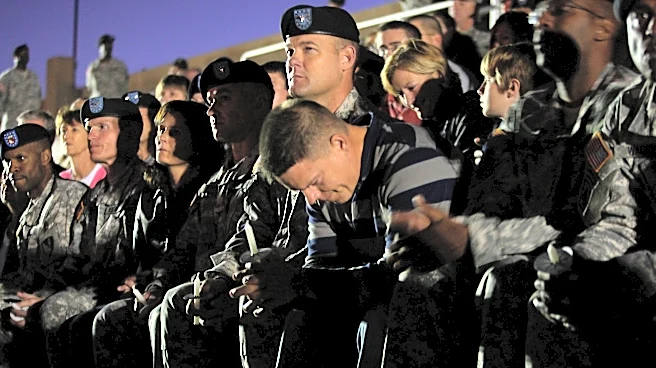


The planned execution of the Fort Hood shooter could be livestreamed for all to see.
Maybe.
It depends who you ask.
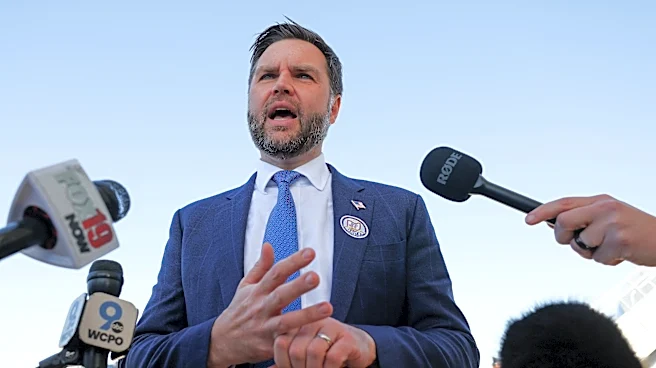
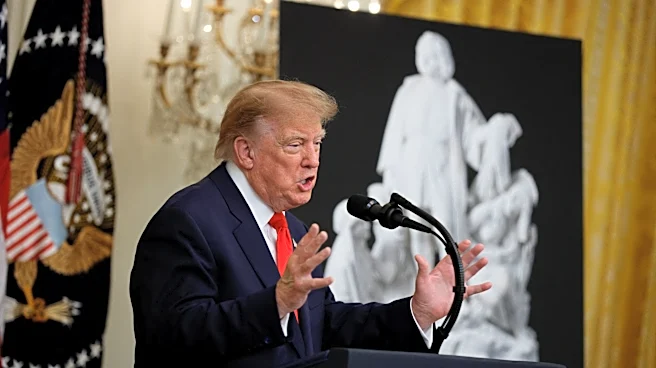
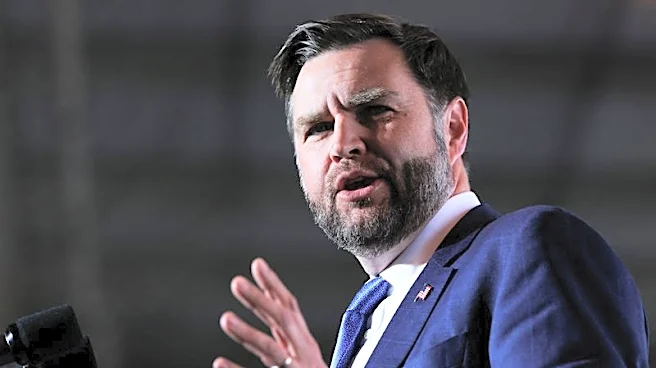
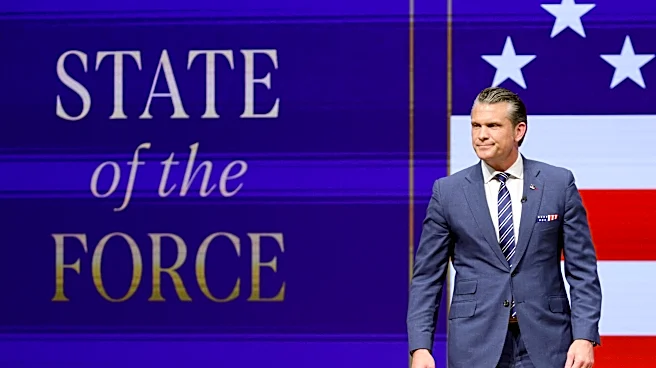
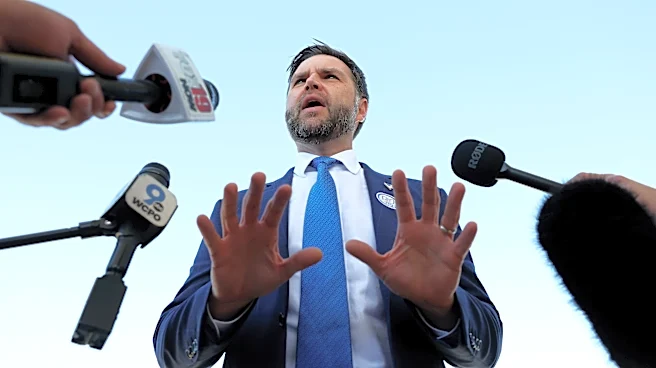
Last week, Pentagon chief Pete Hegseth said the public will be able to watch the firing squad death of former Army Maj. Nidal Malik Hasan, who was convicted in 2009 of killing 13 people and injuring 31 others in a shooting at the Fort Hood military base in Texas. However, as many in the public and both Democratic and Republican officials responded with shock and outrage, Vice President JD Vance said he wouldn't watch the execution. President Donald Trump later added he'd "make a decision ultimately" about whether the death would be broadcast.
The back-and-forth messages, along with public reactions ranging from criticism to support,
have raised questions about society's comfort levels with viewing violence. Experts say the debate has opened up a conversation about our complicated relationship with violent content, including why some people are drawn to watching it while others find the prospect deeply disturbing.
"Genuinely living a nightmare," one person commented over a TikTok about the situation. "This legit sounds like an event that would occur in 'The Hunger Games' universe," said another. Others commented on the unprecedented nature of the situation: "This cannot be allowed to happen it is genuinely the tipping point into full blown fascism," one person wrote on X.
Hasan will be getting a "firing squad of soldiers," Hegseth said in comments to Real America’s Voice on Oct. 8. "We'll make sure that people are able to watch it, that it's public," he said. "Because people need to understand that there are serious consequences for these types of things."
Commentators online have labeled that ideal "barbaric" and "medieval." Others have posted satirical content mocking how livestreamers may make content tied to the event or post about holding "watch parties."
"The first reaction is the dystopian, disturbing nature of execution in general," says Robert Thompson, professor of television and popular culture at Syracuse University. "The execution itself is not what a lot of people are complaining about. It's the fact that we may actually let people bear witness to it."
'Rubbernecking' and why it’s hard to turn away from disturbing news
Acting Secretary of the Army Adam Telle previously announced that Hasan's execution would take place at Fort Hood on Dec. 3. Reuters reported that the Pentagon would announce further details.
Experts who study psychology and violence say disturbing events can activate morbid curiosity, a common psychological trait. It’s the same reason there’s so much interest in horror and crime shows. Research finds that morbid curiosity can reflect a desire in the mind to learn about potential threats, such as violence and death.
Whereas public execution used to be held at the gallows in the town square hundreds of years ago, today’s gathering place happens on devices in the palm of our hand. In the age of social media, when everything can be screenshotted, clipped and repurposed indefinitely, news of these events sometimes appear unprompted on one’s algorithm, such as the way Charlie Kirk's shooting was shared on social media, including by young viewers.
This can lead to tendencies like "rubbernecking," the act of struggling to look away from something gratuitous or shocking.
"This is like driving down the highway and being in a traffic jam because of a car crash, and when you get up to the crash, everybody looks," says Michael L. Radelet, a professor emeritus at the University of Colorado Boulder who researches executions. "There's an attraction there that is hard to resist."
Breaking a norm almost a hundred years old
Radelet says public executions were once commonplace, and these events often featured ministers giving execution sermons about repenting, and a speech from the condemned inmate themselves, according to Radelet.
The last documented public execution in the U.S. was in 1936, when about 20,000 people attended the hanging of Rainey Bethea in Owensboro, Kentucky, according to "American Bloodlines: Reckoning with Lynch Culture," a 2025 book by Sonya Lee.
Radelet says states started to do away with this as the result of a variety of factors, including the invention of the electric chair, which brought executions inside, declining support for the death penalty and a growing moral distaste with public celebrations over these deaths. Lynchings were often carried out without due process, and innocent Black Americans were frequently targeted regardless of guilt.
"We got rid of them for several reasons, one of which, they became carnivals," Radelet says. "It just makes a mockery out of what should be a rather solemn process."
People’s discomfort with the news of the potential livestreaming of the Fort Hood shooter's death is a sign the norm is still strong, says Brad Fulton, professor of management and social policy at Indiana University Bloomington.
"For nearly a century, the implicit agreement in America has been that the state can kill, but not in front of us. A livestream breaks that agreement, and the word 'dystopian' is people noticing it," Fulton says.
The controversy comes after the botched execution in Tennessee of Christa Pike, who was hospitalized in critical condition after two doses of pentobarbital failed to kill her on Sept. 30. Her failed execution has shined a spotlight on lethal injections, which account for the vast majority of botched executions in the U.S.
For Fulton, there’s an important distinction between the witness of an execution and an audience. Military rule calls for journalists to witness and put the execution into context for the public. But a livestream, on the other hand, allows for anyone to take part.
"A witness watches on our behalf and has to explain what they saw," Fulton says. "An audience just watches."
Fernando Cervantes Jr., Amanda Lee Myers, James Powel contributed reporting.
Rachel Hale’s role covering Youth Mental Health at USA TODAY is supported by a partnership with Pivotal and Journalism Funding Partners. Funders do not provide editorial input. Reach her at rhale@usatoday.com and @rachelleighhale on X.
This article originally appeared on USA TODAY: 'Dystopian', 'medieval': Internet reacts to news of planned Fort Hood execution