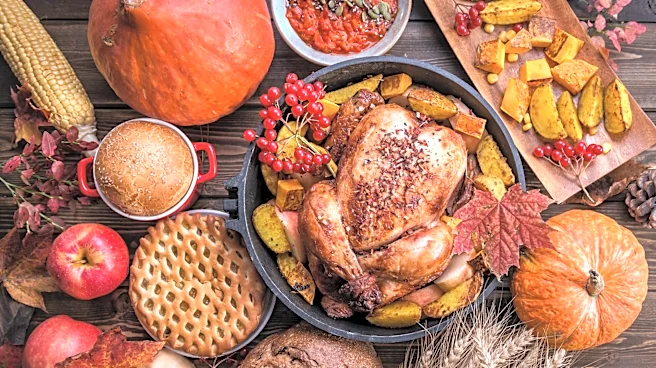





The first Thanksgiving is commonly associated with the 1621 gathering between English colonists and the Wampanoag people in Plymouth, Massachusetts. But two earlier celebrations in what is now Texas predate that event by decades.
According to the Library of Congress, Spanish explorer Francisco Vásquez de Coronado's expedition held a thanksgiving celebration in May 1541 in what is now Palo Duro Canyon in the Texas Panhandle.
Another celebration took place near present-day El Paso on April 30, 1598, when Spanish explorer Juan de Oñate marked the expedition's arrival in the Rio Grande Valley with a feast and religious service.
Both events occurred before the 1621 Plymouth gathering traditionally taught as the first Thanksgiving.
has its origins as long ago as George Washington.
Did the first Thanksgiving actually happen in Texas?
The 1621 celebration in Plymouth is widely recognized as the origin of the American Thanksgiving tradition. However, earlier ceremonies of thanksgiving took place in North America, including two in present-day Texas.
In May 1541, Coronado led an expedition of approximately 1,500 men through the Texas Panhandle in search of the Seven Cities of Gold.
After months of travel, the expedition stopped in Palo Duro Canyon. Padre Fray Juan de Padilla reportedly declared a day of prayer and feasting to give thanks for the group's survival.
The gathering took place nearly 80 years before the Plymouth celebration.
A historical marker commemorating the event was installed in 1959 at a crossing in Palo Duro Canyon, now part of Palo Duro Canyon State Park near Amarillo, according to the Texas Society Daughters of the American Colonists.
The 1598 Thanksgiving celebration in El Paso
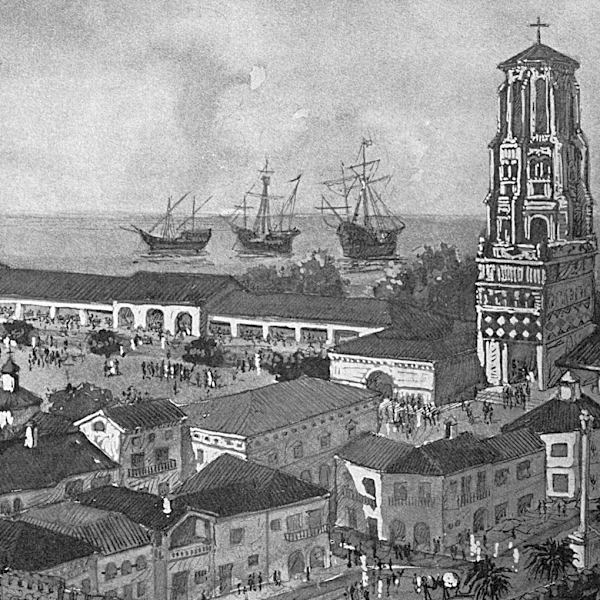
Another early thanksgiving celebration took place in 1598 during Juan de Oñate's expedition into what is now the El Paso region.
Oñate had been granted land in the northern Rio Grande Valley by the governor of New Spain. Rather than follow the traditional route along the Rio Conchos and Rio Grande, he sent explorer Vicente de Zaldívar to establish a wagon trail from Santa Bárbara in present-day Chihuahua, Mexico, to the El Paso area.
Oñate's expedition eventually included approximately 500 people and 7,000 livestock, according to the Texas Almanac.
The group faced difficult conditions during its 50-day journey across the Chihuahua Desert. Rain marked the first week of travel, followed by dry conditions. The expedition also ran out of food and water five days before reaching the Rio Grande.
After arriving near present-day San Elizario, the group spent 10 days recovering.
On April 30, 1598, Oñate declared a day of celebration that included a feast and Catholic Mass. He also read La Toma, or "The Taking," a legal declaration claiming the territory north of the Rio Grande for King Philip II of Spain.
Brandi D. Addison covers weather across the nation as the Weather Connect reporter for the USA TODAY Network and contributes to Texas Connect coverage across the state. She can be reached at baddison@usatodayco.com. Follow her on Facebook here.
This article originally appeared on USA TODAY: Texas hosted Thanksgiving celebrations decades before Plymouth