







PAGE, Arizona ‒ Mike Farrow looked at the kids running across the emerald-green grass of this unlikely desert town and wondered what their future held.
On a warm October evening, city police officers and firefighters celebrated National Night Out with their community. As he watched, Farrow, the city's vice mayor, thought about the shrinking water level at Lake Powell and its effects on Page and the broader community, including the local Navajo and Hopi people.
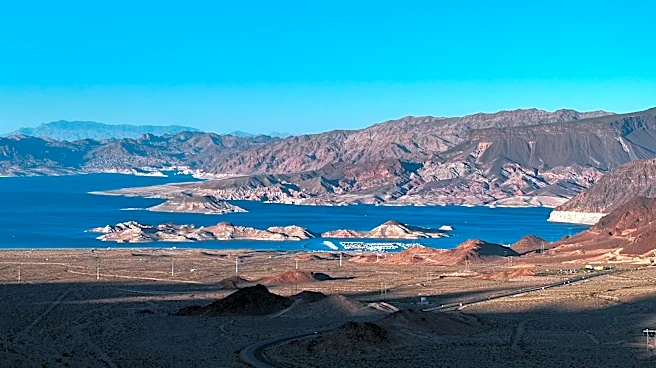
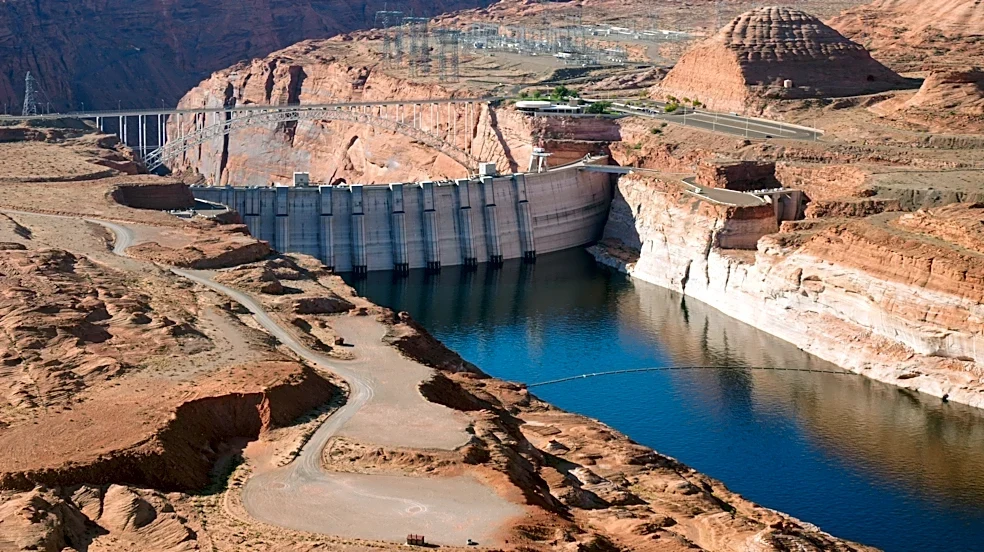
The lake anchors the economy of the tourist city, population 7,100, and the water level has been declining for years. Today, it sits about 21.6% full, up just slightly from the historic low it fell to this summer. Hydrologists say climate change is altering long-term precipitation trends
and the lake will likely never be full again.
Pointing to a child, Farrow said: “If I take the lake away from him, am I helping him or hurting him? If I take away the lake from those kids, what does that mean for jobs?"
Sitting adjacent to where the Colorado River carved a deep canyon through the red rock, Page is facing an uncertain future. The city owes its existence largely to construction of the Glen Canyon Dam and the reservoir it created, Lake Powell. While the dam's construction brought the first families, the lake then drew the tourists.
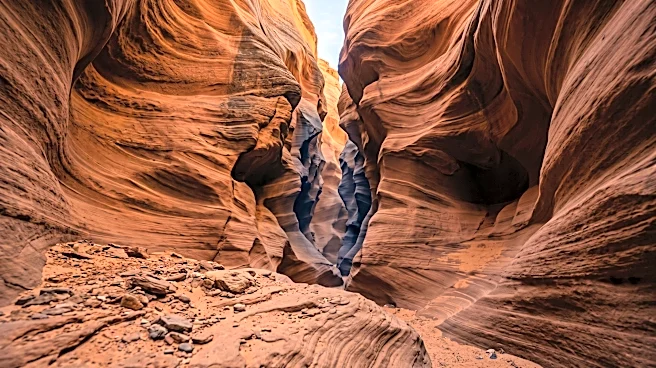
Today, hotels anchor the city's west side, closest to the lake. Most every day, tourists pass through to marvel at the Colorado River sparkling at the bottom of the 1,000-foot Glen Canyon, squeeze through the narrow Antelope Canyon or venture out onto the lake in rented boats or paddleboards at one of several marinas.
Boat dealerships and storage yards dot the compact city, and houseboats routinely roll through aboard trucks.
"We made it into a beautiful, beautiful lake and it’s now a worldwide attraction," Floyd Dominy, the Bureau of Reclamation commissioner who oversaw the dam project, said shortly after the lake's creation. "It’s become the Taj Mahal of America.”
Water shaped the Glen Canyon millions of years ago and it still shapes Page's economy today.
Last year, about 3.7 million people visited the Glen Canyon National Recreation Area. It features the lake, the Instagram-famous Horseshoe Bend viewing area, and Lees Ferry, a major put-in site for Grand Canyon rafting trips.
Visitation is declining, however. In 2024, a million more people visited the area, according to the National Park Service, and that was down from the all-time-high of 5.2 million in 2023. That's a nearly 30% drop in just two years. City officials say visits are down again this year due to the high cost of gas, hotels and flights, as well as a slowdown in international tourism.
A pre-pandemic study found that international tourists represented about 40% of Page visitors, many of them stopping through on bus tours from Las Vegas to the Grand Canyon, Zion and other area national parks.
Kickstarting Page
Retired schoolteacher Al Thoms said he still remembers seeing Page for the first time. Thoms and his wife taught at the local schools after meeting as recent college graduates teaching on the Navajo reservation in nearby Kayenta. But while Kayenta is a dusty, rocky town with little grass and even fewer trees, Page shines like an emerald jewel under the morning sun.
“We called it an oasis. You come in through the desert and all of a sudden you see trees," said Thoms, 71.
Unlike some other northern Arizona communities, Page has easy access to water from the Colorado River, allowing officials to maintain trees, grassy parks and a golf course. Many homes have green lawns, and the Page High School Sand Devils, despite their mascot, play on turf. The city recently completed a new intake pipeline to ensure it could extract water from Lake Powell if the water levels fall further.
For years, the city also enjoyed cheaper electricity than most of Arizona, due to the plentiful, clean hydroelectricity generated by the Glen Canyon Dam. But as the water levels have fallen, so has the amount of power the dam makes.
While Navajo, Hopi and other Native Americans often lived and moved through the Page area, the area was first mapped by the 1776 Dominguez-Escalante expedition from Santa Fe, New Mexico. Other explorers, gold and uranium prospectors, and settlers from the Church of Jesus Christ of Latter-day Saints also lived in the area over the years.
But it was the construction of the Glen Canyon Dam that kickstarted Page. Congress authorized the dam in 1956, and workers quickly swung into action. But first they needed somewhere to live.

The city was named in honor of former Bureau of Reclamation Commissioner John C. Page. Community officials got started on Thanksgiving 1957 with trailers and dirt roads. Workers on the dam project initially received special subsistence payments because groceries and other supplies were so expensive, given they had to be hauled over miles of bumpy roads from Flagstaff, about 130 miles to the south.
It many ways, the settlement first known as Government Camp resembled Boulder City, its counterpart for Hoover Dam construction. But there was one key difference: plenty of churches. While alcohol was banned in Boulder City, the drinking and prostitution that have become synonymous with Las Vegas were ubiquitous during the Hoover Dam's construction, and federal officials didn't want a repeat.
"The Bureau of Reclamation really wanted to inspire families to be a part of Page, and not so much promote the bars and drinking atmosphere," said Debbie Moses, the executive director of the Glen Canyon Conservancy, a nonprofit that supports the national recreation area. "They really wanted to have more of a family atmosphere than bars everywhere... and gave land to plant churches. Now what you have is Church Row on Lake Powell Boulevard ‒ one denomination after another."
Today, denominations from the Immaculate Heart of Mary Catholic Church to the First Baptist Church line the east side of the boulevard as it curves around the high school from Coppermine Road. That road takes its name from a small copper mine on Navajo land south of Page; the mine closed in 1968.
President Dwight Eisenhower fired the first construction blast at the Glen Canyon dam site from the White House in October 1956. At the time, the few roads in the area were dirt, and driving from the Page side of the Glen Canyon to the construction site on the other side totaled 190 miles, according to a federal history of the project.

"Establishing a city from scratch in the middle of nowhere on wind-blown desert sand was no simple task," Jedediah Rogers wrote in a 2006 Bureau of Reclamation history. "At the beginning of 1959, the government had outfitted the new city with electricity, temporary homes, and a school that served 200 students. By mid-1961, the population of Page stood at 6,000, the tenth largest in Arizona, with a school enrollment of 1,500."
Page formally became a self-governing city March 1, 1975, following years of federal management.
Thoms, the teacher, and his wife Kathy, 69, said their kids struggled a bit with the size of Page, but otherwise loved their childhood there: jeeping on rocky trails, two-week houseboat adventures deep into Lake Powell, watching the sun rise and set on the red rocks of the desert. With their kids now grown, the couple spends summers traveling internationally, but they always come home to Page.
"Our whole life was here," Kathy Thoms said.
The Navajo Generating Station's demise
The Glen Canyon Dam began making hydroelectricity in 1964. In the mid-1970s, it was joined by the Navajo Generating Station, a massive coal-fired generating plant built on Page's east side.
Sitting on leased Native Americans land, the plant employed roughly 1,000 people, from the engineers who oversaw the turbines to the miners who dug about 8 million tons of coal annually in Kayenta. Most of the workers were either Navajo or Hopi, and the plant pumped millions of dollars worth of payroll, purchasing and nonprofit grants into the Page economy each year.
That all ended when the plant closed in 2019, a victim of environmental policies that made coal more expensive than natural gas. Workers finished demolishing it about three years later, and many of the generating station's workers left the community to work at power plants across the West. At the time of the plant's closure, federal officials said coal power was contributing to climate change and air pollution.
Among those who lost their job was Adrian Augustine, 45, a Navajo Nation member who now works at the Pow Wow Trading Post in Page. He used to test coal ash for the generating station but now helps assess the value of pawned items, weighing earrings and chunky turquoise jewelry in his hand.
In years past, tourists eagerly bought silver and turquoise jewelry made by local Native American crafters, but now it's mostly become a hobby for family members making gifts, he said.
Like many other Page-area residents, Augustine said news coverage of the dropping Lake Powell levels has exacerbated economic challenges. Sometimes, he said, it feels like Page is a community out of the history books: “It’s basically a boomtown. That's how so many of these communities got started. Gold, silver and water.”
Augustine said the number of people coming to pawn jewelry reflects the economic struggles of the greater Page economy: "The power plant was the main bread and butter here. When they got rid of that, that was a huge hit."

'Just moments away from everything'
Farrow, the vice mayor, retired to Page after first visiting on vacation in 2012. A military veteran, Farrow said he's seen enough of the world to know Page is a special place, regardless of the water levels.
Farrow said he remains hopeful visitation will improve, even if the lake struggles. He said news media coverage of the falling levels has given some people the misperception there's no water left. Even some of his neighbors have fallen victim to that belief, he said, in part due to AI-generated images showing an empty lake.
He said the loss of the Navajo Generating Station meant the end of its community contributions to nonprofits and the schools. Page, he added, is still trying to make up the shortfall. He encouraged tourists to make Page part of their travel itinerary, so they can see the same scenes that have attracted so many to the desert oasis.
“Every corner you go around is a brand-new view that says it’s a destination. You’re just moments away from everything," he said. "Most people who come here end up coming back."
This article originally appeared on USA TODAY: Falling water, falling visits: Desert town faces uncertain future