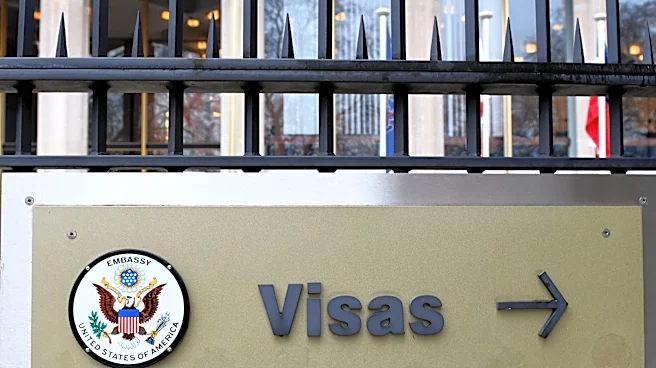


Immigrant visa applicants around the world are being notified by email that long-awaited appointments at U.S. embassies and consulates will be postponed.
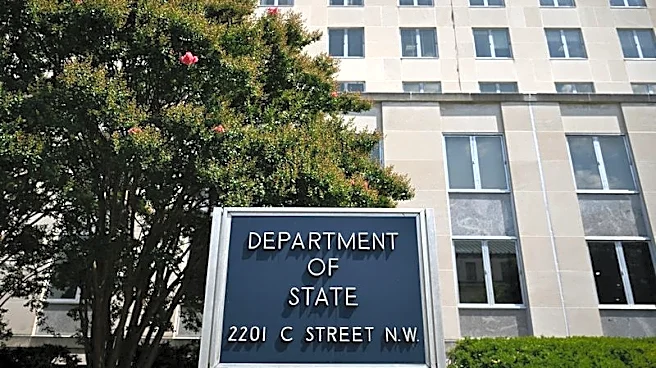
The State Department said it is temporarily pausing appointments for visa services so consular officers can undergo new training on “public charge” screening – an assessment used to determine whether someone seeking to immigrate is likely to become dependent on government assistance.
The interruption is the latest in a series of efforts by the Trump administration to tighten access to legal immigration. Officials have expanded social media screening and raised or proposed fees for certain visas. The State Department says it has revoked more than 175,000 visas since Trump returned to office. On
Aug. 24, it announced plans to revoke visas held by people who entered the country legally as tourists or business travelers and later sought asylum.
Here’s what to know.
Why are immigrant visa appointments being postponed?

The State Department says consular officers need additional training on how to evaluate whether people seeking to move permanently to the United States can support themselves without government assistance.
“A more prosperous America means ensuring that visa applicants are not likely to become a public charge, as defined under U.S. law and regulation, and not likely to become dependent on U.S. public benefits reserved for qualified Americans in need,” a State Department spokesperson said in a statement to USA TODAY.
The department said it has been updating its public-charge guidance and training since early this year. It added that it launched a "a global training initiative" at every U.S. embassy and consulate in early August to ensure consular officers “are fully equipped to evaluate every visa applicant comprehensively and consistently.”
“To accommodate this in-depth training, appointments for visa services will be adjusted,” the spokesperson wrote.
But the training is arriving at a striking moment.
The postponements began shortly after federal judges this month rejected the administration’s attempts to use blanket pauses, rather than individual assessments, to prevent certain immigrants from receiving visas over public-charge concerns.
The move quickly prompted plaintiffs in one of the cases to file an emergency motion accusing the State Department of taking “actions that appear on their face to directly contravene the Court’s order.” They are now asking the court to enforce its ruling vacating the visa pause and require the department to explain the basis, scope and expected duration of the appointment postponements.
The State Department has not released the new training materials, explained what officers are being instructed to do differently or said why appointments had to be postponed while the training was conducted. It also did not answer USA TODAY’s questions about exactly when the training began or when consular posts were instructed to start rescheduling interviews.
What is the public-charge test?
Public charge is not a new concept in U.S. immigration law. The fight is over how far the government can stretch it.
Federal law allows officials to deny a visa or green card if they conclude that an applicant is likely “at any time” to become a public charge. That determination is supposed to be made person by person, based on factors including the applicant’s age, health, family situation, finances, education and skills.
The people affected by the interview postponements are applying from abroad, meaning they generally are not receiving U.S. public benefits. The test instead requires officers to predict whether they may become dependent on government assistance after immigrating.
Even after arriving, many new permanent residents must wait five years before becoming eligible for major federal means-tested programs, including food stamps and Medicaid. Eligibility varies by program and immigration status, and exceptions apply to groups including refugees and asylees.
Successive administrations have disagreed sharply over how broadly that test should be applied.
Under a Biden-era rule, officials generally considered whether someone was likely to become primarily dependent on cash assistance or government-funded long-term care. The Trump administration rescinded that rule in July, arguing that it prevented officers from considering other forms of assistance.
Beginning Sept. 18, U.S. Citizenship and Immigration Services officers reviewing certain green card applications inside the United States will have broader discretionto consider an applicant’s use of means-tested benefits. Receiving benefits alone will not automatically disqualify someone, according to the administration, but it can be considered as part of the overall assessment.
The State Department separately applies the public-charge provision to people seeking immigrant visas abroad. It has directed consular officers to scrutinize applicants’ finances, education, employment prospects, English proficiency and health more closely when determining whether they could become dependent on government assistance.
The department has also started testing public-charge bonds, which can allow some applicants initially denied on public-charge grounds to receive visas after posting money as a financial guarantee.
But the Trump administration's attempts to use public charge to stop entire groups of applicants have repeatedly run into trouble in court.
What have courts said about the administration’s use of public charge?
In January, the State Department stopped issuing immigrant visas to nationals of 75 countries it considered at high risk of relying on public benefits. Applicants could still submit paperwork and attend interviews, but consular officers were instructed to refuse their visas, even if an individualized review showed they were otherwise eligible.
The policy remained in place for seven months.
On Aug. 7, a federal magistrate judge in California blocked the department from applying the policy to the plaintiffs in Sayani v. Rubio.
On Aug. 21, U.S. District Judge Jeannette Vargas went further, vacating the 75-country policy. Vargas found that Secretary of State Marco Rubio had exceeded his authority by categorically stopping consular officers from issuing visas based on applicants’ nationalities.
Four days later, U.S. District Judge Richard Leon found the public-charge pause unlawful as applied to the named Diversity Visa applicants challenging it in Ivanov v. Trump and several consolidated cases. Leon also rejected separate State Department and USCIS pauses affecting those plaintiffs.
The decisions did not eliminate the public-charge test or prevent officers from denying visas on that basis. Instead, they drew a line between scrutinizing an individual applicant – which the law permits – and stopping entire groups of people from receiving visas without that individualized determination.
On
Who is affected by the postponed appointments?
The postponements appear to affect people applying for immigrant visas through U.S. embassies and consulates abroad.
The most common immigration visa applicants include spouses, parents, children and siblings of U.S. citizens, as well as relatives of green card holders. Immigrant visas are also available to some people sponsored by U.S. employers.
An immigrant visa allows someone to travel to the United States and seek admission as a permanent resident. Once admitted, the person becomes a green card holder; the physical card is generally mailed afterward.
The appointments are being postponed even as the administration pushes more green card applicants into the consular system. In May, USCIS said it would approve applications for permanent residency from within the United States "only in extraordinary circumstances." The policy could require more applicants already living legally in the U.S. to leave the country and complete the process at consulates abroad.
For many applicants, the interview comes near the end of an already lengthy process. They may have paid fees, gathered years of records and completed medical examinations before receiving an appointment. Some must also cross international borders to reach the appropriate U.S. consulate because the United States does not process immigrant visas at every diplomatic post. A last-minute postponement can mean losing money already spent on airfare, lodging and medical appointments.
The pause is not expected to affect nonimmigrant visas, which include visas for tourists, students and temporary workers.
What happens to people whose interviews were already scheduled?
Applicants have received emails telling them that their interviews are being rescheduled and that they each will receive another notice with a new date and time.
What happens in the meantime is less clear.
The uncertainty quickly spilled onto Reddit, where applicants and relatives compared cancellation emails, shared accounts of last-minute postponements and searched for clues about when interviews might resume.
One described rushing to cancel a hotel reservation and other travel plans before losing more money. Another, who said a relative's upcoming interview had been canceled, described feeling confused and upset by what appeared to be an embassy-wide hold.
The State Department has not said whether applicants will retain their places in line, how quickly canceled interviews will be rebooked or whether some may have to repeat medical examinations or replace documents that expire during the delay.
For Diversity Visa applicants, the clock is especially unforgiving. They must receive their visas by Sept. 30, when the federal fiscal year ends. Missing that deadline can erase their eligibility, no matter how long they have waited or how close they came to completing the process.
When will immigrant visa appointments resume?
The short answer: It’s unclear.
The State Department did not answer USA TODAY’s questions about when appointments would resume or announce how long the postponements would last. It said only that “whenever there are changes to visa interview appointments, embassies and consulates communicate any changes directly to visa applicants.”
Recent visa pauses offer little certainty. The 75-country immigrant visa pause remained in place for seven months, until a judge struck it down. Plaintiffs in that case are now asking the court to require the State Department to disclose how long the new disruption is expected to last. A separate pause on Diversity Visa issuances, announced in December, is still in effect.
For now, affected applicants are left waiting for another email.
This article originally appeared on USA TODAY: Immigrant visa interviews delayed: Who's affected and what's next