




When it became clear Salman Rushdie was going to survive the 2022 stabbing, he knew he wanted to document his injuries.
Days after Rushdie suffered multiple stab wounds to the head, neck, torso and left hand, his wife, the poet Rachel Eliza Griffiths, had a video camera shipped to the hospital in Erie, Pennsylvania, and began to record.
The footage is now a documentary, “Knife: The Attempted Murder of Salman Rushdie,” directed by Alex Gibney. Borrowing from Rushdie’s memoir, “Knife: Meditations After an Attempted Murder,” the documentary follows Rushdie’s recovery and return to the amphitheater in Chautauqua, New York, where the attack occurred.
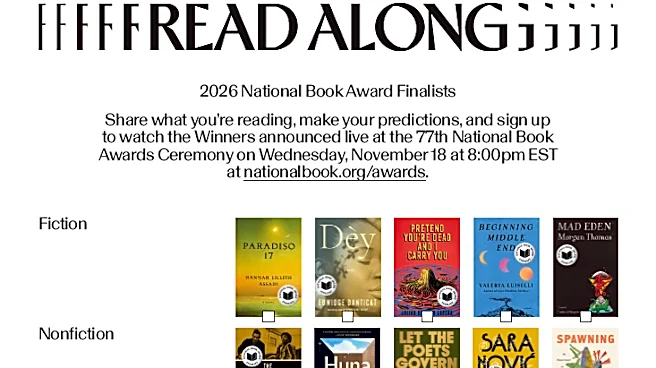
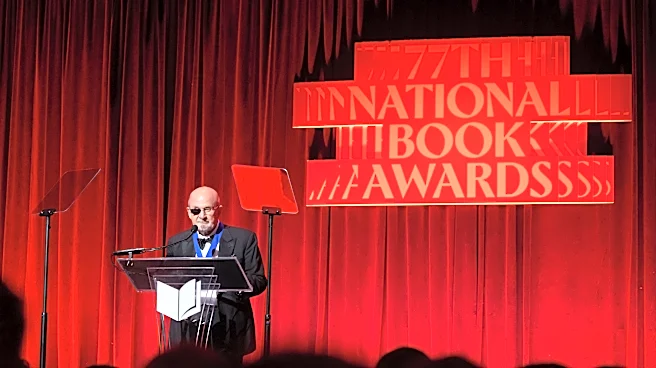
Rushdie, speaking with USA TODAY ahead of his lifetime achievement award at the 2026 National Book Awards,
said his recovery gave him a deeper appreciation for the human body’s “amazing quality of recovery, of regeneration.”

In ‘Knife’ documentary, Rushdie seeks closure from 2022 attack
“Knife,” which premiered at Sundance in January and is in select theaters now, is an intimate, unflinching look at the aftermath. When we first greet Rushdie in the hospital room, his eye is brutally damaged and needs to be sewn shut. A large gash across his neck has been stapled together. It’s not easy to watch.
The camera, Rushdie says, “became like a third person in the room.” Filming was as much an exercise in public record as it was memory recall. He knew the trauma would prevent him from remembering the early days.
Rushdie has faced death threats since his novel, “The Satanic Verses,” published in 1988. In 1989, Iran’s then-supreme leader Ayatollah Ruhollah Khomeini denounced the book’s depictions of the prophet Muhammad as blasphemous and issued a fatwa calling for Rushdie’s death. For nearly a decade, Rushdie lived in secrecy. Then he decided to live “like a free man,” he says in the documentary, moving to New York City and appearing at public events regularly. The New York Times described Rushdie and his social outings in 2012 as “From Exile to Everywhere.”
A decade later, 24-year-old Hadi Matar attacked Rushdie on stage as he was about to speak to an audience about keeping writers safe from harm.
“This was, to put it mildly, a surprise. It really felt like we’d gone past that,” Rushdie says.
The security footage of the attack appears at the end of the documentary. Watching that for the first time was “shocking,” Rushdie says.
Rushdie refers to Matar only as “The A,” a letter that describes him as an attacker, an assassin, an “asshole.” In the memoir, he fantasizes about meeting Matar and constructs fictional conversations the two might have. Matar is currently serving a 25-year prison sentence for attempted murder and a federal jury found him guilty of terrorism-related charges this summer.
But today, Rushdie says he has no interest in meeting his attacker. The mantra he’s adopted is “indifference is the best revenge.”
“I don’t really think about him that much. It’s interesting to me that I have managed to kind of dismiss him from my thoughts,” he says. “But what I do not forget is these remaining injuries; it’s very difficult to wake up without your right eye and I have to think about that every day.”

Lifetime achievement award lets Salman Rushdie ‘pass the baton’
Now he takes public appearances – like the National Book Awards – event by event, somewhere in between the constant surveillance of that first decade and the exciting socialite life of the second. He doesn’t want to “go crazy about it.” He says he doesn’t feel there is still an imminent threat to his life.
On stage at the National Book Awards Nov. 18, Rushdie acknowledged the long journey for an Indian-born British writer to enter into the canon of American literature: “To ride into this town and end up at this saloon with these companions is a hell of a thing.”
A lifetime achievement is not just a testament to where a writer has been, but a glimpse at the path laid for new and future writers.
Rushdie says he’s particularly inspired by the broadening of the definition “American literature,” which now comprises so many immigrant writers. He cites a few favorites: the British-born Pulitzer Prize-winning Jhumpa Lahiri; National Book Award finalist Yiyun Li, who hails from China; and Nigerian Women's Prize-winning writer Chimamanda Ngozi Adichie.
“Now there are American writers from everywhere,” he tells USA TODAY.
What’s next for Salman Rushdie?
Just above the window on his computer where our Zoom call lies is Rushdie’s new novel draft. He’s hoping to turn it in by the end of the year.
It’s a homecoming for Rushdie, who started as a novelist but has now published memoirs, essays and criticism, children’s books and short story collections. He’s written two books and published three since the attack, including "Knife."

“When I started out being a writer, the last thing in the world I wanted to do was to write about myself," Rushdie says. "I thought, that’s the least interesting thing I can think of. And then, you know, I guess I acquired an interesting life.”
That “interesting life” has also given him some pop culture cred. Rushdie appeared as himself in “Bridget Jones's Diary” in 2001 (he still marvels over the "high professionalism" of Renée Zellweger, Colin Firth and Hugh Grant) and in “Curb Your Enthusiasm” in 2017, encouraging Larry David to take advantage of the female attention that follows a fatwa (“Geniuses of improv,” he says, of the “Curb” crew). When I saw “The Last Five Years” in its Broadway debut last year, I noticed they changed the lyric that used to shout out Knopf publisher Sonny Mehta to: “I wrote a book, and Salman Rushdie read it!”
It all makes a lot more sense when you realize that Rushdie was involved in student theater at Cambridge and fringe theater in London until he “basically understood that I was not very good.” When I ask Rushdie whether he’d like to guest star in anything else, he doesn't hesitate: “Slow Horses.”
“Now that I’ve said it, I’ll wait for the phone to ring,” he says.
But for now, Rushdie enjoys the day-to-day, “nothing fancy” kind of life he leads. That’s what freedom means to him: Seeing his friends, being with his family, walking the streets.
“Because (the fatwa) was such a big news event, there are many more people who have heard of me in the context of the violence than have read my books. So it’s there, like a second self,” Rushdie says. “Hopefully in the end what will be left behind is a shelf of books and a few people will read them. There’s nothing I can do about it. All I can do is do my work.”
Clare Mulroy is USA TODAY’s Books Reporter, covering buzzy releases, chatting with authors and diving into the culture of reading. Find her on Instagram, subscribe to our weekly Books newsletter or tell her what you’re reading at cmulroy@usatoday.com.
This article originally appeared on USA TODAY: Salman Rushdie on surviving brutal attempted murder –'Indifference is the best revenge'