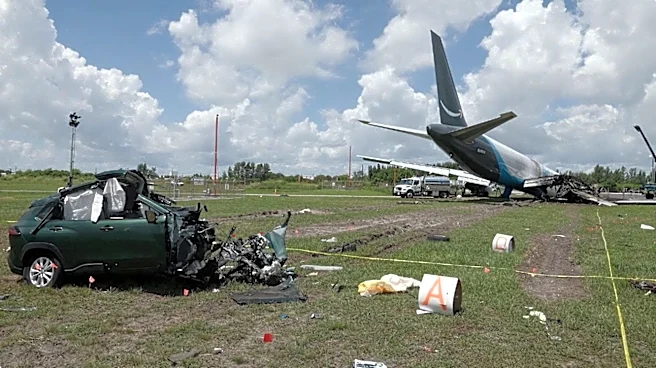






An air traffic controller did not provide required information about tailwind conditions to the pilots of an Amazon cargo plane before it overran a runway at Miami International Airport and crashed last month, killing five people on the ground, according to a preliminary federal report released Oct. 1.
The National Transportation Safety Board said the controller cleared Amazon Air Flight 7598 to land Sept. 6 without advising the crew about winds that could have affected the approach. Four minutes earlier, the controller had told another aircraft that winds were from 190 degrees at about 21 mph with gusts to 25 mph, according to the report.
The Amazon Air flight was not monitoring that radio frequency at the time. Under federal regulations, "both
wind direction and velocity were required to be stated when authorizing use of a runway when a tailwind component exists," the report states.
The Boeing 767-33A, operated by Miami-based 21 Air on behalf of Amazon, was arriving from San Juan, Puerto Rico, when it landed on Runway 30, continued beyond the pavement and struck two vehicles. Five people on the ground were killed, while three others suffered serious injuries and the two pilots sustained minor injuries.
The latest preliminary findings raise further questions about the aircraft's approach and the crew’s handling of the landing. The NTSB previously found that one pilot repeatedly commented on the aircraft's excessive speed during the final one minute and 42 seconds of the cockpit voice recording, while recorded data showed no indication that speed brakes or thrust reversers were deployed to help slow the aircraft.
NTSB investigators detail Amazon cargo plane's approach to runway
According to the NTSB report, the flight crew checked in with the Miami control tower and were cleared to land about four minutes before the end of the cockpit voice recording.
The aircraft crossed the runway threshold about 105 feet above the ground at roughly 203 mph and touched down about 3,750 feet beyond the threshold while traveling at approximately 184 mph, according to flight data.
The first officer cautioned that the aircraft was flying "too fast" more than a minute before touchdown and made additional comments about excessive speed during the remainder of the approach, according to the report. NTSB investigators said the captain did not verbally acknowledge all of those comments.
Investigators also said the captain considered aborting the landing after touchdown. Investigators reiterated earlier preliminary findings that the speed brakes remained stowed and the thrust reversers did not deploy during the landing.
The NTSB found that the two pilots had flown together for the first time earlier that day. Before arriving in Miami, the aircraft had completed flights from Cincinnati to Miami and from Miami to San Juan.
The Boeing 767, a 32-year-old freighter that previously operated in passenger service before being converted for cargo operations, was carrying more than 32,000 pounds of cargo that consisted primarily of contact lenses, according to NTSB Chair Jennifer Homendy. No hazardous materials were aboard.
21 Air says it is reviewing NTSB's preliminary findings
In a statement to USA TODAY on Oct. 1, 21 Air said it had received the NTSB's preliminary report and was continuing to support those affected by the crash.
“Our focus since the accident has been on supporting everyone affected, to include providing resources to those who were injured, the loved ones of those who lost their lives, and our colleagues and commercial partners,” the company said.
The company said it will continue working closely with federal investigators until the probe is complete and that it will review the preliminary report alongside its own operational protocols.
Amazon said it remains committed to supporting the NTSB's ongoing investigation. The company has paused use of 21 Air since the accident.
Several lawsuits have been filed by family members of the victims killed or injured in the crash alleging that negligence and safety failures by the two pilots, 21 Air, Amazon and others connected to the flight contributed to the accident.
Contributing: Reuters
This article originally appeared on USA TODAY: NTSB: Amazon plane pilots weren't warned about winds before crash