

On the Thursday, September 3, 2026, episode of The Excerpt podcast: Is America becoming anti-tech, or demanding more control over how technology enters everyday life? USA TODAY National Reporter Christopher Cann explores how fears about job losses, surveillance and secretive development deals are turning public skepticism into political pressure.
Hit play on the player below to hear the podcast and follow along with the transcript beneath it.
This transcript was automatically generated, and then edited for clarity in its current form. There may be some differences between the audio and the text.
Podcasts: True crime, in-depth interviews and more USA TODAY podcasts right here
Dana Taylor:
Americans may be divided when it comes to politics, but they
stand united on at least one front, from opposition to massive data centers to concerns about surveillance cameras, frustration with the flood of AI generated content derisively called AI slop, the tech backlash is real. The question is whether big tech can be cajoled or even forced to press pause.
Hello and welcome to USA TODAY's The Excerpt. I'm Dana Taylor. Today is Thursday, September 3, 2026. USA TODAY National News Reporter Christopher Cann is here to share his insights on this rare moment of unity. It's good to have you here, Chris.
Christopher Cann:
Great to be here.
Dana Taylor:
The current tech backlash is a rare point of agreement in America, you wrote about that. It's bringing together groups that usually don't agree on much, right?
Christopher Cann:
Right. So overall, we're seeing polls show that a growing number of Americans are skeptical of big tech companies and the advanced products and systems that they produce, especially artificial intelligence. So on the ground, we're seeing communities of all sizes in rural areas and in major cities reject these AI related technologies like data centers, which power AI systems and Flock cameras, which are AI powered surveillance cameras that are used by law enforcement nationwide. So this is a pretty big contrast from about 25 years ago when Americans had a generally positive view of technology with advancements in personal computers and the internet. There was one pew research poll that I had come across with the title was Optimism Reigns: Technology Plays a Key Role. And what that poll showed was that 8 in 10 Americans said they believed the new millennium would usher in the triumph of science and technology. So there was just a lot of optimism at the time around tech and the internet. So it just shows how far public support has fallen as Americans increasingly reject the ambitions of Silicon Valley.
Dana Taylor:
Before we turn to data centers, in your piece, you point to the recent $18 billion Meta settlement as another sign of growing public frustration with big tech. What's the big takeaway from that case?
Christopher Cann:
So that case was brought by 47 states against Meta over claims that its Facebook and Instagram platforms were designed to get children addicted to them and had improperly collected their personal data. The company agreed to make sweeping changes for teenage users, including adding daily usage limits. But this case really came amid a wave of litigation brought by states and local governments and school districts that alleged that Meta and other social media companies had fueled a nationwide youth mental health crisis. And so these cases taken together show a broad backlash against big tech and social media companies, many of whom are involved in the current AI race.
Dana Taylor:
Data centers are some of the most visible battlegrounds. Why are they generating so much resistance?
Christopher Cann:
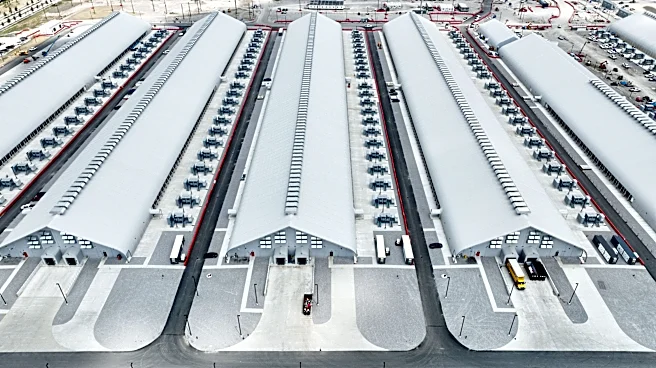
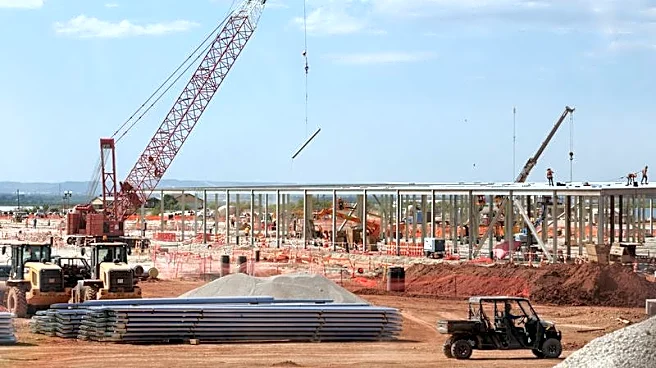
Data centers have been built for decades in this country, but companies are now looking to build more than ever to meet the demand for AI and cloud computing. And many of these new data centers can be classified as what's called hyperscalers, which are these enormous facilities that can reach over a million square feet in size and have seemingly endless rows of servers and networking equipment. And so as these projects have been proposed and green lit, communities across the country have packed city council meetings to express a fury and anger just about the potential for strain on water and electricity resources as well as disruptions to the communities with noise and air pollution. And so this backlash really cuts across party lines. They're in small and large communities. A Gallup survey earlier this year found that about 71% of US adults opposed building a data center in their area and almost half of those about 48% said that they strongly oppose them. So it's really people from all walks of life.
Dana Taylor:
What does that opposition look like on the ground?
Christopher Cann:
People against these data centers have packed these city council meetings and called on their local officials to step back and either issue moratoriums or restrict construction and potentially pull out of these deals. So what we have seen is that about 75 data center projects worth about $130 billion have been blocked or delayed because of this local opposition, but there are still 1,500 data centers under construction or are currently in development. So we have this local backlash, but there are others that are moving through.
Dana Taylor:
And there's another side to this. Supporters are arguing that data centers are essential for economic growth. How are local officials balancing these competing arguments?
Christopher Cann:
So industry advocates for AI data centers, including President Donald Trump, say that these data centers are essential for infrastructure for the AI era and if they support innovation, create high paying jobs and generate tax revenue. But like I'd mentioned, many communities are still rejecting them. We have over 75 that were rejected, but still there are 1,500 under development and you even have people like Senator Bill Cassidy of Louisiana, for example, who said a data center built by Meta in that state really boosted tax revenue and allowed teachers to receive heavy bonuses. So you have people in small communities that are getting this opposition from people in their district, but then are also seeing how maybe some other states and jurisdictions are benefiting from increased tax revenue. So they're balancing really these two issues.
Dana Taylor:
Beyond opposition to the physical infrastructure behind AI, there's also resistance to AI itself. What concerns have people been sharing?
Christopher Cann:
Yeah, so there was a survey from Pew Research that found that 52% of Americans say they're more concerned than excited about the use of AI in daily life. And that's a big jump from even a couple years ago in 2021, that was about 37%. And for Gen Z and young people that have adopted the technology more than any other age group, only about 1 in 10 say that they're more excited than concerned.
So a lot of this anxiety really revolves around AI potentially leading to mass job loss. And so that's a scenario that even tech executives themselves have warned about. You had OpenAI CEO, Sam Altman, who's described a difficult economic transition that will be ushered in by AI. Anthropic CEO said that AI could wipe out half of all entry level white collar jobs. And most recently, Microsoft founder Bill Gates warned that many jobs will disappear forever and that AI has a potential to become the worst source of injustice. So when you have these people who seemingly would have the most knowledge about these systems and what their impact could be, warning about adverse impacts to the economy and job loss, it's no wonder that people are anxious about a future dominated by AI.
Dana Taylor:
Flock cameras are another source of public anxiety. How do concerns about surveillance fit into this larger tech backlash?
Christopher Cann:
So Flock cameras are these AI powered license plate readers and they're in about 49 states across the country and they scan billions of vehicles every month. And so unlike regular surveillance cameras, law enforcement can search the data taken in by these cameras without a warrant. And so with these Flock cameras, people are worried about privacy, mass surveillance, police misconduct, and the backlash really has intensified over the last few months after reports of immigration authorities accessing Flock data, officers abusing the network to stalk women and misreads that have led to innocent people being held at gunpoint. So like data centers, people have been staging protests and packing city council meetings to get these cameras removed.
And this year about a hundred jurisdictions across the country have either paused or canceled their contracts with Flock. The company in turn has made changes to prevent police misconduct and assuage the concerns about how long it holds onto the vehicle data, as well as similar to data centers, we're seeing local state and federal politicians increasingly moving towards the public view. So they're blasting these projects in public statements, issuing moratoriums, and in the case of Flock opening a congressional investigation.
Dana Taylor:
Is this really an anti-tech movement or is what you're seeing more of a reaction to how technology is being deployed? Are these communities trying to stop technology or are they just asking for more control over how it enters their lives?
Christopher Cann:
So this is kind of an open question, but it's clear from the polling and how quickly data centers and Flock cameras became villains in the eyes of Americans, that people are very skeptical of these technologies and the companies behind them. A sociology professor at the University of Chicago who I spoke with said that he thinks that broad fears over AI are fueling the backlash against data centers and Flock cameras to at least some degree. He described these technologies as a proxy for people's frustration over how these technologies are affecting their lives and how they might in the future. But these are also, like you mentioned, local issues affecting communities with very local concerns about pollution and surveillance. So it's a balance of these local and national concerns.
But it's also important to keep in mind that much of the backlash here, both about Flock cameras and data centers is around the way that they were introduced. Some people didn't realize a data center was being built in their community until construction began. Some of that is because large tech companies have had officials signing non-disclosure agreements. And similarly, many communities introduced Flock cameras without any prior public notice or community input. So people I spoke with said they felt these companies like Meta, OpenAI, Amazon, Flock and others, and some of which are valued in the trillions of dollars bulldozed their way into their communities, so they feel it's kind of almost a David and Goliath story when you talk to people who are in these council meetings, residents or activists speaking out against these technologies.
Dana Taylor:
I asked earlier about local officials and how they're handling the pushback they're seeing. What about on a national level? Has there been a response out of Washington or are you hearing crickets?
Christopher Cann:
Yeah, so data centers have become a major issue that President Trump has had to address. He has been a vocal supporter of AI and data centers since returning to office. You'll remember that Silicon Valley's biggest tech CEOs were standing behind him during his inauguration, including Elon Musk and Meta, CEO Mark Zuckerberg and Amazon founder Jeff Bezos. Recently, President Trump has said that communities should want data centers unless they want to "be backwards and poor." He's argued that allowing foreign adversaries like China to outpace the US in developing AI could be a risk to national security, but his administration has been very supportive of AI despite the growing backlash. So the EPA recently announced plans to eliminate a requirement that states publicize and ask for public comment on applications for things like data centers and some of their related power plants. Trump hasn't specifically weighed in on Flock cameras, but with the growing backlash, he's come out and said that his stance is under review. He told reporters at the White House that his position will come out sometime in the coming weeks, so we're not exactly clear where he stands on those.
Dana Taylor:
What happens next? Could this tech backlash be the beginning of a long-term political movement?
Christopher Cann:
Yeah, so we're seeing more and more politicians come out against these technologies from Florida Governor Ron DeSantis to Senator Bernie Sanders, to Texas Governor Greg Abbott. Abbott, along with Pennsylvania Governor Josh Shapiro, both recently announced restrictions on data centers, and they had even in recent months or as early as last year had praised large data center projects in their states. So it just shows how quickly sentiment has shifted. And this is also impacting the midterms with Democrats and Republicans alike, both proposing moratoriums and withholding funds for the project. It's become such a big issue that the National Republican Senatorial Committee, which is the Senate GOP campaign arm, said in a memo that the backlash against data centers could cost Republican Senator Jon Husted a crucial race in that state. The memo had described how data centers are "the anchor around Husted's neck." It went on to say that, "If he loses and data centers get the blame that politicians across the country will take notice and they won't go near the next one." So we're really seeing a big shift among Democrats and also among Republicans against these ambitious projects from Silicon Valley.
Dana Taylor:
And then finally, how is the tech industry responding?
Christopher Cann:
Large tech titans have defended their products, have largely put the blame on public relations and the lack of fruitful discussions with local communities. Sam Altman of OpenAI, for example, said, "Fears over data center water usage are overblown," but he and others have recently acknowledged that people's increasing negative feelings on the technology. He told Time Magazine that, "Clearly people hate data centers right now." He also said that, "People are negative on AI." So it's clear that the tech industry is seeing the public pushback and is trying to assuage concerns. You have Flock who had made sweeping changes to its technology or to how police interact with it, putting up some guardrails, and the companies behind these data centers saying that they will try to communicate better with local communities where they're trying to build these large projects.
Dana Taylor:
There's a lot to unpack here. We'll be back tomorrow with a look at a USA TODAY investigation on the misuse of Flock camera data. I hope you will join us for that conversation. Christopher Cann is a national reporter for USA TODAY. It's always so good to speak with you, Chris.
Christopher Cann:
Thank you for having me.
Dana Taylor:
Our stories come from USA TODAY reporters across the country. Thank you so much for listening. I'm Dana Taylor.
This article originally appeared on USA TODAY: The AI backlash uniting a divided America | The Excerpt