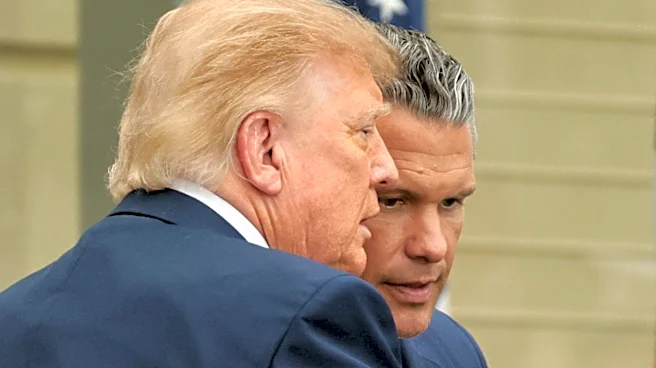





U.S. military intelligence and cybersecurity forces will work together to protect the midterm elections from foreign interference, Defense Secretary Pete Hegseth announced.
"Under the Secretary's directive, U.S. Cyber Command and Combat Support Agencies will prioritize and deploy advanced intelligence and cyber capabilities to identify, disrupt, and neutralize foreign interference in U.S. democratic processes," the Department of Defense announced in a Sept. 28 press release.
In a memo dated Sept. 22, Hegseth directed the Defense Intelligence Enterprise "to mobilize every authorized asset, capability, and partnership under your command to defend our election infrastructure from foreign malign influence and ensure that every lawful voter can cast
their ballot free from foreign intimidation, coercion, or fear." The National Security Agency will be one of the Pentagon organizations involved in the effort.
The announcement came just five weeks before the midterms, though the directive isn't in itself unusual. U.S. military and intelligence agencies routinely work together to identify and deter foreign threats to elections.
But it comes against the backdrop of an intense push by the Trump administration to center election integrity concerns in the leadup to a critical set of midterms and in the wake of cuts to agencies specifically tasked with safeguarding election infrastructure.
In July, Trump removed two of the three members of the the independent U.S. Election Assistance Commission, and the Cybersecurity and Infrastructure Security Agency, an arm of the Department of Homeland Security, has lost staffing and funding in Trump's second term. Election administration is left to the states, but federal agencies have played a role in cybersecurity and other threats.
Trump's previous focus on cracking down on elections has largely involved preventing non-citizens from voting, though election experts say the number who do is negligible.
During the primaries, the Department of Justice sent poll watchers to various states' polling places. Civil rights advocacy groups have sued the administration in recent weeks to block similar efforts in the general election.
Trump, who still denies he lost the 2020 election, continues to push legislation like the SAVE America Act, which is stalled in the Senate and aims to require proof of citizenship to register and identification to vote, and would restrict mail balloting. The Justice Department has lost cases seeking state voter rolls, but the Supreme Court on Sept. 25 allowed the Department of Homeland Security to resume providing a citizenship database for states to compare with their voter lists.
Hegseth also has a history of publicly questioning the results of the 2020 election and questioning the Jan. 6 attack on the Capitol during Congress' efforts to certify those results.
The Pentagon move "will defend the integrity of America's voting systems, expose foreign malign influence, and ensure our democratic processes remain secure from external manipulation while protecting the fundamental freedoms of the American people," Chief Pentagon Spokesman Sean Parnell said in the press release.
The U.S. intelligence agencies will "identify and defend against cyber threats to our nation," according to Gen. Joshua M. Rudd, commander, U.S. Cyber Command and director of the National Security Agency/chief, CSS. "The Command and the Agency regularly counter actions by malicious foreign cyber actors including those with the intent to interfere with our democratic process."
This article originally appeared on USA TODAY: Hegseth targets 'foreign interference' in midterms with new directive