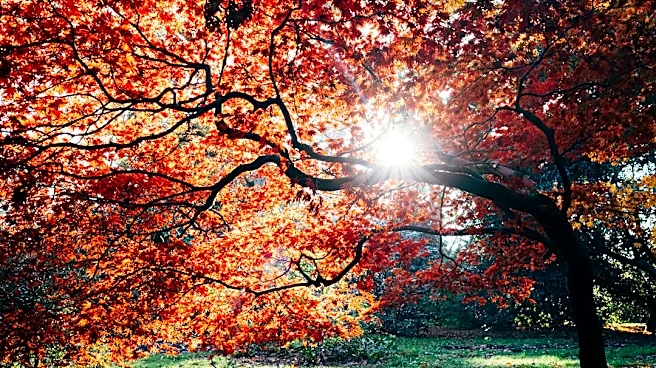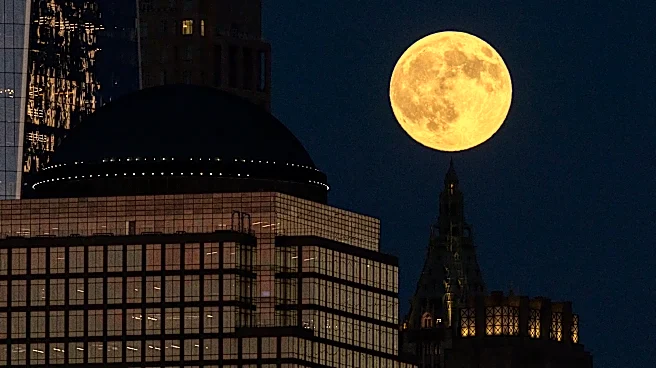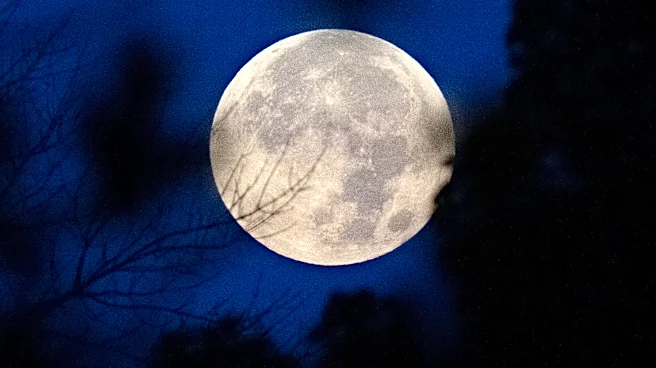

Leaves will soon turn yellow and orange, and temperatures will begin to drop because fall is finally here. And September's Harvest Moon will mark the first full moon of the season.
While the names of moons
usually never change and are based on the month they fall in, the Harvest Moon is different. It can occur in either September or October, depending on which moon will fall closest to the date of the fall equinox.
Here's what to know about fall's first full moon of 2026 and when it will peak.
When will the Harvest Moon peak?
The full moon will peak on Saturday, Sept. 26, at 12:49 p.m. ET, according to the Farmer's Almanac.
Although the peak occurs in the daytime, the moon will still look bright and full the night before and after it peaks.
Why is it called the Harvest Moon?
This year, September's moon is known as the Harvest Moon because it falls closest to the fall equinox. In 2025, the title of Harvest Moon went to the October full moon. When it doesn't fall on the date closest to the fall equinox, the moon is named the Corn Moon.
The Harvest Moon gets it name from farmers heavily relying on the moon's light to get their job done at night before there was electricity. "The Moon's light was particularly important during fall, when harvests are the largest," according to NASA.

September's full moon can also be called the following, to honor the transition from summer to fall, according to Almanac:
- Autumn Moon
- Falling Leaves Moon
- Leaves Turning Moon
- Moon of Brown Leaves
- Yellow Leaf Moon
Full moon occurs days after the fall equinox
The fall equinox, also known as the autumnal equinox, occurred on Sept. 22 and marks the first day of fall.
There are two equinoxes in a year: the first in March, which marks the first official day of the spring season, and the second in September, which marks the first day of fall.
Unlike the summer solstice, which marks the longest day of the year, or the winter solstice, which marks the longest night of the year, during the equinox, night and day are "nearly equal," according to Time and Date. But both the fall and spring equinoxes have more daylight.
However, the days will soon become shorter as we move closer to the winter solstice, which will occur on Monday, Dec. 21, 2026, at 3:50 p.m. ET, per the Farmers' Almanac.
List of remaining full moons for 2026
Here are the rest of the full moon dates for 2026, according to the Farmer's Almanac:
- Hunter's Moon: Peaks Oct. 26 at 12:12 a.m. ET
- Beaver Moon (supermoon): Peaks Nov. 24 at 9:53 a.m. ET
- Cold Moon (supermoon): Peaks Dec. 23 at 8:28 p.m. ET
Julia Gomez is a Trending reporter for USA TODAY and covers space phenomena, scientific studies and natural disasters. Connect with her on LinkedIn, X, Instagram, and TikTok: @juliamariegz, or email her at jgomez@gannett.com.
This article originally appeared on USA TODAY: Fall is looking up. Harvest Moon is set to peak today