
If you or someone you know may be experiencing a mental health crisis, contact the 988 Suicide & Crisis Lifeline by dialing or texting “988.”
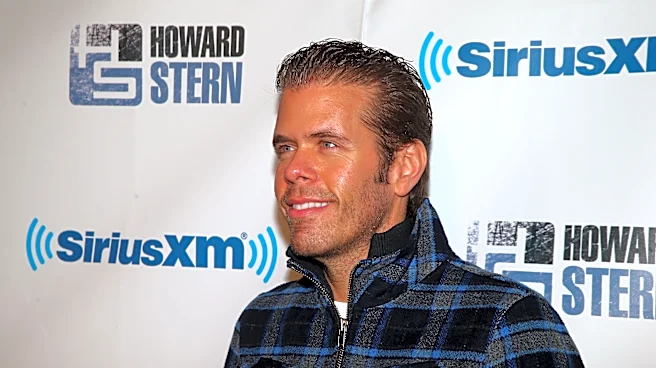
When Perez Hilton was seen self-harming in a TikTok Live Tuesday
night, the platform's automated content moderation system "quickly flagged the livestream and alerted the American content moderation team," its spokesperson tells USA TODAY. But a "'moderator error' caused a delay in taking down the disturbing livestream." Plus, X users have noticed that screenshots from the video remain available on the platform.
TikTok said the duration of the livestream was 15 minutes, not the 30 that has been reported elsewhere, and it also closed several subsequent streams by Hilton within 90 seconds. TikTok also noted that Hilton's account has been banned outright "due to Hilton breaching the social media platform's community guidelines."
But videos of the explicit livestream continue to circulate on X. Why does footage like this stay available longer than the platforms intend? And how do they try to curb it?
How do platforms moderate potentially harmful content?
Each of the platforms has its own policies that do not permit the depiction of self-harm or suicide. "We have a zero-tolerance policy for ads that promote, depict, glorify, endorse, or document suicide, self-harm, or dangerous behaviors which may lead to these," TikTok's reads.
Though X did not respond to a request for comment and Meta declined to comment, Instagramhas a policy with similar language, as does X and YouTube. (A spokesperson for YouTube pointed to its policy.) Screenshots from the graphic stream are still available on X as of the publication of this article.
X was bought by Elon Musk in 2022, who made large structural changes at the company — including firing a large portion of the content moderation team. Since then, the app has faced intense scrutiny of its moderation policies.
Content moderators at any social media company often are under immense strain when doing their job – not only do they frequently have to look at the most disturbing content, but they have an overwhelming amount of content to moderate. In an article written by the Harvard Business Review, the author found that moderators face a host of challenges: old interfaces that keep them from reviewing content as efficiently as they'd like to, poor pay, and the scrutiny they face while being evaluated (e.g., how many cases they went through and whether their supervisor agrees with their decisions on videos).
Jessica Maddox, an internet culture researcher and an associate media studies professor at the University of Georgia, says that content moderation is "like Whack-a-mole, because something pops up, you knock it down, and several other things pop up in its place."
She's sympathetic to the difficult nature of content moderation, but argues that the human error that occurred, keeping the livestream up for 15 minutes, is indicative of the fact that there should be an automatic removal process in place that is more immediate. If something was removed that wasn't deemed harmful, it should be restored, Maddox says, which is a version of the system that's in place. However, there have been multiple instances where this harmful content falls through the cracks.
The ability to find this graphic content has become mainstream, Maddox tells USA TODAY. "Social media was made for this violence. This type of violent content that we are exposed to on social media is not antithetical to social media's values; it is indicative of their values."
Take Charlie Kirk's assassination, for example. The video was widely shared on X, and if you search for it, videos from different angles still exist. These graphic videos used to live in darker corners of the internet that weren't as easily available as they are today.
On the same day as Hilton's livestream, another TikTok showed a Mexican influencer with over 600,000 followers get shot and killed. Blurred-out and edited videos of the shooting are still currently available on the platform. In 2020, TikTok had two major instances of not removing graphic content in a timely manner. The first was a Brazilian influencer who livestreamed his suicide to an audience of over 200 people, The Intercept reported, and the video remained on the platform for over an hour and a half.
That same year, in September, a veteran named Ronnie McNutt livestreamed his suicide on Facebook and clips of the stream were uploaded to TikTok and other social media platforms. The platforms raced to take down the videos, but they kept being reuploaded.
One of McNutt's friends, Josh Steen, spoke to Heavy following the spread of the video and argued that Facebook did not do enough to take the video down. "Facebook could’ve stopped this and didn’t," Steen told the publication. "Facebook, Twitter, Instagram, and other social platforms could ban accounts, IPs, and stop the spread of this video. YouTube can flag you for using two seconds of a copyrighted song, but can’t seem to filter out my friend ending his life. It does not make sense.”
Maddox argues that all of the platforms fall short in this area, which is a detriment to community building, career-building, conversations, and other positive aspects of the internet.
"The algorithmic trend economy of social media has incentivized everyone participating in the viral conversation of the day for kind of again clicks, likes, views, growing an audience, even if that's detrimental to people's mental health," Maddox says. In the absence of meaningful intervention from the platforms, the only people we can rely on are ourselves. "Do not seek out the video, because if you do, it incentivizes creators and users and platforms to keep pushing it, so I do think in this age the best and most radical thing we can do is deny something like this our attention."
This article originally appeared on USA TODAY: Why the traumatic Perez Hilton video stayed available so long