





Spoiler alert! We're discussing important plot points and the ending of the historical drama “The Uprising” (in theaters now), so beware if you haven’t seen it yet.
In case you were wondering if “The Uprising” was a secret Robin Hood movie, it totally is. Just not that big a secret.
There was confusion and muddled messaging in the marketing of the movie. Director Paul Greengrass’ vision, however, has always been pretty clear: When he started writing a screenplay based on England’s 1381 Peasants’ Revolt, Greengrass even called it “The Hood.”
“There's no real person called Robin Hood. But the legend began in the wake of these events, and I've always thought that’s really cool,” says the British filmmaker.
TODAY's movie and TV recommendations right in your inbox

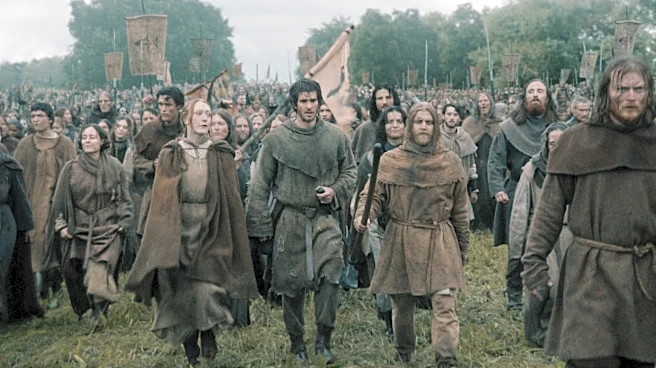
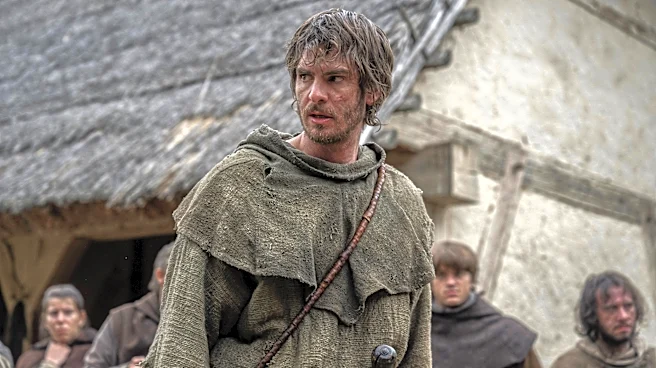
“The Uprising” stars Andrew Garfield as a downtrodden farmer called Ploughman who lost his entire family in the Black Death. When the tax collectors of teenage King Richard II (Woody Norman) come to take money from local villagers, Ploughman fights back. It inspires others to do the same as they drive out the tax men and soldiers, and this revolutionary spirit catches fire in various parts of the country.
In the movie, the rebels march to London, and the king agrees to hear their pleas. It’s all a ruse, though, as Richard sets a trap for the peasants, and the king's men slaughter most of them.
Ploughman and a few others escape. He returns to his homestead and covers his face with the dirt where his family is buried. It’s a moving moment of “death and rebirth,” Greengrass says, “but it's also wanting to keep their souls on him and cleave to the land.”
Cut to a year later. The king and his mother (Katherine Waterston) are traveling through the forest when they’re met by a band of not-so-merry men (and women), hooded figures wielding bows and arrows. Ploughman unmasks to reveal himself as their leader and spares the king’s life so the kid can live in fear from then on.
“He’s reborn as an outlaw, and he'll never trust anyone ever again – and certainly he'll never trust a king again, because he trusted him once before,” Greengrass explains. “And as he says, ‘You'll never have peace all the while I'm out here.’

“When he puts the mask and the hood on at the end, he's become a mythic figure in a way. He's no longer Ploughman. He's somebody new.”
Garfield was a big fan of the ending. “It was the perfect coda to what this man had been through and kind of the only way he could carry on living,” he says. “Either give up and let yourself perish, or you live as a law unto yourself and you're more in tune with a different kind of belonging. You start belonging to eternal things. You start belonging to your fellow brothers and sisters."
The first reference to Robin Hood appears in “Piers Plowman,” a poem written in the 1370s before the Peasants' Revolt that became a key inspiration for Ploughman. But the real spread of the legend came in the late 14th and early 15th centuries, Greengrass says. “People told stories about outlaws because it was a way of saying, ‘You didn't give us our rights, but we're going to keep that dream alive by telling stories about an outlaw. Particularly about this guy, Robin Hood, who stands up to power at the time when we feel oppressed.’ ”
Also, the original iteration "wasn't an aristocratic Robin Hood,” the director adds. “That's a 19th-century Victorian invention. He was an outlaw. He was very much like the character that you see” in “The Uprising.”
The Robin Hood effect also gave Greengrass the satisfying ending he needed, or as much of one you can muster given the violent history. “You don't want to make a film about a whole bunch of people who rise up against the king and then get crushed, end of story, he’s dead. Who's going to want to watch that?” he says.
Garfield found Ploughman's journey both "thrilling and incredible": an outsider who rejects the aristocracy and works to build a better world.
“Of course it feels in the archetype of Robin Hood energy," the actor says. "It doesn't feel literally like Robin Hood to me. It feels like someone who's living according to their own natural law.”
This article originally appeared on USA TODAY: Andrew Garfield explains that Robin Hood connection in 'The Uprising'