




The dinner party as we know it may be dead, but the art of hosting is alive and well.
It’s true: Americans are hosting and gathering less. Perhaps it’s the distance left by the pandemic, the pull of our screens or the demands of crowded calendars, long drives and grocery bills. Somewhere along the way, having people over can slip fromsomething we do into something we keep meaning to do.
Derek Thompson examined that retreat in an essay aboutthe “death” of the American host. Drawing on historical surveys and new polling, he reported that the share of adults hosting friends or family at least monthly fell from 42% in 1975 to 12% in 2026.
The fantasy of the effortless hostess — apron tied, table set, somehow keeping dinner and the household running
at once — was never effortless. That work still has to happen, only now it is often squeezed around jobs, parenting and crowded schedules.
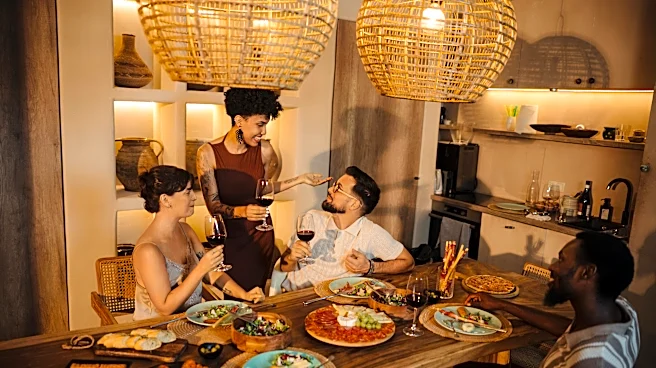
Today’s hosts are adapting that model rather than recreating it. Potlucks, apartment suppers and afternoon drop-ins spread the work, lower the stakes and make gathering feel less like a production. The hosts we spoke with have not stopped inviting people in; they have simply changed what the evening looks like.

Make room for the gathering you can manage
After her divorce, Cora Cowles started Huit Dining Table, hosting eight people for family-style Sunday meals in her suburban Detroit home. With two preteen children and a full-time job, she schedules the dinners when life allows, a more deliberate version of the standing Sunday gatherings she remembers from childhood. “There is no more Sunday open-door policy,” Cowles said.
In Brooklyn, Morenike Lambert hosts potlucks and shared meals, letting friends contribute rather than taking on every dish herself. Sometimes the gathering is smaller: A neighbor regularly invites her for lunch or dinner, and at one recent brunch they divided the shrimp and grits between them.
Sutanya Dacres hosts intimate Dinner for One suppers in her Paris apartment, but having people over does not always mean planning a dinner party. It can be lunch with a friend or making room for someone who stops by, carrying forward the kind of hospitality she grew up with in a large Jamaican family.
In Atlanta, Chiel Walker still likes to have people over, but his hosting has become more relaxed. He joked that he is “still trying to be an Ina,” while letting guests help out and serve themselves rather than managing every part of the meal.
Dolly Debutante regularly welcomes friends and neighbors into her junior one-bedroom apartment in Manhattan, sometimes with little more than snacks in the refrigerator and somewhere to sit. She has even moved the holiday itself, hosting Easter Monday so friends who work in hospitality and nightlife can actually make it.
The common thread is not doing more. It is finding ways to make hosting ask less of the host.
Pass the plate, and the responsibility
For Lambert, that meant loosening her grip on the menu. She once preferred to make everything herself for what she called “quality control.” Now, she hosts more potlucks and lets guests contribute dishes, sometimes using a spreadsheet so the group ends up with a complete menu instead of several versions of the same thing.
“I think that what’s gotten better over time is not being so committed to perfection and having things a particular way,” Lambert said.
Lambert also puts out appetizers and a signature cocktail in a pitcher so guests can help themselves while she finishes cooking. Dessert might be a store-bought pound cake topped with macerated berries.
Sharing the cooking also shares the grocery bill. “When everybody can just bring something, that really helps ease that burden,” she said.

Dacres grew up with a similar sense of shared responsibility. In her large Jamaican family, gatherings often began with questions about “who’s cooking what” and who made a particular dish best. Walker recommends sticking with recipes you already know rather than trying something ambitious with guests on the way, leaving more time to actually spend with them. And for Debutante, she usually handles the food but asks friends to bring wine. “Being able to outsource makes hosting a lot easier,” Lambert added.
Your home doesn’t have to be 'ready'
Hosting gets easier when the house doesn’t have to perform, either.
Debutante has seen how often people postpone inviting anyone over because they believe their home is not clean, organized or attractive enough. Her advice is to focus on the spaces guests will actually use.
Her own quick reset includes taking out the trash, putting laundry in the hamper, wiping down surfaces and leaving a clean towel in the bathroom. Guests need somewhere comfortable to sit and a usable bathroom, not a transformed apartment. “Your place doesn’t have to be picture perfect,” Debutante said. “To have people over, it really just has to be a place where people feel welcome and people feel safe.”
Dacres takes a similarly practical approach to space. Dinner for One happens in her Paris apartment, using the home she already has for intimate suppers rather than waiting for a larger dining room or more formal setup. Cowles remembers an equally unfussy version of hospitality from childhood: Sunday dinner at her grandmother’s house, where the good china stayed in the cabinet while everyone ate from paper plates.
It doesn’t always have to be dinner

For Dacres, the invitation itself can be smaller, too.Having someone over might mean lunch with a friend or making room for someone who stops by. “What’s really important is to make sure we were all well fed and satisfied,” Dacres said. A smaller gathering can carry the same care without requiring several courses or a full dining room.
Walker remembers a more casual rhythm growing up, when gathering did not always require much advance planning. “There wouldn’t really be an invitation,” he said. “People just knew when the birthdays were and they’d stop by.” Cowles echoes that simpler formula: “A quick text and some bagged snacks with a movie or game is an easy start.”
Hosting may still take time, money and effort, but it does not have to take over the evening. The goal is to make enough room — on the calendar, around the table and in the plan — to actually enjoy the people who show up.
For Walker, that is reason enough to keep opening the door. “Connection. People need connection to survive,” he said. “It’s the most important thing we have and unifies us all.”
This article originally appeared on USA TODAY: The dinner party is dead. At least as you knew it. Here's what's next