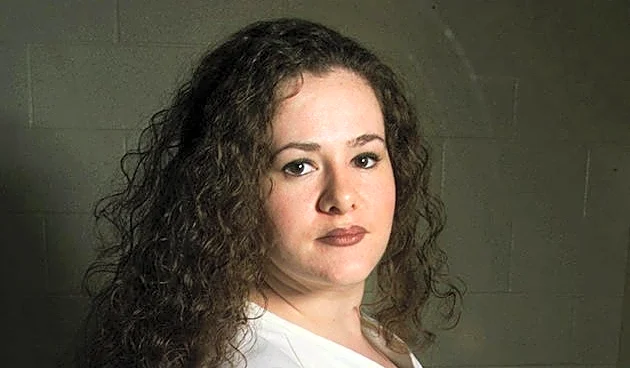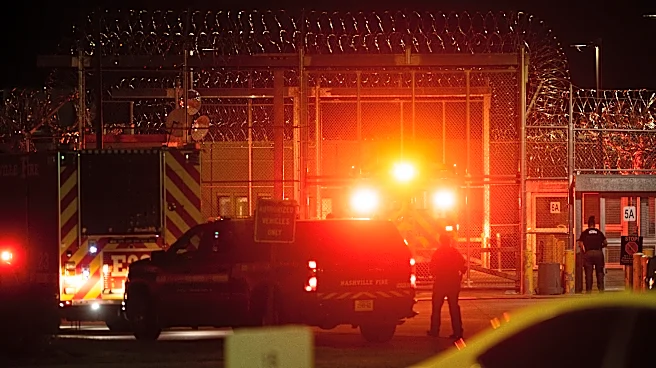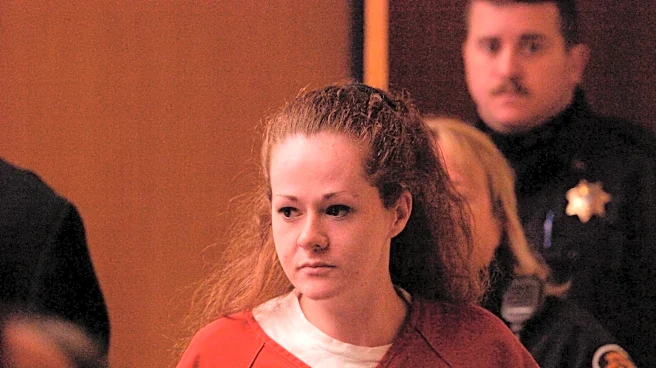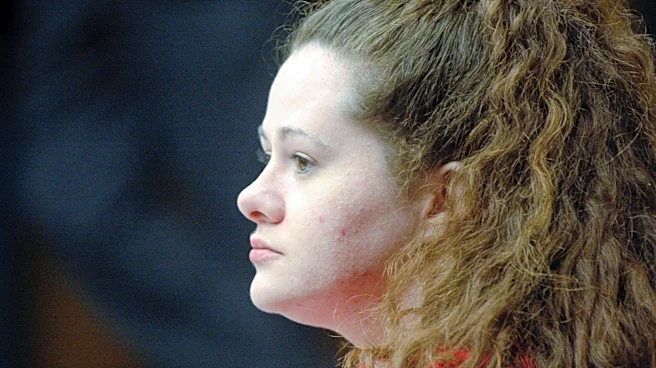






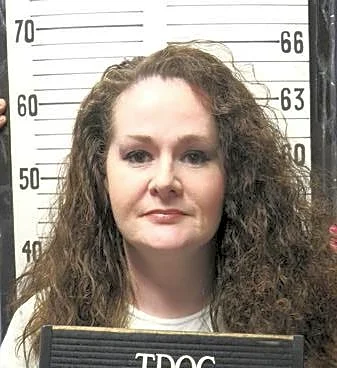
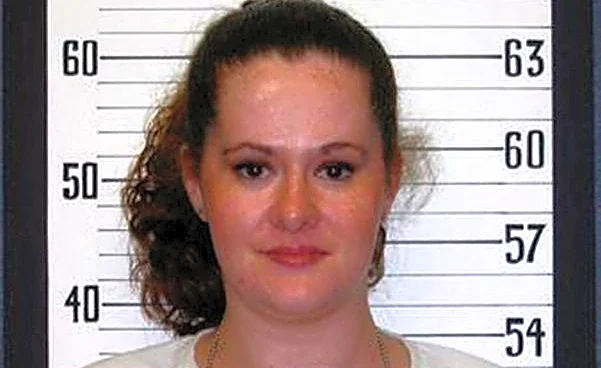
Christian faith leaders and observers say this week’s botched execution of Christa Pike in Tennessee offers both an appalling illustration of the death penalty’s moral contradictions and a potential rallying point for opposition among clergy and their congregations.
“We have to nip this in the bud by appealing to the conscience of decision makers going forward,” said the Rev. Marvin Morgan, interim pastor at Rivermont Presbyterian Church in Chattanooga, Tennessee. “This is not a time when the church can remain silent.”
Pike, a death row inmate, remains unconscious and on a ventilator in critical condition at a Nashville-area hospital after surviving two doses of pentobarbital administered in a bungled execution procedure on the evening of Sept.
30. Tennessee Gov. Bill Lee has ordered an investigation.
“This Tennessee case could and should be a reminder that the essential violence of capital punishment cannot be eliminated or erased simply by moving from bullets to syringes,” said Richard Garnett, a professor of law who directs the Program on Church, State and Society at the University of Notre Dame in South Bend, Indiana.
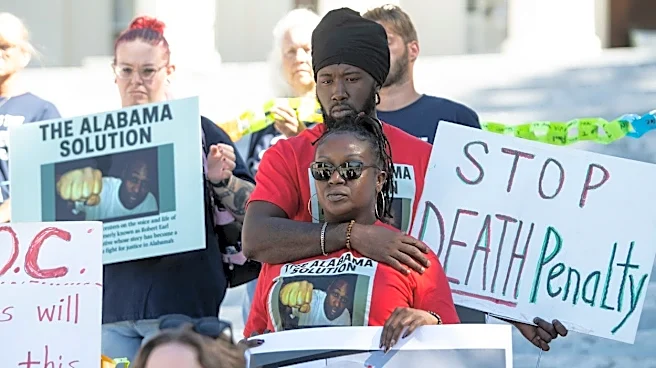
Morgan, who demonstrated prior to this week's attempted execution by chaining himself to a flagpole outside Tennessee’s state capitol building, said he’d even written Gov. Bill Lee to offer his own life in exchange for Pike’s.
Another faith leader who called for clemency for Pike was Helen Prejean, a U.S. Catholic nun and leading death penalty opponent known for her best-selling book and subsequent movie "Dead Man Walking," which recount her experiences with two death-row convicts for whom she served as spiritual adviser before their executions.
"Christa Pike suffered repeated child sexual abuse," Prejean posted Oct. 1 on Facebook. "Her early life was marked by abuse, violence, and neglect. Her trial lawyer never explained the impact of this abuse to the jury that convicted her and imposed a death sentence. This is not justice."
Wednesday's botched execution, she wrote, "is one more exposure of the cruelty involved in the death penalty, now masked as a medicinal death - or 'putting someone to sleep,' The government is deliberately killing its citizens and masking it as a medical procedure — which the people involved are not trained to do."
Others said the case lays bare the practice’s ethical dilemmas.
“In the Christa Pike case, we really see the contradictions inherent in the system,” said Mathew Schmalz, a professor of religious studies at the College of the Holy Cross in Worcester, Massachusetts. “First the state tries, unsuccessfully, to put her to death. Now they’re trying to save her life. In what moral universe does this make sense?”
Wednesday’s event prompted statements from Tennessee’s three Catholic bishops and the Archdiocese of Chicago and groups like the Catholic Mobilizing Network, a national group working to end the death penalty.
“We recognize both the seriousness of a crime and the inherent human dignity of those who commit it,” the Chicago archdiocese’s statement read. “Justice can protect society and hold people accountable without engaging in the taking of human life.”

Illinois has been without the death penalty since Gov. Pat Quinn signed a bill abolishing it into law in 2011, the statement noted.
While a botched execution is “a particularly painful reminder” of the punishment’s human consequences, the archdiocese said its opposition is independent of whether it’s completed efficiently or according to procedure.
“The taking of a life – including in an execution – is always wrong and it is an illusion to believe that society can somehow thus rebalance the scales of justice,” the statement said.
Americans, including most Catholics, largely disagree. A Pew Research Center report in August said 68% of Americans consider capital punishment morally justified for those convicted of murder.
According to Schmalz, nearly that share of Catholics do too – despite Pope Francis having declared opposition to the practice under the same umbrella as opposition to abortion and euthanasia.

Likewise, Pope Leo XIV, who succeeded Francis last year to become the first North American pope, said in September 2025 that while he understood tensions around the issue, “someone who says I’m against abortion but says I’m in favor of the death penalty is not really pro-life.”
“American Catholic attitudes toward the death penalty are yet another instance where the position of most American Catholics does not align with Catholic doctrine,” Schmalz said. “… Perhaps Christa Pike’s experience will cause us to reflect upon the human dimensions of the death penalty, in which neither perpetrators nor victims receive justice, let alone mercy.”
The moment is an invitation to address congregations about relevant church teachings, said, the Rev. James Chern, director of campus ministry for the Catholic Archdiocese of Newark in New Jersey.
"Consistency in defending human dignity is not optional," he said. A person may be in prison for life, but even there, their life has value. Even in prison there remains the opportunity for change and salvation. But when we impose the death penalty, that possibility is taken away forever.”
Matters of life and death
The Rev. Stacy Rector, a Presbyterian minister who directs Nashville-based Tennesseans for Alternatives to the Death Penalty, said several Christian communities have been united in their opposition to the death penalty, appealing for clemency and urging a halt to executions while lethal injection protocol is reviewed.
In August, the state’s Catholic, Episcopal and Lutheran bishops called for the state to end the death penalty and a commutation of Pike’s death sentence.
“Although some Christian denominations in Tennessee believe the death penalty is biblically justifiable, more are coming to understand that today’s death penalty is neither necessary nor just,” Rector said.
Chern, of the Archdiocese of Newark, said that while the incident might serve as a galvanizing moment for faith leaders against the death penalty, it shouldn’t be reduced to a point of debate.
“What Wednesday demonstrated in horrific fashion is something deeper,” Chern said.
The event, he said, illustrated the ongoing spiritual battle between what the church sees as the sanctity of human life and a “culture of death” – a conflict identified by Pope John Paul II in Evangelium vitae, his 1995 encyclical on the subject.

“It emerges whenever a society begins treating human beings as problems to be solved rather than persons made in the image and likeness of God,” Chern said. “Whether that’s an unborn deemed inconvenient, an elderly person deemed burdensome or a convicted murderer executed in a way that raises serious questions about dignity and due process, the concern is the same – some lives are being judged as less worthy of care.”
Chern said the church has historically recognized the state’s “right and duty to protect its citizens,” including use of the death penalty – but “only when it is the sole practicable means to prevent further harm.”
“To take a life in punishment only furthers the ‘culture of death,’” he said. “We find ourselves looking for vengeance, when the Gospel calls us to mercy.”
The sophistication and security of today’s prison systems have led the church to consider the practice increasingly unnecessary, he said.

Rector said that with the 23rd annual World Day Against the Death Penalty approaching on Oct. 10, she hopes faith communities mark the occasion by embracing policies that promote healing, whether engaging with efforts to end the death penalty or working with organizations that support victims of violence.
“All of us have an opportunity to learn from the pain of this week’s botched execution,” she said.
She said the moment offers a chance to remember that faith communities can agree on certain things, including supporting those impacted by violence, holding those who commit violence accountable, creating safe communities and ensuring fair and equal treatment under the law.
“These areas represent our common ground,” Rector said. “If we start there, we can move together toward a legal system that no longer relies on the death penalty.”
This article originally appeared on USA TODAY: 'Bullets to syringes': Christian leaders outraged over Christa Pike horrors