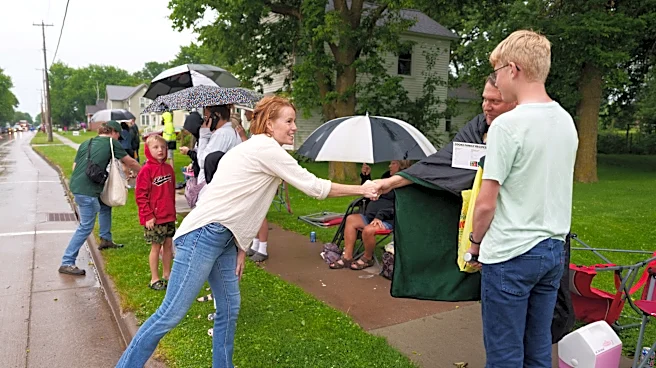


Tensions heightened in the race for Wisconsin’s 3rd Congressional district between Rebecca Cooke and incumbent Rep. Derrick Van Orden on Sept. 30 when Cooke sent Van Orden a cease and desist letter directing him to stop posting AI deepfake videos of her.
The letter cited a video Van Orden posted on X in August showing an AI-generated video of Cooke saying, "Do you really think it matters what you peasants think? I am the Anointed One. You will comply and you will vote for me."
Wisconsin passed a law in 2024 requiring campaign advertisements to disclose if they use AI-generated content, but it doesn’t apply to social media content.
"I think it's a gross misrepresentation of who I am," Cooke told USA TODAY. "I don't think putting words in people's
mouths is what voters are looking for. I think they're looking for authenticity at a time when there's deep mistrust in government and concern about what the future of AI looks like, and it's overreach into our lives."
Van Orden’s press team did not respond to requests for comment from USA TODAY.
His ad is far from the only one using the technology to attack opponents, though. In this election cycle alone, the Wesleyan Media Project found 164 instances of political ads generated or enhanced through the use of AI, and the project’s co-director, Travis Ridout, said that was likely an underestimation.
Another study by Anchor Change in May found that 87% of strategists and campaigners use AI to help generate creative graphics, texts and visualizations for ads.
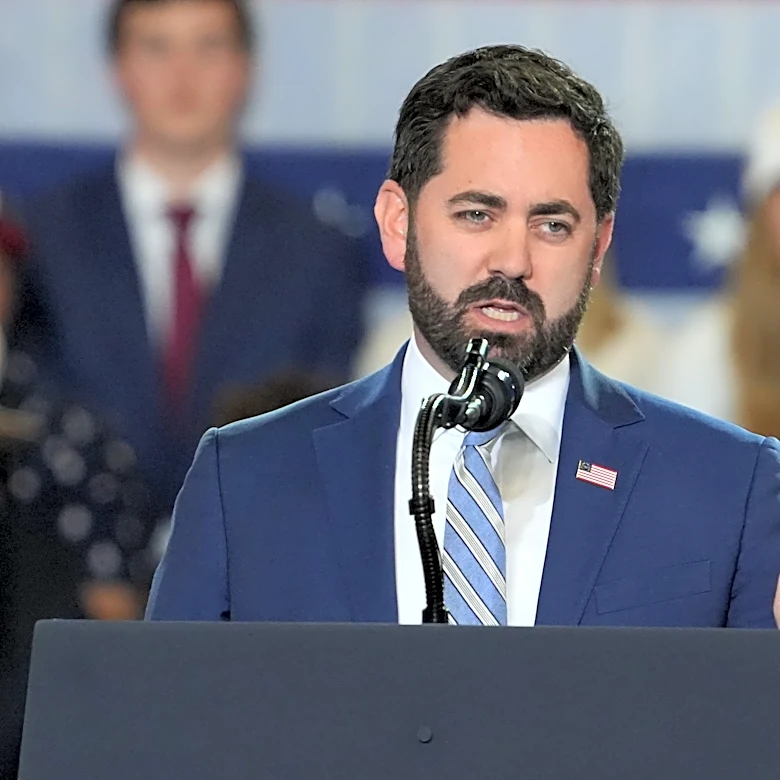
"In the last couple cycles, it may have been out there, but it was something which not the average person was using widespread," said David Inserra, a fellow at the libertarian think tank the Cato Institute.
Now, he added, "it seems normal because the tool has shifted from this avant garde, new thing on the block."
Lack of federal regulations
Existing regulation doesn’t yet target AI-generated content at a federal level. Thirty-one states have passed laws prohibiting deepfakes or requiring disclosures, according to the National Conference of State Legislatures, but deep fakes are not the same as AI-generated content.
"We use deepfake just to refer to a portrayal of someone famous, generally a politician in the case of political ads, that is depicted doing something, or saying something or wearing something that they didn't do, wear or say," Ridout told USA TODAY.
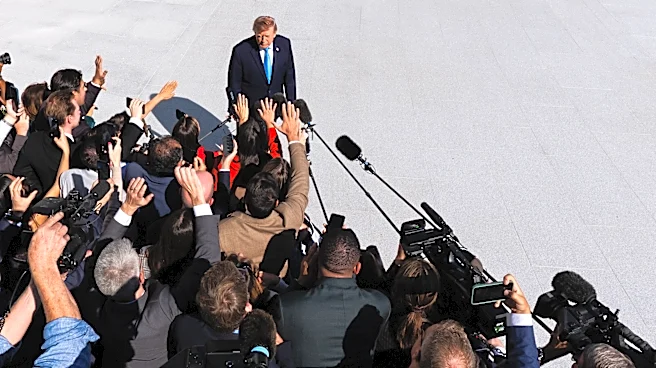
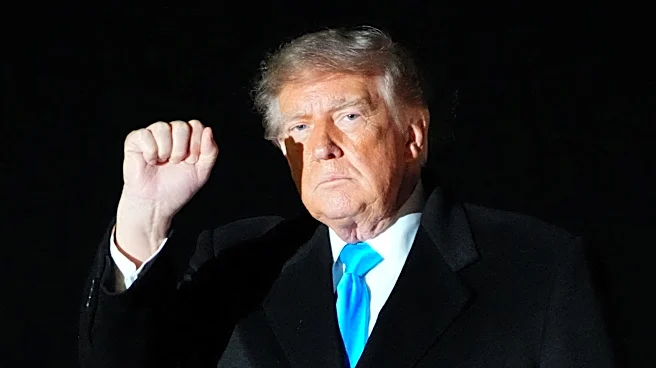
AI can do a lot more than that, he added, such as place a candidate in a scene from the Revolutionary War or conjure a luxury mansion for an opponent to step out of. President Donald Trump has posted multiple AI-generated images, includes one of himself depicted as a Jesus figure. And another of himself beside a shackled alien.
"There's a lot of different uses to create scenes that don't necessarily deceive a viewer into thinking that a politician was doing a thing they didn't do," he said.
Wesleyan Media Project’s data suggests Republicans, specifically Republican groups like PACs or nonprofits, are more likely to use AI than Democrats or Democratic groups. Politicians and candidates lobbying against ads, on the other hand, tend to be Democrats.
Sens. Amy Klobuchar, D-Minnesota, and Sen. Lisa Murkowski, R-Alaska, have advocated for bipartisan regulation that would require transparency in political ads using AI-generated content since 2024.
"I think it misleads voters and I think it's got to be regulated," Cooke said.
Video manipulation isn’t new
Altered photo and video techniques have been a tactic present in political campaigns "since time immemorial," Inserra said, referencing tools like Photoshop and video manipulation.
A slowed down video of Nancy Pelosi, for example, went viral in 2019 for making her appear to slur her words. The original video showed that she was speaking normally.
But AI-generated ads have been slower than most AI tools to become mainstream.
In the run-up to the 2024 presidential election, the Republican National Convention saw widespread backlash about its use of AI in their ad against then-President Joe Biden, which depicted a dystopian world of crime and financial disaster.
In the top right corner, a small disclaimer read, "Built entirely with AI imagery."
But in the two years since it aired, political campaigns have begun using AI-generated content with more regularity and less scrutiny.
In Texas, state Attorney General Ken Paxton's campaign released an AI-generated attack ad in September against his Senate opponent James Talarico. In Ohio, the Ohio Flyer PAC aired an attack ad in April against Democratic candidate Sherrod Brown.
"The fact that people are creating so much of this content means that more and more people are knowledgeable about AI content," Inserra said. He expected that AI content will only increase as the midterms get closer.
Not all of the use-cases of AI in campaigns are strictly attack ads. Many politicians or political groups have used it for satire or comedic purposes.
"It has also opened political advertising up to more creativity," Ridout said. "I'm seeing a lot more satire and parody they can do. Maybe it would be difficult to film a candidate emerging from a swamp, but that's an interesting situation that you can have AI create for you."
Inserra also noted ways it could "democratize" campaigns, which are incredibly costly and require a lot of resources.
"It is a way for them to cheapen their access to reasonably good quality content," he said.
As the November midterms creep closer, the success of the candidates using AI-generated ads could act as a test-case for the 2028 election.
"I do expect more use," Ridout said of the technology. "Whether this is a complete game changer, I'm skeptical that these ads are any more persuasive than the old-fashioned political ad. But I suppose the jury is still out on that one."
Greta Reich covers the artificial intelligence industry for USA TODAY through a fellowship from the Tarbell Center for AI Journalism. Funders do not provide editorial input.
This article originally appeared on USA TODAY: 'New thing on the block.' AI-generated ads have politicians divided