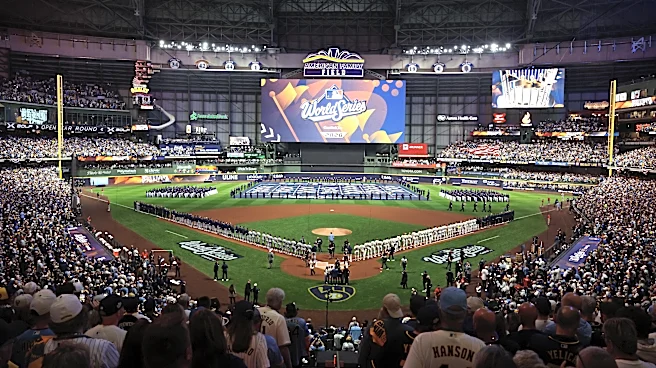





How will this year's World Series play out? Using the Dynasty League Baseball online simulation, USA TODAY Sports' Steve Gardner and DLB designer Mike Cieslinski will pre-play each game to provide some insight into the key matchups and strategy fans can expect to see in the Fall Classic.
There was something hauntingly familiar with the way Game 3 of USA TODAY Sports' annual Simulated World Series played out.
The Tampa Bay Rays jumped out to a quick early lead, but the Milwaukee Brewers slowly and methodically chipped away before finally recording a 5-4 victory − one that wasn't decided until after some wild ninth-inning drama. Sure sounds an awful like the actual Game 2, doesn't it?
Here's how our Game 3 simulation played out:
Rays vs Brewers World Series Game 3 simulation
With the home field
advantage shifting in Tampa Bay's favor, the starting pitching advantage figured to follow suit with Nick Martinez getting the call for the Rays in our simulation − against lefty Robert Gasser of the Brewers. (Tampa Bay's actual starter in Game 3, Freddy Peralta, started and won Game 2 of our simulation.)
One of the unique features of Tropicana Field is the short 315-foot distance down the left-field line. The Rays took advantage almost immediately, with center fielder Jonny DeLuca and catcher Nick Fortes hitting solo home runs down the line in the bottom of the second inning, neither of which cleared the wall with a whole lot to spare.
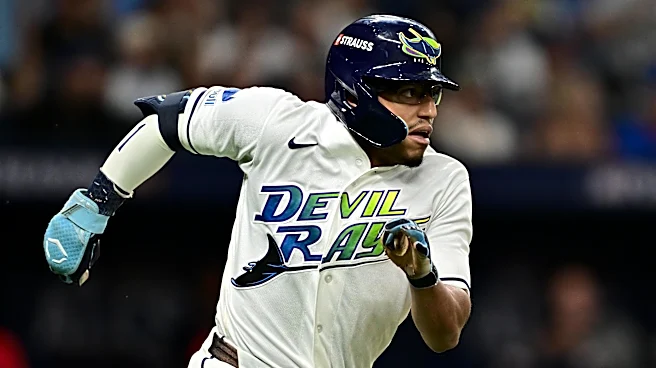
The Rays added another solo shot in the fifth, as Yandy Diaz blasted one 375 feet to right center.
But the Brewers had an answer. After a Brice Turang walk in the top of the sixth, Jake Baures followed with a two-run blast off Martinez to cut the Rays lead to 3-2.
Tampa Bay scored a run in the bottom of the inning on Richie Palacios' pinch-hit RBI single off Abner Uribe to go up 4-2.
Then in the eighth, the Brewers staged their winning rally. After singles by David Hamilton and Jackson Chourio put runners on the corners with no outs, the Rays called on lefty Cam Booser to face the left-handed bats of Brice Turang and Bauers.
Turang stunningly laid down a squeeze bunt that scored Hamilton to make it 4-3. After a walk to Bauers and a wild pitch by Booser put two runners in scoring position, William Contreras put the Brewers ahead by plating both runners on a two-run single to left, with Bauers easily beating the throw to the plate from Chandler Simpson.
Up 5-4, the Brewers turned to closer Trevor Megill to face the heart of the Rays order in the bottom of the ninth.
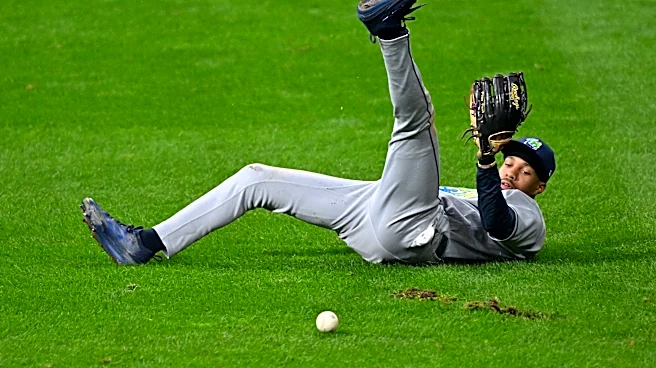
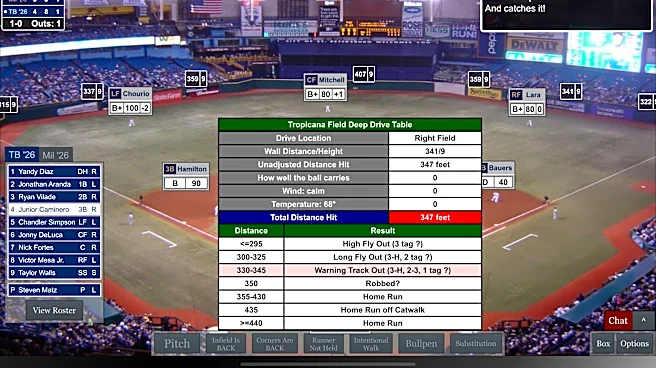
With one out, the ever-dangerous Junior Caminero crushed a Megill fastball deep to right field that looked like a potential game-tying home run. But the ball died when it got to the warning track and it fell into the glove of rookie Luis Lara. Dodging that bullet, Megill then struck out Simpson to end the game.
BOX SCORE: Brewers 5, Rays 4
FULL PLAY-BY-PLAY: Brewers stage late rally to upend Rays

What to watch in (the real) Game 3
▶ Gasser vs. Rays lefty bats. The Brewers' Robert Gasser held left-handed hitters to a .163/.259/.293 slash line during the regular season. That could be important with lefty hitters Jonathan Aranda and Chandler Simpson hitting high in the Rays order.
Tampa Bay countered with Ryan Vilade, who had a .341 on-base percentage and slugged .477 against left-handers during the regular season, by starting him in right field over Victor Mesa Jr. (Although ... the lefty-swinging Mesa slashed .333/.385/.483 against southpaws in just 66 plate appearances.) In Sim Series Game 3, Vilade tripled against Gasser in the second inning, but finished 1-for-5 with a strikeout. Mesa walked as a pinch-hitter in the eighth.
▶ The bunt is back! The Rays and Brewers ranked first and fifth in the majors during the season in number of sacrifice bunts. They also ranked first and second in bunt hits (Rays 49, Brewers 32).
The bunt has been a frequently used weapon already in the Sim Series, especially in Game 3. Tampa Bay's Taylor Walls collected a bunt single in the second inning, Nick Fortes successfully executed a sac bunt in the sixth, and Chandler Simpson bunted for a hit in the seventh − though none eventually resulted in the runner scoring.
The Brewers did make it count when Turang's squeeze bunt plated a run in the eighth. David Hamilton also bunted for a hit in the ninth, but was later caught trying to steal third.
▶ Risk of overuse? The Brewers staged their winning rally in the eighth against Rays lefty reliever Cam Booser (.123/.157/.231 vs. left-handed batters during the regular season), working in his third consecutive game. Although Dynasty League Baseball does account for relievers tiring early when making back-to-back appearances, the off day between Games 2 and 3 had Booser working on full rest.
Still, seeing a reliever several times in a playoff series usually reduces that pitcher's effectiveness. The Rays would love to be able to use another lefty reliever to face Brewers lefties Turang, Bauers, Garrett Mitchell and Christian Yelich, but Steven Matz (.573 OPS vs. LHB) and Ian Seymour (.789) are nowhere near as effective.
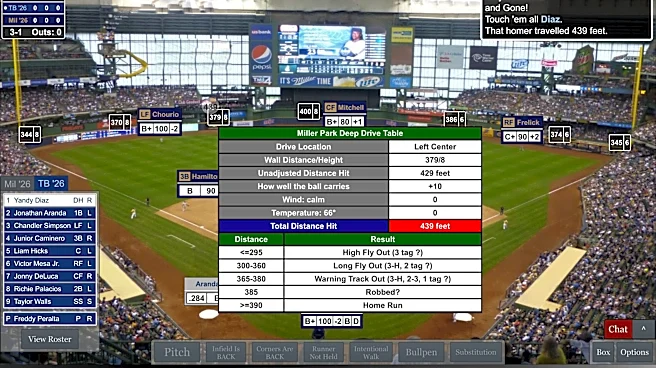
▶ Megill's stinginess on long balls. Brewers closer Trevor Megill allowed just one home run in 61 2/3 innings during the regular season. That ridiculously low rate gives him a special advantage in Dynasty League Baseball that turns home runs on hitters' cards into deep drives (which require additional dice rolls to determine the outcome).
In Caminero's case, his A power rating gave him an excellent chance (76%) of hitting a home run anyway. But in this particular instance, he just didn't get enough to hit it out.
Previous 2026 Sim Series results
- Game 1: Rays 3, Brewers 0
- Game 2: Rays 5, Brewers 2
Simulate your own World Series. Get a FREE one-month subscription to Dynasty League Baseball online by going to DynastyLeagueBaseball.com, selecting the monthly option and entering code USA2 at checkout.
This article originally appeared on USA TODAY: Simulated World Series 2026: Brewers stage dramatic comeback to win Game 3