


California lawmakers passed several bills aimed at restricting local and state law enforcement agencies from hiring former federal immigration agents and banning the use of electric-shock gloves amid growing frustration with the Trump Administration's immigration enforcement tactics.
These bills passed in the final days of the California legislative session and are awaiting Gov. Gavin Newsom's signature or veto.
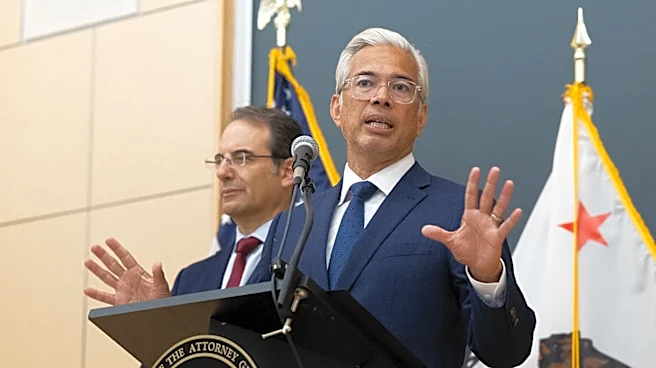
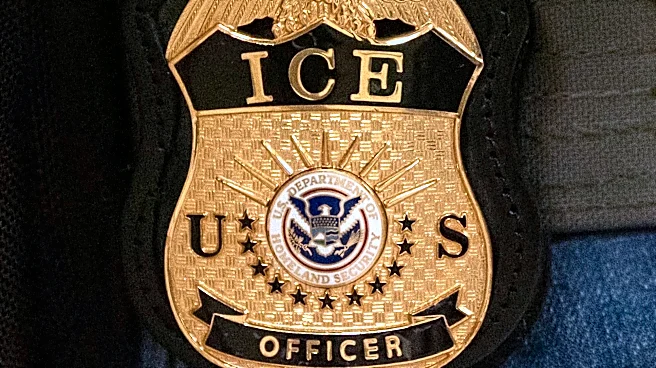
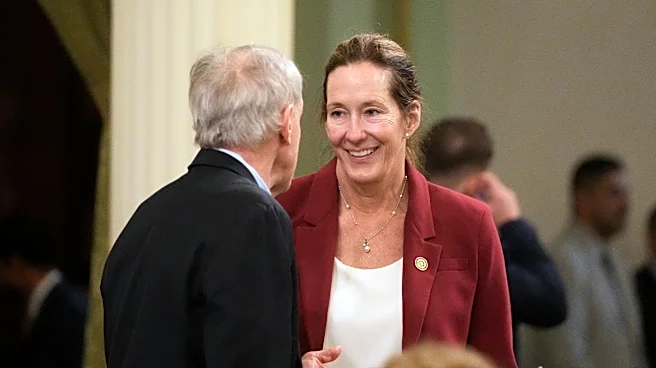
"Get The Feds Out" Act, authored by Assemblymembers Mark González, D-Los Angeles, and Robert Rivas, D-Salinas, would disqualify people who have previously participated in immigration enforcement activities from being hired by state, county, or local public agencies in California.
It would require folks who've previously served as law enforcement
officers or contractors handling immigration enforcement to complete a background investigation to determine whether they are "suitable to enter the (Peace Officer Standards and Training) basic course subject."
"AB 1896 ensures our police officers, teachers, civil servants, social workers, judges, and school safety officers — all those we trust to keep our loved ones safe and protected — hold the same values of acceptance, peace, and tolerance for our diverse communities," González said in a statement.
González cited the deaths of Renée Nicole Good and Alex Pretti, the two individuals who were fatally shot by ICE agents in Minneapolis earlier this year, as the main inspiration for the piece of legislation.
"Time and time again, we have seen these agents show they are unwilling to stand up to unlawful orders," González said in a statement. "These agents disgust me, and they have no place… no right to serve the public here in California. So, I am proud to stand with the Speaker in drawing a line— if you want to choose violence, if you choose to violate civil rights and follow blatantly racist orders from this oppressive federal administration, good luck finding a job here in the Golden State."
If Newsom were to sign the bill, it would become "a first-in-the-nation" policy to disqualify a former immigration agent from working in the state and local government.
Another bill aims to address residents' concerns about current law enforcement officers potentially serving as law enforcement agents.
The bill, authored by Assemblymembers Isaac Bryan, D-Los Angeles, Juan Carrillo, D-Palmdale, and Liz Ortega, D-Hayward, would restrict current law enforcement officers "from engaging in any form of secondary employment" with federal immigration agencies.
When introducing the bill in March, Bryan highlighted that although current state laws restrict local law enforcement agents from directly working with federal immigration agencies, it does not restrict officers from being employed by the federal government as a second job.
"There's a dangerous loophole in state law currently, and that is that there are no explicit policies in the more than 55 police departments that we identified that have a single policy that prohibits secondary employment with the Department of Homeland Security. Moonlighting," Bryan said in March.
"It's important that we close this loophole because there is tremendous fear in California. There's fear that the law enforcement officers, the cops who protect and serve during the day, are masked up, terrorizing and kidnapping at night. There's also important disclosures that have not—that don't currently exist about how frequent this practice is happening, where and if it is happening."
Beyond the future employment of former immigration agents, the California General Assembly also passed legislation that places a three-year ban on local and federal agencies from using the new controversial wearable electroshock device within the State of California.
Assemblymember LaShae Sharp-Collins, D-La Mesa, and several other state leaders introduced this bill near the end of the California legislative session in response to the news that the Trump Administration had planned to spend $10 million to $20 million in 2027 to buy thousands of the electric gloves for its officers and agents.
The devices look like ordinary patrol gloves, but when used, they deliver an electric shock only when the agent activates them and the glove's palm is in direct contact with bare skin.
Although the Trump Administration emphasized that these gloves are non-lethal and intended to help restrain individuals during immigration enforcement activities, the idea faces immediate backlash, as many political leaders have spoken out against the rapid adoption of this new law-enforcement tool.
The emergency piece of legislation made its way through the California House and Senate within days of the end of session.
"Assembly Bill 2760 draws a clear line. Public safety technology must be proven safe and accountable before it can be deployed. We Cannot wait until someone is actually killed or seriously injured," Sharp-Collins said when she introduced the bill on Aug. 26.
If signed, the bill would restrict law enforcement agencies from using the technology until Jan. 1, 2030.
Noe Padilla is a Northern California Reporter for USA Today. Contact him at npadilla@usatodayco.com, follow him on X @1NoePadilla or on Bluesky @noepadilla.bsky.social. Sign up for the TODAY Californian newsletter or follow us on Facebook at TODAY Californian
This article originally appeared on USA TODAY: California could be first to bar ICE agents from other government jobs